Victoria, B.C., Great Destination town

I spent a full month living in Victoria, a popular port-of-call for cruise ships, and liked it so much that it is now on my list of favorite cities on the planet (and I’ve been to most of the good ones) … so much so that I could almost see retiring there, if the Canadian Government would allow it.

img_2898

So … as an explaination of WHY I like it much, let’s start with with a seemingly insignificant fact ….. no bugs — seriously! And this lack of annoying little critters extends to all of the Island, not just British Columbia‘s capitol city, Victoria.

img_2853
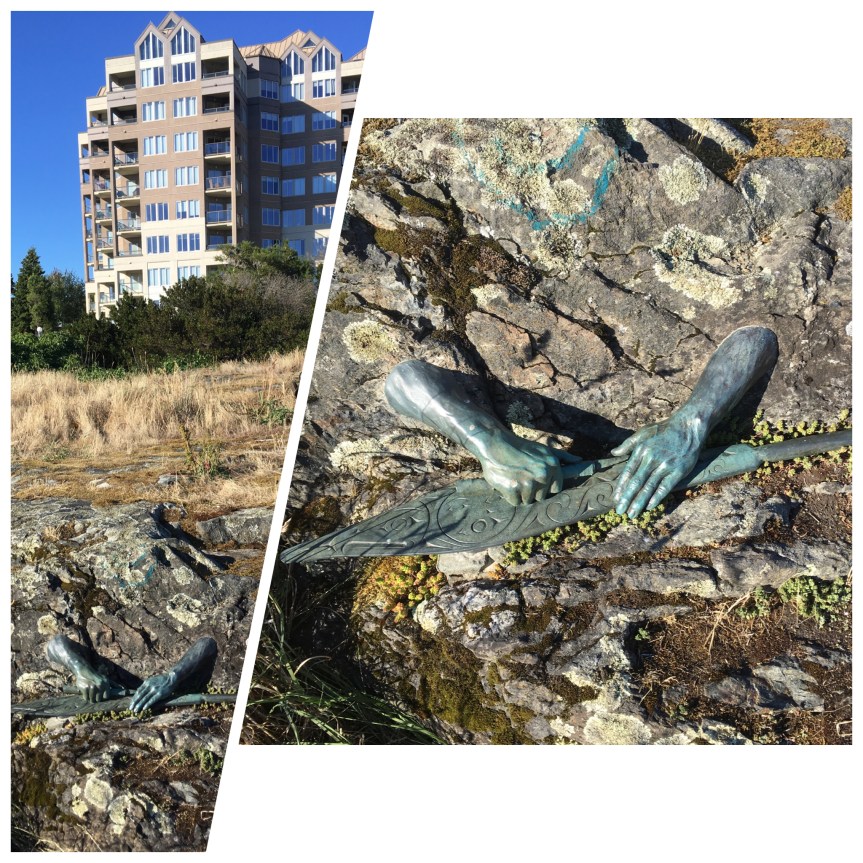
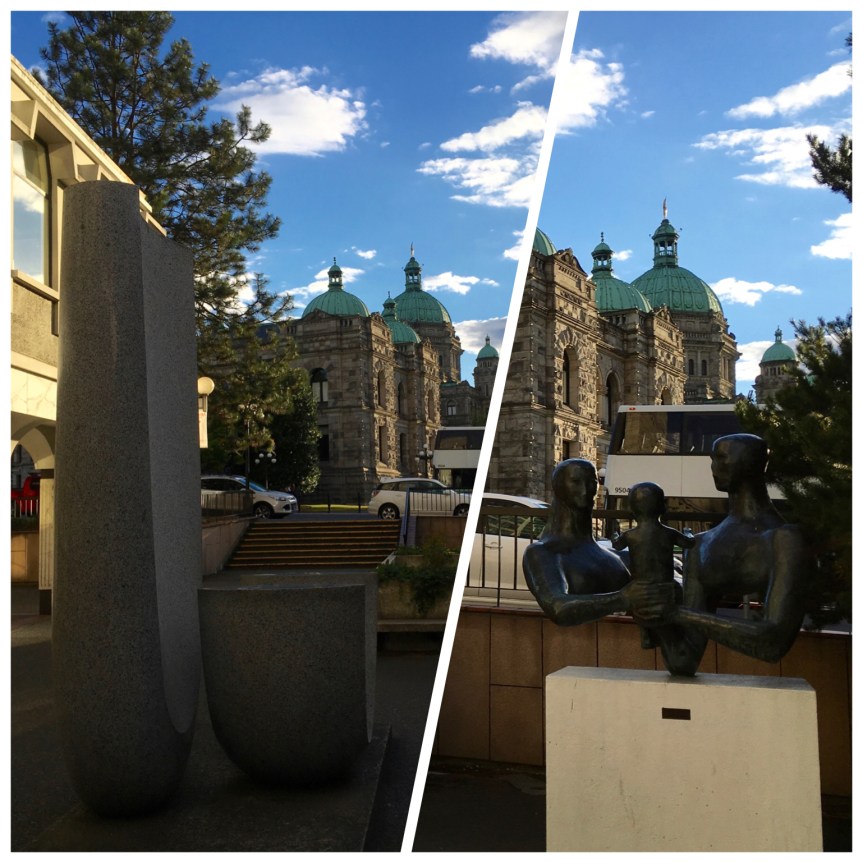
One of the seemingly infinate pieces of outdoor art to be found along the streets of Victoria

Now, granted, of course there are bugs, there wouldn’t be life if there were not bugs… but not so much that you’d notice; and more to the point, other than chiggers (out in the woods) not much in the way of bugs that bite. I was on Vancouver Island  for two whole months and only suffered ONE … seriously… ONE mosquito bite. And it really doesn’t seem to matter what time of day we’re talking about. Granted this may seem trivial, but after having spent a few months in places like Florida or parts of the upper midwest — where you’ll be eaten alive at certain times of day; and when you are bitten you run the risk of things like zika and other nasties … 24 hours a day; and let’s not forget to mention myriad places on the North American continent where if you drive at dusk, within miniutes your car will become so THICK with dead bugs that you’ll have to get it washed, and the job will HAVE to be by hand, or you won’t to get rid of them all (and if you don’t … you’ll have the pleasure of watching other bugs swarm your car to feast on the carcasses of their dead friends. So, really, you learn to appreciate ‘no bugs.’

Beyond that, let my list the other reasons why I love Victoria so much:

Architecture

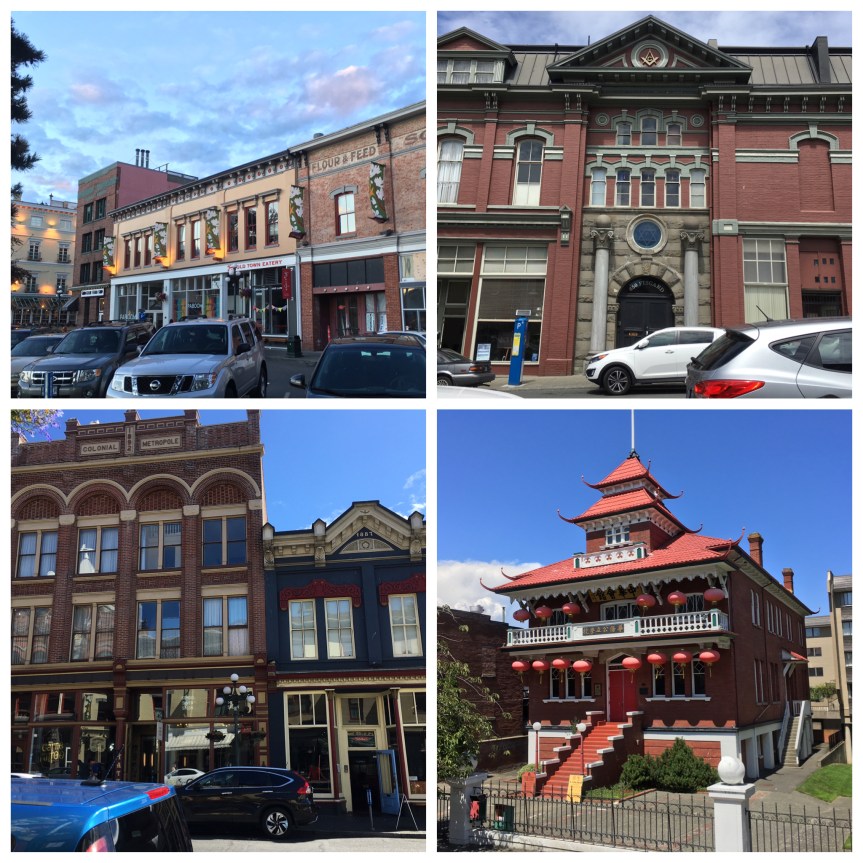
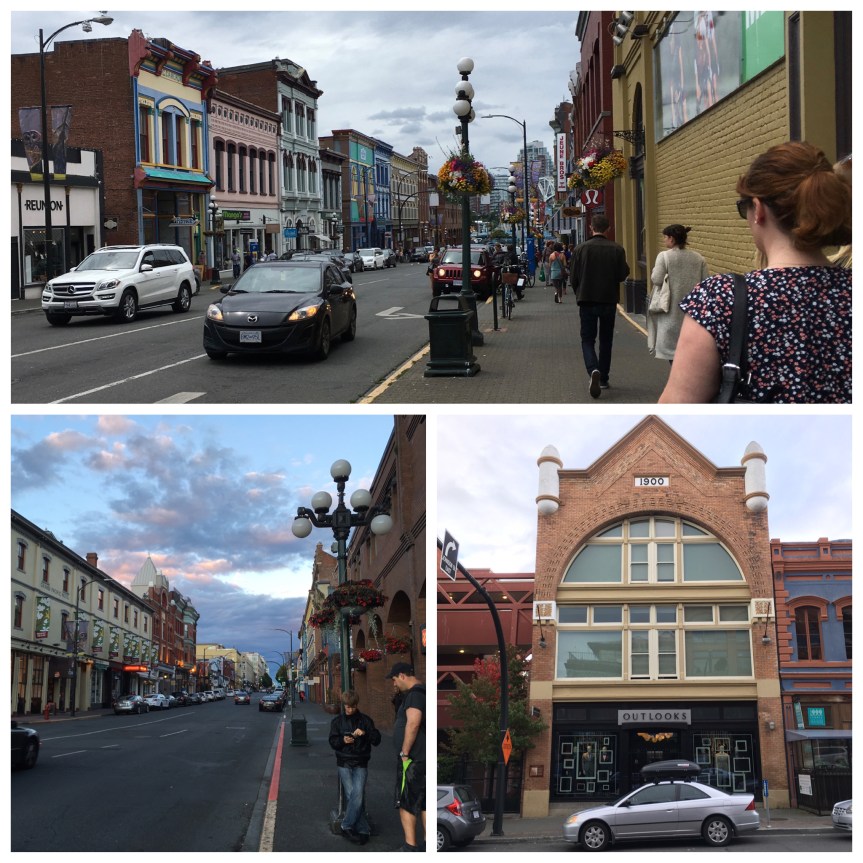
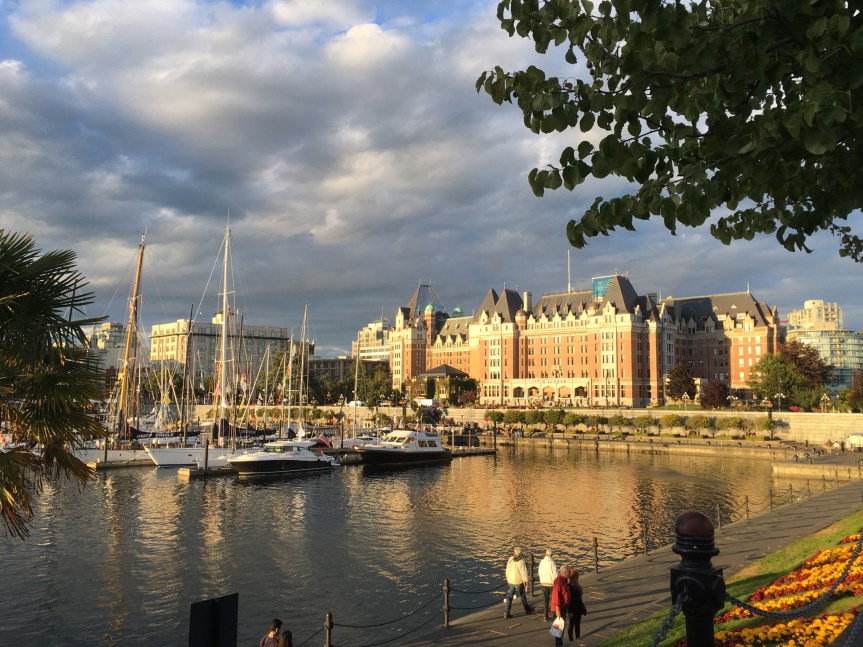
As my pictures will show, it is a visually GORGEOUS city; the local government has put laws into place that require that all historical buildings be maintained (at the very least their facades) and/or restored. The result is panoply of colors and designs to delight the eyes. Architectually it’s buildings range from Stuart influenced Victorian British and early 19th century Americana, to a smattering of modern glass and steel on the outer edges of town.

img_9585
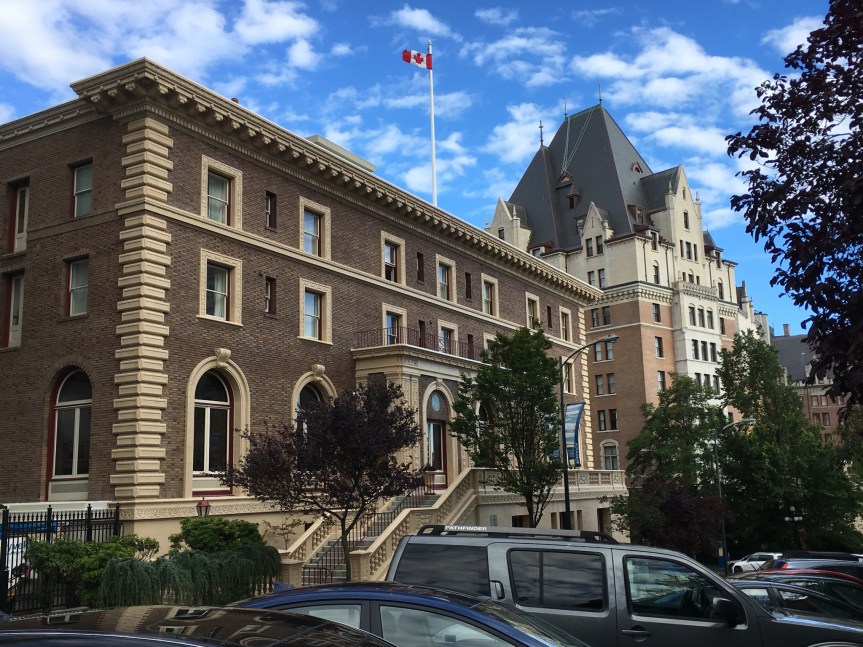
This is the capitol building for British Columbia

img_2956

img_9586
The red pagoda looking building is a school that serves the Chinatown community

img_9587img_2856

History:

Victoria it is a city that with British zeal embraces and honors it’s history in a myriad a ways; if you pay attention, stop, look and read, you almost don’t need a tour guide to learn about the place; and it’s not allways done via obvious things, like this memorial to Captain Cook,

img_3841

The plaque below it reads:

Capt. James Cook, R. N. (1728 – 1779)

“After two historic voyages to the South Pacific Ocean, Cook was cruising the waters of the Pacific Northwest on his third and final voyage, with his two ships, Resolution and Discovery. He was searching for the western exit to the legendary Northwest Passage. In March 1778, they put into Nootka Sound for repairs and to trade with the native people. With him on the voyage were Mr. William Bligh as master of the Resolution and midshipman George Vancouver.

This statue was commissioned by the Victoria Environmental Enhancement Foundation and unveiled by The Honourable William Richards Bennett, premier of the province of British Columbia. July 12, 1976.”

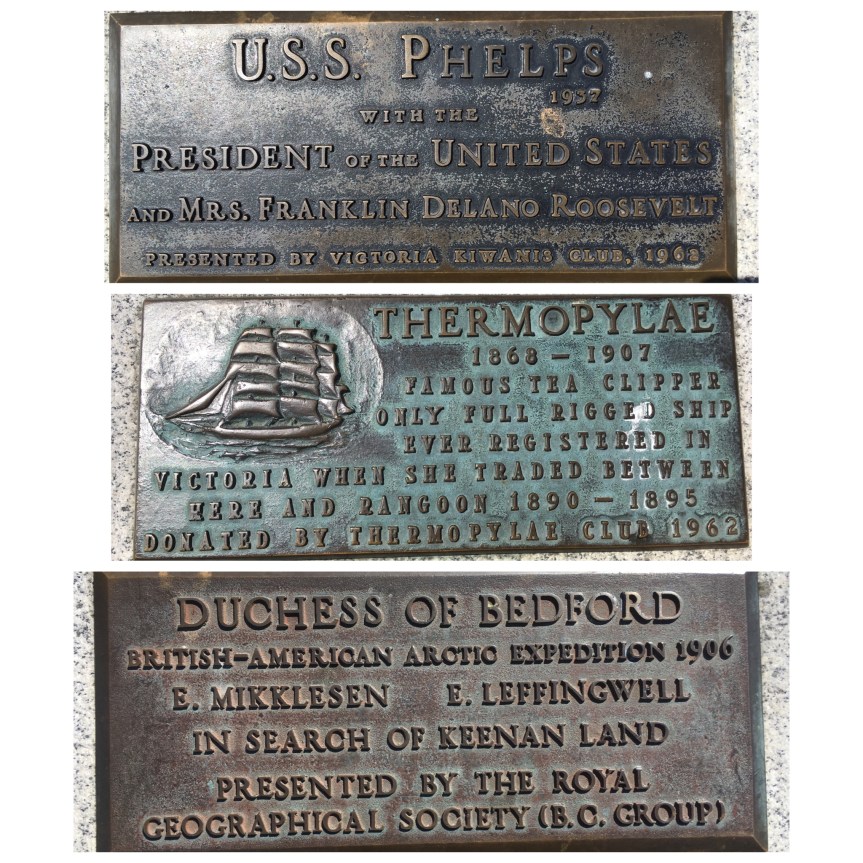
Rather, in Victoria you really need to pay attention and look, because the place is RICH with historical documentation, but it tends to go overlooks; for instance, one of the things I noticed (during my month long stay in Victoria where I passed this statue almost daily) was that MOST tourists never seem to stop and take notice of is the LONG line of smaller plaques all along the wall located right behind that statue (see picture above), and all along the dock which memorialize all the notable ships that docked in her port (below are just a few example, but they line the whole dockside):
img_9583

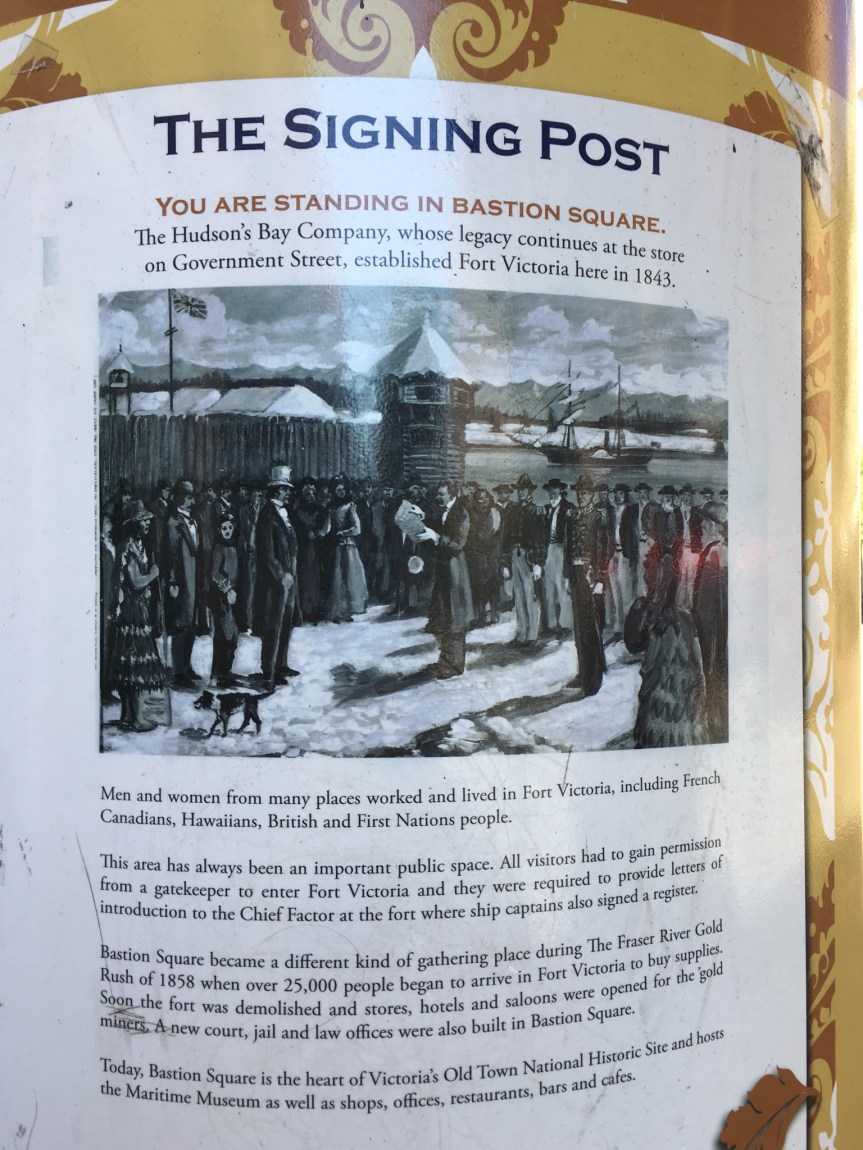
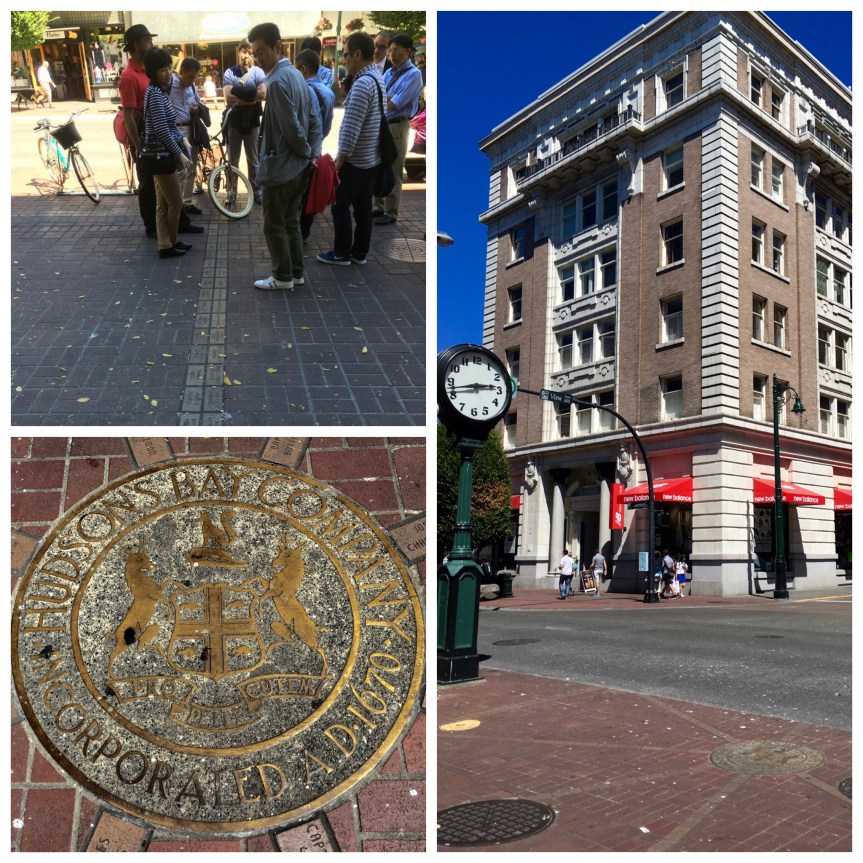
Another example is that there is ample evidence and explaination regarding the location of the original fort on the main shopping street in Victoria, but if you don’t stop and look (as the Asian tourists who were being led by a professional guide — the guy in the red shirt — are doing in the picture below) … you’ll miss it:

img_2796

img_9579
The large tan and white building, across from where the fort had stood, was the first office building of the Hudson Bay Company, when Victoria transitioned from a fort to a city
img_3276
Every name memorialized in these bricks is that of a founding citizen of the city

img_3479

And then every single historic building that’s been renovated and repurposed (and there are LOADS of them) has attached to it a sign explaining the history of the building. Below for instance is a bank building that is now a bar.
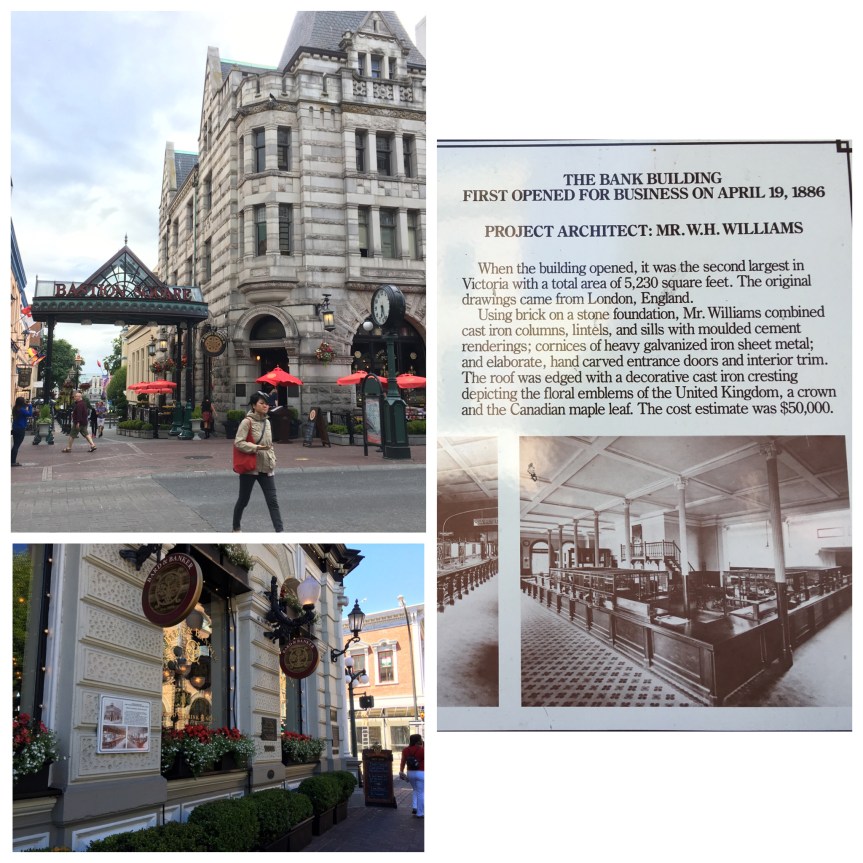
img_9581

img_9582And then Victoria has different districts, and again, if you stop and look you’ll find plaques, and the like, explaining the area’s past.
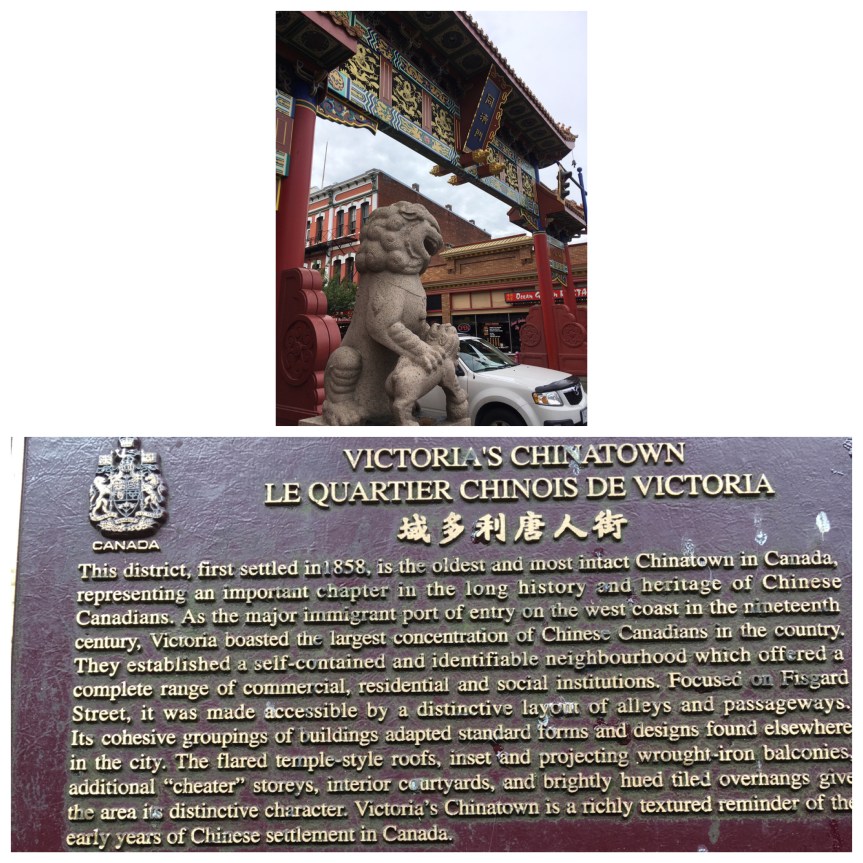
img_9578

And then in the front of the Government building, there are little vignettes, describing the history of the city, performed by the Parlimentary Player’s, a group of young actors dressed in historiacal garb that try to ‘bring history to life’ in a way that might be more appealing for those who don’t enjoy reading — including one playing the role of Queen Victoria herself. After which, you can enjoy a enjoy a tour of building itself (either self guided with a pamphlet, or led — for a fee, see my blog post).

img_9580

That said, it is STILL worth your while to invest in one of the many historically themed walking tours, because they will often add more information than the signs and plaques, not to mention point out little historical tidbits that city has overlooked — or chosen not to — document… for instance, as you walk along Fan Tan Alley in Victoria’s China town you might easily walk right by this little piece of history which links back to the active opium trade that used to exist in the area.

img_9584

What the picture doesn’t show (or at least well) is that across the alley from the door are two peep holes in the opposite wall. From here, guards would check the alley for cops, and if they gave the all clear, the metal door would open, handing a customer his or her opium.

In addition to the history that exists in historic parts of town, There are more historical spots, just on the outskirts like the  Fort Rodd Hill National Historic Site (see my blog about it), which host historical events, Craigdarroch Castle (again, see blog), and Christ Church (ditto).

Public Art:

Public Art is visible almost everywhere you look; be it street art, murals (government sanctioned or otherwise) that either celebrate the city’s history and rich cultural past — or simply decorate boring buildings, sculptures that range from monuments to famous people involved with the city’s history, to the more esoteric and fanciful, Victoria almost doubles as an outdoor museum.

img_3265img_9571img_3013img_3051img_9576img_4406img_2807img_9574img_9572img_9570img_4485img_9569img_9567img_9566

Mother Nature, Natural beauty:

Although one could argue that Victoria’s proximity to the ocean is such an incredible an asset, that the aforementioned, massive investment in public art, is “gilding the lily” just a bit …
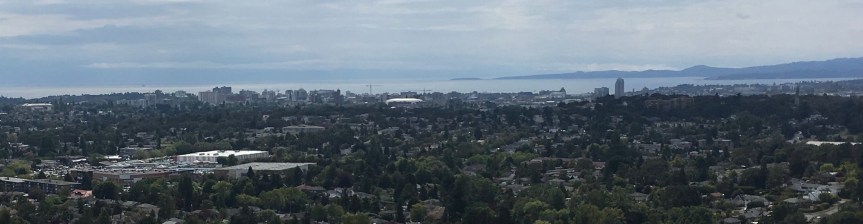
img_3992img_9564img_9563
img_9562
img_9561
img_9565

And in addition not only have the Canadians inherited the British love of gardens, but they the almost perfect weather for a wide variety of flowers and plants. The weather is SO good (not too hot, not to cold), that it is considered to have a mediteranian climate (PALM TREES growing outdoors, north of Seattle, REALLY!).

img_2933

To that effect, a short drive away (maybe 20 minutes) is the world famous (see my blog post on) Butchart Gardens, which not only hosts musical events, but also serves up a very nice afternoon tea

Shopping:

I was really impressed by the shopping in Victoria. The prices for pretty much everything are low (well, at the exchange rate at the time, that could change); And there is great shopping from high fashion to antiques;
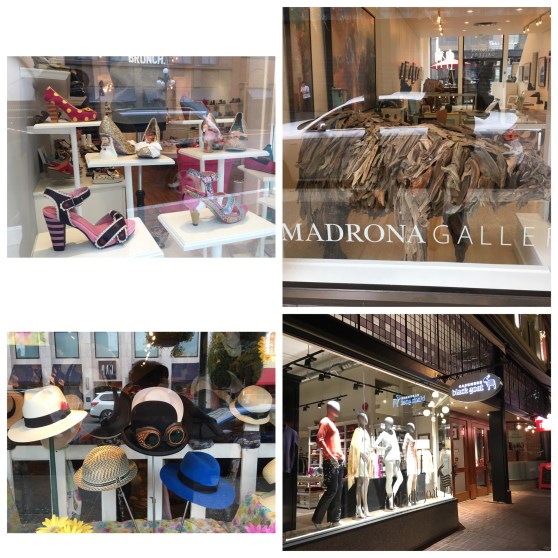
img_9528

img_2844
A bank, converted into a book store

img_3255The guy who owned this store, which was stocked with stuff that made my history major heart swoon, said that he USED to have significantly more WWII era stuff, but that the Holocaust Museum in Washington D.C. bought out most of his best items a few years ago.

img_9526

This next store was probably the coolest of of the MANY gaming stores I found in Victoria, as in one every few blocks — apparently gaming is a popular activity there. You could come with friends, or join up with other folks already there, play board games, etc., and buy them if you enjoyed them… plus it was a cafe.

img_9527

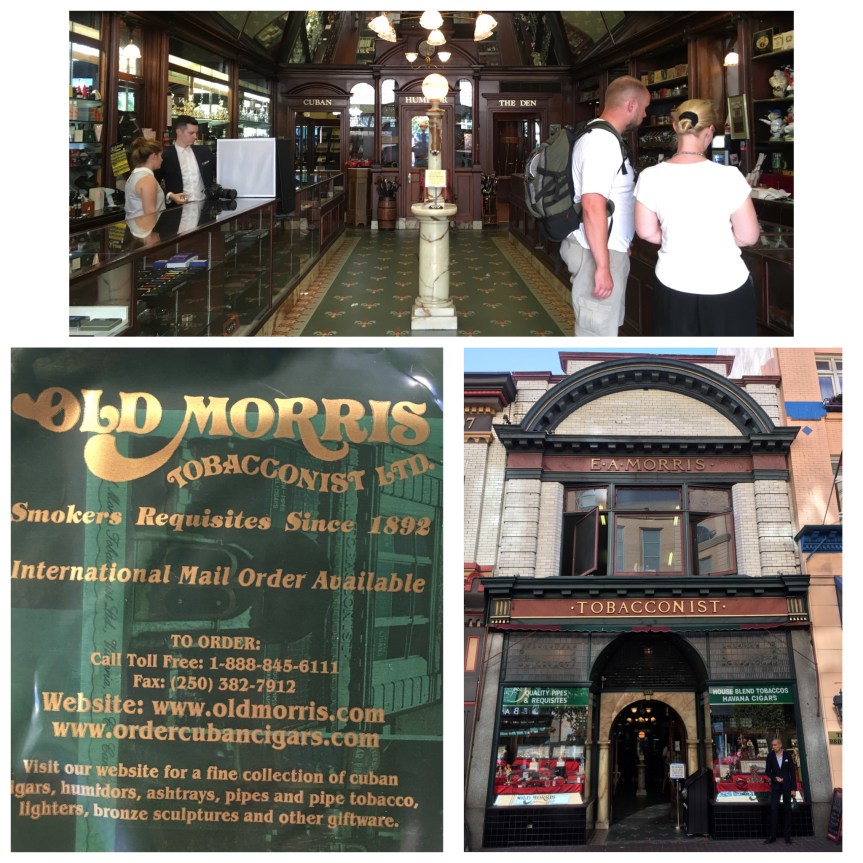
The owner of this next, historic store, which is the oldest contiuously running store in the city, said he was worried now that US and Cuban relations were about to normalize, as a large chunk of his business was selling Cuban cigars to Americans tourists who couldn’t get them at home.
img_9525

Once many years ago, while in the UK, I accidentally purchased a t-shirt made of hemp, found it to be an amazingly comfortable, sturdy, and breathable fabric, and have been looking for clothes made of it ever since; hemp clothing was difficult to find in the US, till quite recently, because of it being a variety of cannabis plant, i.e., marijuana).

So when I saw this store, I got excited; Now, granted, there wasn’t much I could buy — since living out of the trunk of a car limits one’s closet space,  but since I was supposed to attend the orthodox Jewish wedding of an old friend a month later, and didn’t have anything appropriate to wear, I had a reasonable excuse to buy myself a really nice formal (yet informal) dress made from hemp.

Safe!:

From the perspective of a girl from Chicago, Victoria has an impressively low crime rate (see happy homeless people for part of why that is) so that as a single woman I felt completely comfortable walking around alone, even at night;

img_9558
img_9559
img_9560

Great resturants:

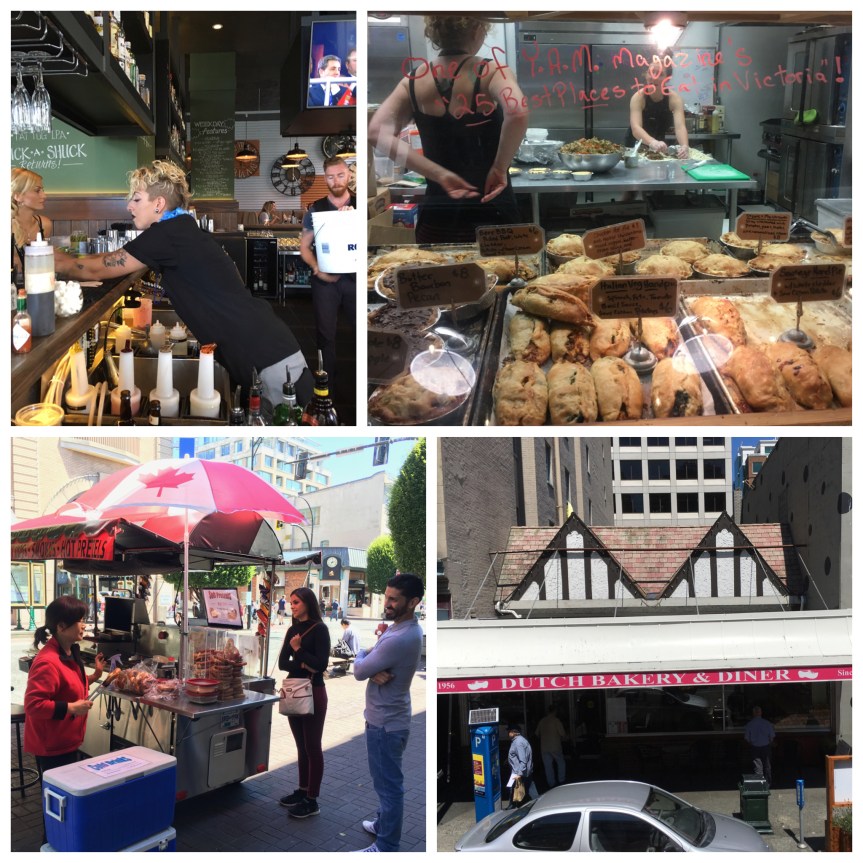
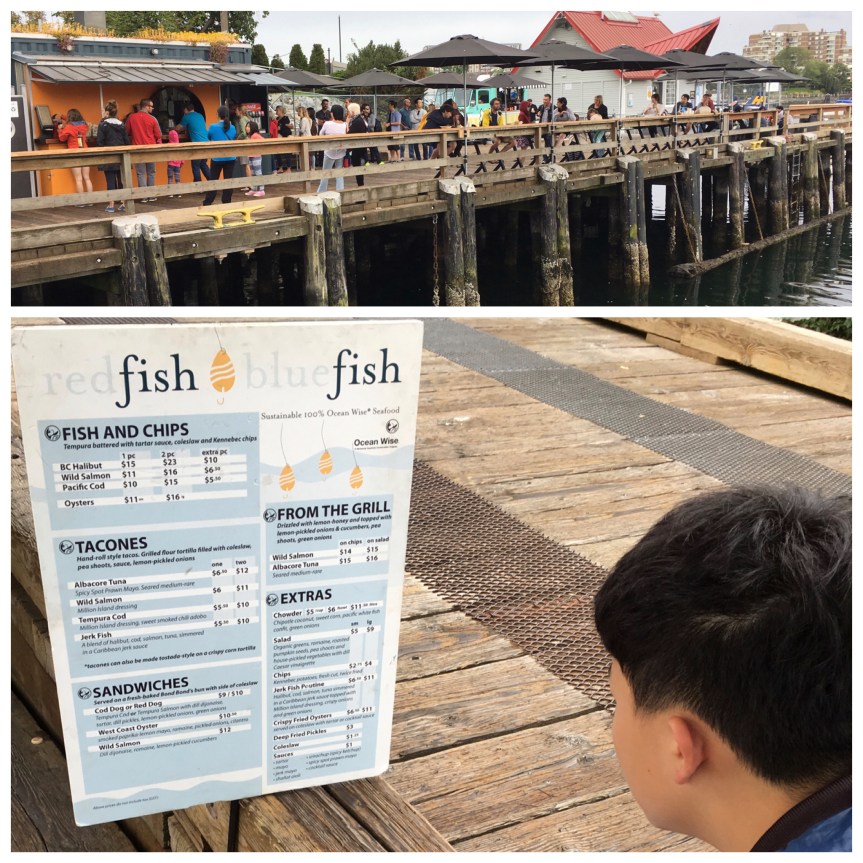
There are no shortage of really great resturants,  (see the blog post about my favorite, the Ferris Grill) all of which have fresh from the ocean seafood obtained from the local, and more importantly working, (see my blog post about) Fisherman’s warf; so that I got spoiled with buck-a-shuck amazingly fresh oysters, most of which were HUGE… and then keep in mind the exchange rate, so that from my viewpoint it was actually cheaper than $1 each. While there is a China town, I was not overly impressed with the Chinese.
IMG_1032

IMG_1033
RedFish BlueFish is a VERY popular foodstand on the dock across from the fancy hotel (not fisherman’s warf)

Music and Art:

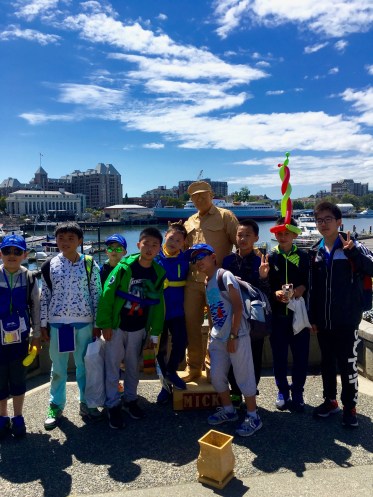
There is an active music and arts scene! (Although, sadly, not much in the way of Theater) For instance, there are free concerts almost every week day in front of the city hall, not to mention orchestral presentations at the local cathederal, and a plethera of street performers.
IMG_3119

IMG_1030

Tourism:
From a straight tourism point of view, there’s relatively little in the way of “tourist trap” attractions (which is not necessarily a bad thing). There’s the aforementioned fisherman’s warf area, there is one really good museum (see my post about the Royal British Columbia Museum) which hosts really impressive traveling exhibits, and a few small ones. There are also in addition to the aforementioned historically themed walking tours a few tour different bus tour companies, whose offerings are for the most part, the same (I took two of them).

IMG_1031

of the multiple tours the most amusing one I spoted (although not for me as I don’t drink) was the rolling pub tour.

And, as a Jew, I was very excited to see an active Jewish community (albiet a tiny one) that was active in the city

Royal British Columbia Museum, Victoria Canada

This Royal BC Museum of natural and human history is 130 years old, and is located right off of the TransCanadian Highway at the western edge of the ‘tourist’ area of downtown Victoria, next door to the British Columbia Capitol building. It is a VERY good museum with interactive/experiential display, that make learning more exciting while still protecting the exhibits. I saw something with my actual eyes I never expected to ever see in my life, an actual mammoth.

img_6718
The museums displays extend beyond the building, to encompass the entire property, and all ingresses and egresses from the building; and this includes some of the doors themselves, which in some cases are beautifully carved; as such, it really is worth while to explore the entire property, and not just B-line it to the front entrance.
img_6719
img_6723
Inside the museum (assuming you came in via the front entrance), the first thing you see is the Imax theater, and the adjoining gift shop (which has some REALLY nice stuff with much BETTER prices than I saw for similar items at the local tourist shops). This included a lot of T-shirts, hiking gear, clothing, etc. There are in fact TWO gift shops, on the ground floor, so it is worth it to check both of them out. The one in the picture below is smaller, and tends to have more ‘useful’ type stuff, while the 2nd larger one has more ‘artistic’ sort of things.
img_6720
Based on my math, if you intend to go there at least three times in a year, the one-year-pass is by far the smartest buy. And since I was going to be living for a full month only a few blocks away from the museum, and expected to see it at least that many times during my stay (rainy days, etc), and maybe even take in some of their IMAX movies, I bought the pass.

The layout of the Museum is more narrow and tall, rather than low and wide, like most museums; as such in order to enter the exhibits sections of the museum (laid out on three separate floors), you need take an escalator — at which point you will be asked to show your tickets and or pass (or the elevators, available for handicapped access). This can be a bit confusing as you can easily spend a full day on just the first exhibit floor (2nd floor of building) and spend so much time there that you end up missing the other exhibits.

On the first floor, just where you exit the escalator, they have the rotating exhibition rooms. When I went it was an excellent exhibit on mammoths that really awed, over whelmed and stunned me. The first rooms taught you all about mammoths, and was very high tech and interactive and interesting.
img_6722
But the stunner, was after that room you entered a very small and very dark room which included an ACTUAL baby woolly mammoth.. they have named Zhenya.
img_6721
When you first entered the room, your eyes actually need to adjust a bit, but I assume this is to protect this oh so priceless find… which I’m actually kind of shocked they’ve allowed to go on tour.
img_3160

Seriously, I cannot overstate my excitement, delight and awe at being able to see in the flesh, an actual woolly mammoth, even if it was a tiny baby. I was completely farklemt.

(I will note, whoever was in charge of curating the display was not particularly careful in setting it up — look carefully at the photos and see if you can pick up the major OOPS!)

In the next room (well lit) there were more interactive displays to help teach kids about the lives of these now extinct animals
img_6724
img_6725


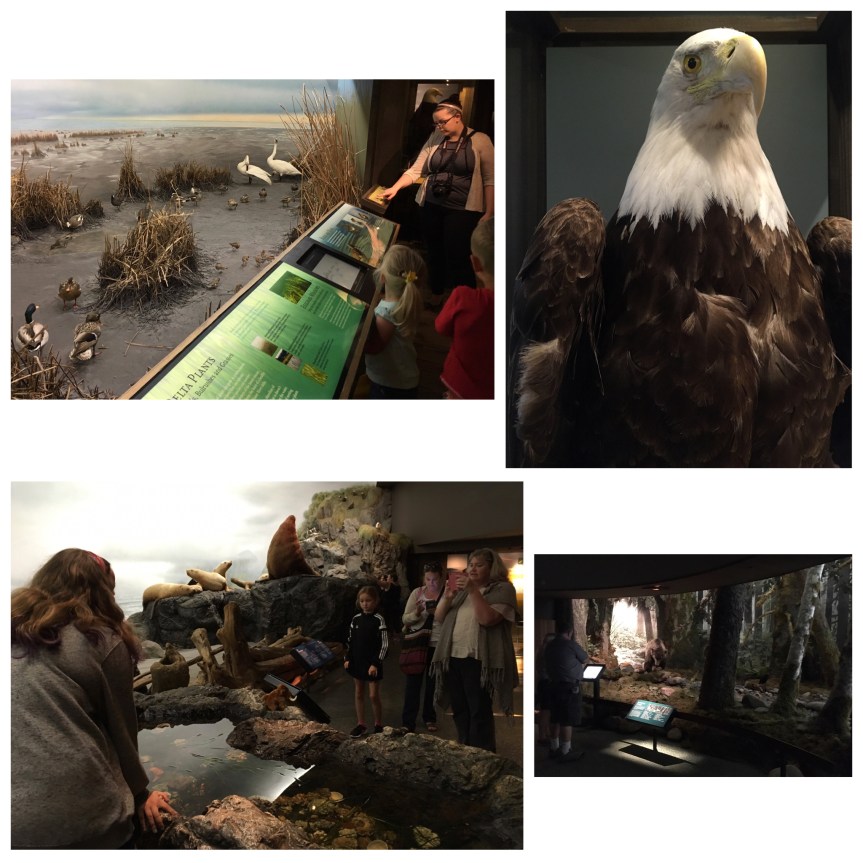
Another set of rooms was about the Natural environment of the British Colombia region, and displayed taxidermied local animals arranged into impressively ‘simulated natural’ settings — remarkably natural, some of them even included moving water.

img_6726
this was followed by a very Steampunk/ Jules Verne, ‘20,000 Leagues Under the Sea type esthetic, showing off the underwater life of the area.
img_3222


Another section of the museum is devoted to the human history of Victoria, as a seaport town belonging to the British

img_3578

Their collection includes George Vancouver’s Uniform, among others

img_6727

AND — and I thought this was really cool, the “actual” dagger (or at least it’s believed to be) that was used to kill the famous explorer, James Cook.
img_4738

Alongside these displays is life size “walk through” of the dock, and of a section of a British Sailing ship, with all the appropriate sounds (and some smells) piped in.

img_6728

This is followed by a small section devoted to the Gold Rush that help make the navel base /trading post into a city, where you can try your hand at sifting gold

(What the sign says: “Wig and Case: within a year of the rush to the gold fields in 1858, British law was imposed. As head of teh law enforcement, Judge Matthew Baillie Begbie was responsible for justice … The wig was just one of the many effects used by the judiciary to impress upon the sometimes rebellious gold rushers that British justice was paramount.”)

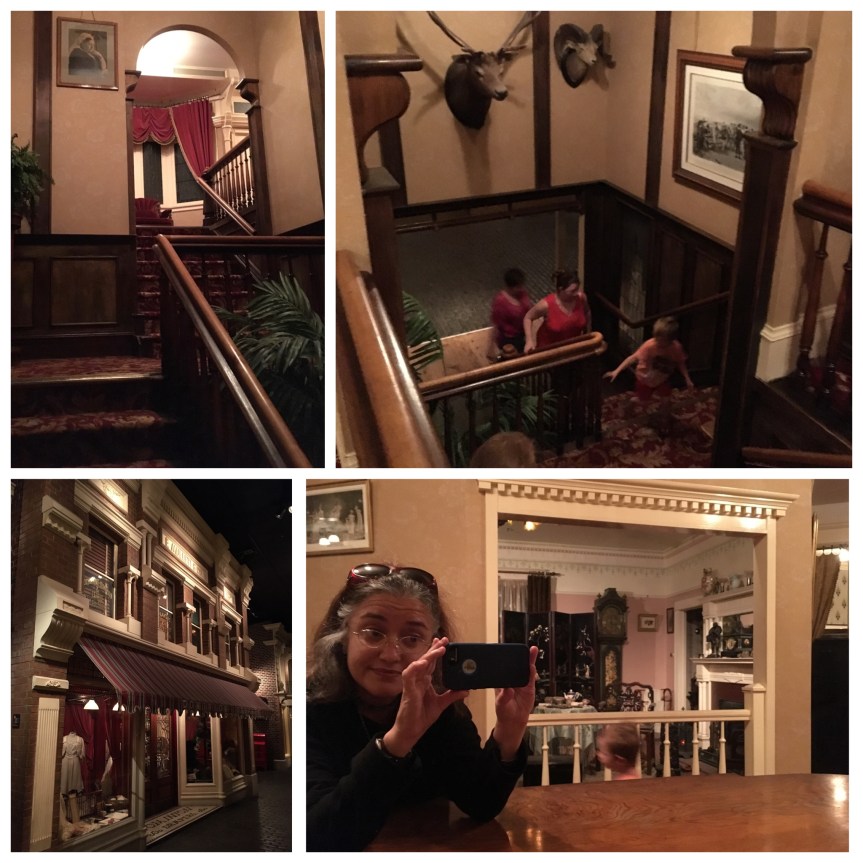
In another section of the museum there is a reconstruction of what Victoria looked like back in time, that is again, completely lifesize. You can walk into stores, go into the movie theater and watch a black and white movie, or walk through a hotel and see the rooms.

img_6729
IMG_6730.JPG
img_6731
And then there’s a whole section of the museum devoted to the First Nations (Canadian term for their Native American Tribes, which is gaining acceptance in the USA as well), their languages and their art.

img_3637IMG_3648.jpg

Viking Statue & Runestone Museum

Because nothing says Minnesota like a massive Viking!!
History of the area via its historic buildings and consumer goods,
and… the rune-stone

IMG_0179

Cute local museum: Essentially, it’s a combination of the trend of collecting historic buildings to one central location in order to save them from demolition and a history of the area via consumer goods. However, there is also a massive ‘rune-stone‘ which a farmer ‘dug up’ from his farm that he claimed is supposed to be proof that the Vikings came to America way before Columbus — while the museum refuses to say it, and some in the local community believe it’s the real deal… the fact is that it’s never been considered anything but a hoax by serious researchers.

IMG_0228

If you dial the number below, or scan the QR code (the box thing) you’ll hear about the stone and a translation of what it says.

IMG_0229

In fact one of the most interesting points, from my perspective, was how local small budget museums are able to utilize these technologies to upgrade the customer experience. Throughout this museum there are descriptions you can access via your cell phone or smart phone (using a QR scanning program), which are available in English AND Norwegian.

I had previously seen a TV show, I forget where, that talked about how in Norway there is a very popular reality TV show about kids who come to Minnesota to try to find their families and experience their lives in the USA. Apparently there’s a huge tourist population of Swedes and Norwegians discovering small town MN, and these narrations in Norwegian are the proof of that.

IMG_1263

IMG_1267

Granted, this place is nowhere near as well laid out is the last local museum I went to, but they’ve done a fairly decent job of collecting junk from all of the surrounding town members and housing it in a way that at least people can see it and understand what it is.

Paul Bunyan & Chippewa Valley Museums

While I came to see the Paul Bunyan, and it was OK, it was the unexpected Chippewa Valley collection that I was deeply, deeply, impressed by — ardently so, to the extent that I would argue that if you’re ever within (let’s say) an hour drive of there, it’s definitely worth making a special trip to Eau Claire just to see it. In fact just before leaving — while telling the elderly woman at the front desk how much I loved the place, I learned that their former curator (who was the one who had set the tone) had been ‘stolen’ away from them by the Smithsonian. Yes, it’s THAT good, but on a much smaller budget.

What brought me to the Paul Bunyan Museum was I had remembered seeing a truly massive statue of Paul (and his Blue Ox “Babe”) when I came here with my mother as a child (maybe middle school aged?). Apparently, based on what other people who also came to see the statue as I was waiting for the place to open, that one had fallen apart and been replaced with this much smaller and far less impressive model.

img_0034With regards to the hand, I saw a bunch of these sculptures scattered all over Eau Claire. I thought that they were a bit like the Chicago cows — which are much larger, also decorated uniquely and scattered around the city — or something of that sort, and it turned out I was exactly correct.

Initially, I arrived at the Paul Bunyan museum just as it was closing. They let me walk in and look at the gift shop collection, but that was it. As such, I opted to spend the night in Eau Claire and come back the next day before continuing my trip westward.  (I stayed at an Airbnb, a REALLY nice apartment in a high rise with an amazing view; the owner made me home-made quiche and some really good coffee for my breakfast.) The next day, because my host had to go the work, and I was intending to not return to her digs before leaving town, I arrived an hour before the Paul Bunyan was due to open.

As I sat there, I was looking at the sky and saw that there was a slight beige tint to it. It’s not as bad as say the skies in Korea but there was clearly a lot of something between me and the blue. I think Eau Claire Wisconsin is beginning to get the downdraft from that contagion of fires spreading all over southern Canada that were why I opted to take Interstate 94 across till I got to Glacier National Park, rather than going straight north and taking the Trans-Canada highway all the way to Vancouver Island, where I plan to spend to months.

The Paul Bunyan museum to be honest struck me as something of a tourist trap-ish… the employees were for the most part a bunch of spoiled teenagers who are paid to essentially sit there and do nothing (LOUSY customer service). When I went there was in fact this one blonde girl who is clearly the bully/leader who was doing her best to avoid actually working, and expected the other employees to stay with her so she could laud it over them. When I finally demanded help, she send over this other girl, a kind of passive and sweet brunette to see what the problem was. It was a rather small museum and most of what was in there in terms of interactive displays didn’t even work.

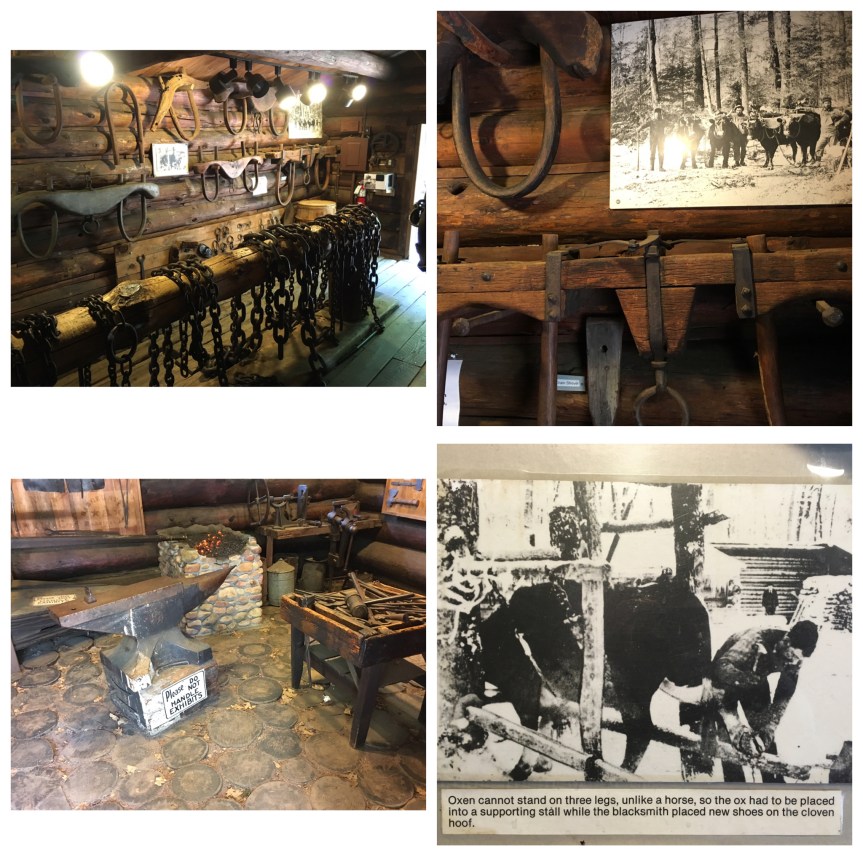
To be honest the best part of the Paul Bunyan is what I refer to as the “living Museum” part out back — a collection buildings representing a logging camp; and… I saw many locals go STRAIGHT to these, bypassing the completely the building where you pay your entrance fee… and like I said before, all the teenagers on staff were just sitting in there not doing their jobs — which would have included stopping people from entering without paying.

img_6582
Note the Green button on top of the silver box in the bottom right picture, every area had one of these and when you pushed it a “local” in this case the ‘store owner’ would begin offering a detailed narration of the room, its contents, and tidbits of about the life of the loggers who worked there.

img_6583

img_6584

img_0057
Again on the left, the green button you pushed for the narration

img_6585

As you continue back through the buildings you pass through a wooden gate and come to more houses, only these are no longer the logging camp and look more like part of what might have been early Eau Claire, WI, marking the transition to the Chippewa Valley Museum, in the large post office type looking building in front of you (no pic, sorry).

img_6586

Even though the two museums, the Paul Bunyan and The Chippewa Valley, are located right next to each other within a park area (surrounded by a sort of moat — see map below) they are not in fact cooperative with each other — you can not even get a discounted combo ticket for both — because they are their owned by two different groups.

img_0074

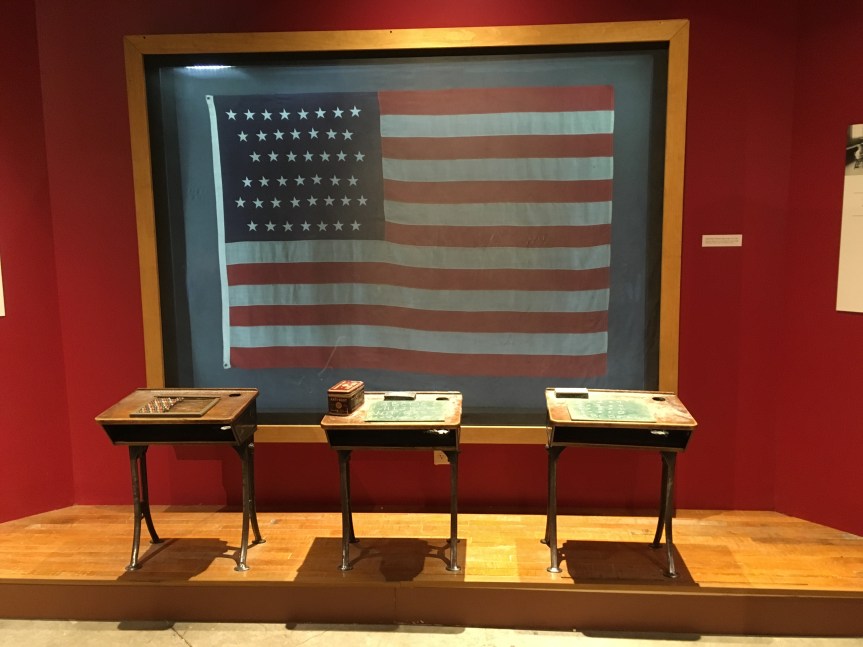
The price is the same for both places seven dollars each, but this place which is the non-for profit devoted to the overall history of the area, not just logging, actually has a much better display in my opinion. Rather than having to hit a button, the who place is automated with movement activated ‘background noises’ to give each area a feeling of veracity. So for instance, in the section about how the Eau Claire area used to be devoted to logging and wood industry, as you enter you hear the manager of the woodworkers talking to them about doing their jobs or when you walk into a section that supposed to be a schoolroom children saying the Pledge of Allegiance, that’s what you hear.

img_0094

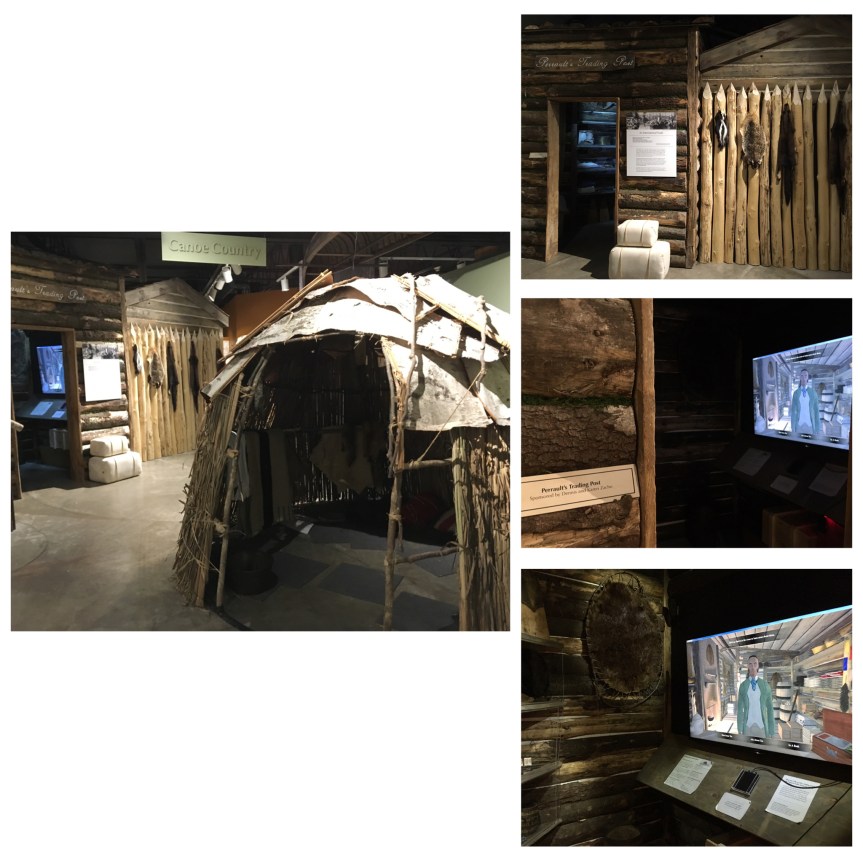
They also have really taken a good advantage of the video game architecture as a way for people to be able to go back in time and experience various things. … So for instance, fir you walk into an area devoted to the original Native American tribes the lived in the area

img_6587

and in the trading post you can actually in a video game (built by local students) sort of manner interact with the trader. You are a Native American of the region and your language shifts between English and your native language is you negotiate with the trader and socialize.

Perrault’s Trading Post Game from Alex Bostone on Vimeo.
(The actual interaction between you and the trader begins 1 minute into the video)

img_6588

This is followed by a fairly devastating area devoted to the cultural havoc wrought on the tribes when they children were forced into boarding schools where they were forcibly ‘converted’ to meet the cultural norms of the dominate white population. This included a selection of interviews with Elderly tribal members recounting their own memories of the place, and of the abuses.

And then the presentation moved into modern times…

img_6589

Then they talk about problematic things, like the resettling of the Hmong refugees in the area and the problems they had when they came to settle,

img_6591

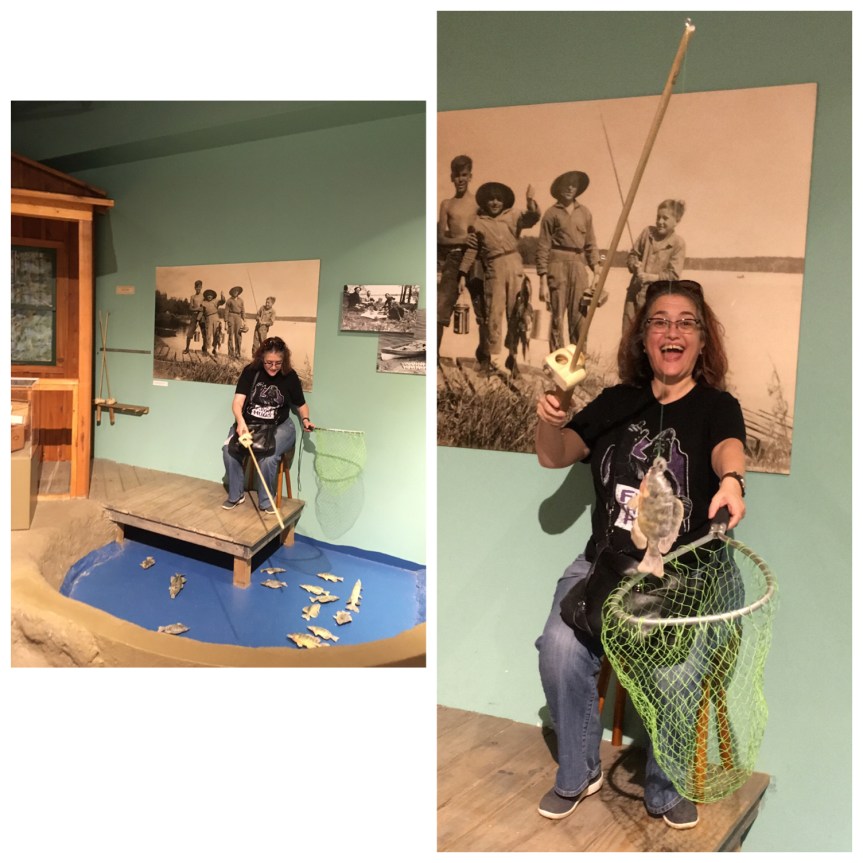
And then of course there are ‘fun things’ like the local fishing pond

img_6590

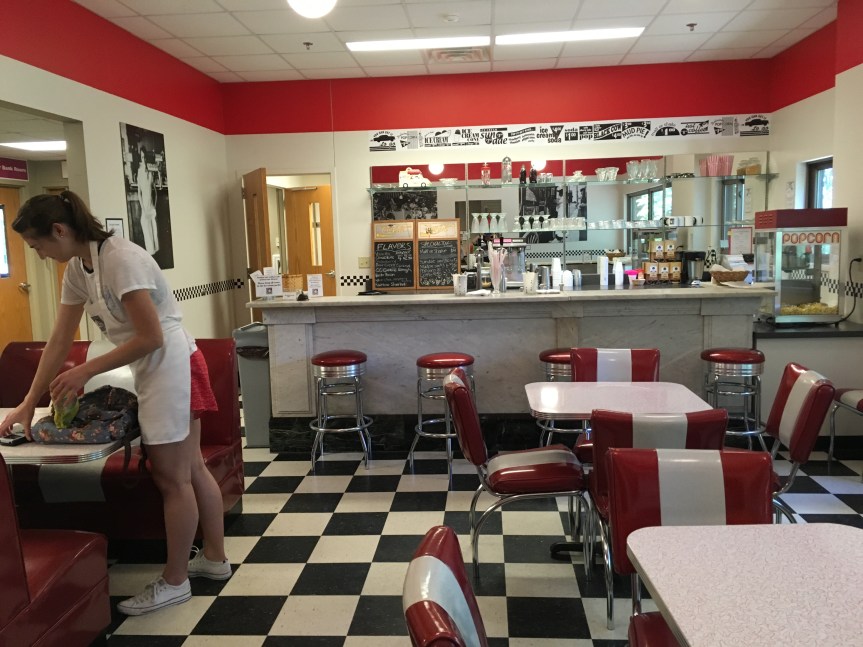
And the functional icecream parlor where you can get a snack

img_0177

All in all this was probably one of the best local history museums I’ve ever seen; while there I talked to a local who said as he was walking through one of the sections devoted to what life was like between the late 1800’s and around 1960, also broken down into subject categories (jobs, health, technologies, etc)… as he went through he was reading all of these quotes, and noting to me that they were from locals he knew—  and he’s lived here all his life — so whoever organized the exhibitions clearly had anthropologists and historians going through the community and collecting the local stories and supporting objects from the area in order to re-created the experiences….. and they skipped nothing, the good, the bad, and the ugly… it’s all in there….civil strife, strikes, economic upheavals, it’s all in there …. I am deeply impressed


First Ladies National Historic Site

Worth a visit, but underwhelming; remember to use your National parks pass!!

You know how pretty much every former US President has gotten a memorial or (at least since Herbert Hoover) a library, well this fairly new National park is a museum (consisting of two, not quite adjacent buildings) dedicated to the women behind the men… i.e., all our unsung first ladies. It was established, in order to fill that gap, around the year 2000, and consists of the historic (from 1878-1891) home of Ida McKinley (whose husband’s memorial and museum are about 5 minutes away by car), and a nearby former bank (built 1895 — so after her family had already moved out); the former bank now holds a small collection of first ladies dresses, etc., and a library/research section (on its upper floors).

The Museum is pretty easy to find, and there is free parking. However, one of the more disconcerting things about this site, at least to me, was how the area is arranged; the lot is adjacent to Ida McKinley’s house but blocking your entrance is one of those vertically swinging gates. When you get there you have to ask (via a microphone) to be allowed in, and will be asked to verify that your intent is to visit the site — I get why they do it, but it is pretty unusual, all things considered. Then you will discover, confusingly, that the building you need to go to first (it’s where you pay your fee and are then led around by a docent) is NOT the house you just parked next to, but rather, it’s the former bank building which is on the FAR side of an adjacent hotel&parking-structure. And, if you happen to be cutting it close till the tour, as I was, and have any trouble walking (as I do), then it can be quite the trek. However, and I learned this afterward having already left the site entirely, there are actually quite of few first ladies dresses and things of that sort on display in the hotel, so you should try to either time your arrival so that you have a chance to see those — either before a tour, or otherwise try to remember to do it before driving away afterwards (the docents were NOT the ones who told me about it, so odds are they won’t remind you either).

In the bank building (where you are NOT allowed to take pictures) you’ll pay your fee, don’t forget to use your national park pass if you have one, and be led to a back ‘library’ to watch a pretty propagandist movie about the first ladies. I say this, because it says things like, and I’m paraphrasing “all of the wives were supportive of their husbands” and then goes on to even mention Bess Truman who I wouldn’t describe as a ‘supportive’ first wife….

Now if you know anything about Bess, you’ll know that she DESPISED Washington and would only deem to be there when her presence was absolutely demanded (essentially abandoning her husband for the majority of his presidency). Her behavior overall made it clear that she was less than thrilled about her husband’s political career in spite of Truman doing everything he could to keep her involved, including nepotism in the form of finding her paying jobs. Once, when asked if she’d like her daughter to one day be President, she said, “most definitely not.” Bess held only ONE press conference over the course of Harry’s two terms in office and only did that once her repeated refusals to do them had become a political issue. While one could give her the benefit of the doubt and say that she feared her father’s suicide would become a public issue (back then the ‘heinous sin’ of a suicide in the family was like a permanent ‘taint’ on the blood of all descendants), or perhaps one could argue that it was a before-her-time feminist stance (if the press asked her what she might be wearing to a public event her “written” responses were usually pretty sarcastic) the overall effect is still of a woman whose behavior could not be described as “supportive of her husband.”

…. hence why I mean it when I say the movie they showed us about the first ladies was pretty “propagandist”; for me, I prefer my history presented unapologetic-ally, with the good, the bad and the ugly intact.

Then we were led into the front room where the docent offered to either let us just wander the exhibits independently, or he could share with us what he knew. I promptly said “share what you know” and he made it clear he knew his first ladies (although he did edit some of the most controversial stuff out), including things like the fact that Jackie-O felt she was cursed. The docent then essentially keeps us in the ‘first ladies room’ for what I’m pretty sure was a set amount of time — it was clear my group was ready to go one well before he allowed us to do it, and then we were told to all go as a group past the hotel (again) to the Ida McKinley’s house where we led around by a different docent.

Over all, I felt the place was underwhelming; the exhibits in the first building were, in my opinion, worth seeing but not quite ‘ready for prime time.’ It was like they knew they HAD to have something, and this was the best they could come up with.  I have not yet seen the Smithsonian’s first ladies exhibit, but I’m guessing it beats the pants off of what I saw here. And then, while the lower floors of Ida’s house impressively attempted to ‘recreate’ the home — based on old family photographs of the rooms, the top floor of Ida’s house then discordantly tried to tie back into the first ladies theme by offering a gallery of portraits of the women. While up there I brought up the topic, “what are you guys going to do if Hillary wins the presidential campaign?” The docent admitted it was an issue they were currently trying to wrap their brains around — even though it was something they should have considered at the outset. Insisting that first ladies need to be recognized is a feminist stance… Yet,  Just looking at the place, in my opinion, how they set the place up is evidence that its founders essentially bought into the belief that presidents are and always will be male. Considering organized the place not 16 years ago, you’d think they’d have prepared, nay… looked forward, to the eventuality of a female president, but it is clear they had not.

Before leaving the site entirely, I struck up a conversation with some retired folks who were in the parking lot. To my great luck, one of them had grown up in Canton and started telling me about just how different the site had been then — reiterating something I had spotted in an image that was in the house.

IMG_8125

Ida’s childhood home had been converted into a business, and the parking lot we were standing in, as well as the home’s garden, had been occupied with other businesses/buildings … all of which have since been torn down (in order to restore the site, something that probably could not have happened but for a downturn in the Canton economy).

President McKinley National Memorial & Library

IMG_8077

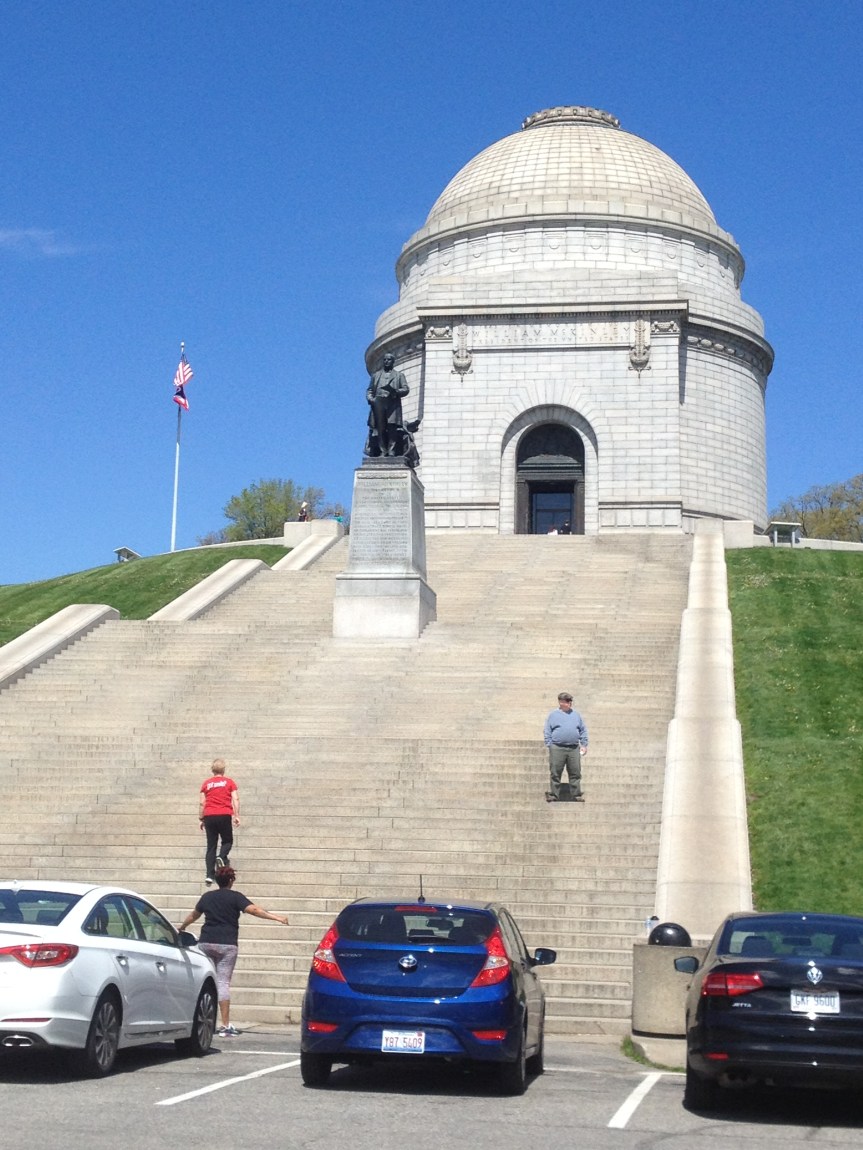
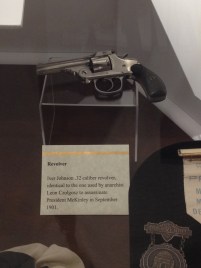
For those who are weak on their presidential history, McKinley was the 25th President, and was shot six months into his second term, in 1901, by Leon Czolgosz, an anarchist (he didn’t think we should have any sort of government); McKinley is probably best remembered for, by the simple act of dying, making way for Teddy Roosevelt — which might not be fair to McKinley who was actually a fairly effective president (depending on how you feel about US expansionism/colonialism), but is none the less an accurate statement.

IMG_8074

As mausoleums  go, this is a pretty impressive one, and doubles as a popular place to work out, a phenomena that I seriously doubt the folks who designed and built it had in mind. While there I saw any number of ‘dressed to work out’ women and some men doing the steps. I even saw one class of orange clad 2nd graders assigned by their teacher to run up the stairs as a way of calming them down after a long bus ride, before entering the presidential library/museum portion of the memorial.


IMG_8084

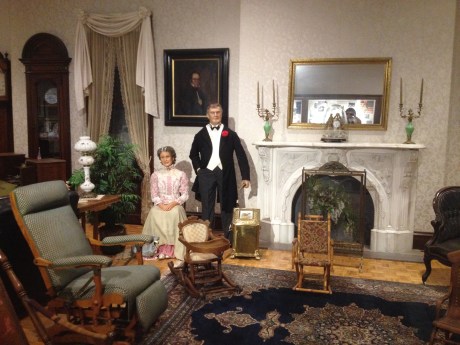
Next door to the mausoleum is a really impressive little museum (completed in 1964) that is most definitely worth a visit. It kind of reminds me of a miniature version of Chicago’s Museum of Science and Industry. There’a small planetarium (because of all the school kids I was lucky enough to see a light show on a week day), a gallery devoted to the McKinley’s that shows furniture and various items that belonged to the and includes an animatronic President so good that I’m thinking they may have gone to Disney for his production.

IMG_8105 IMG_8098

There is also a whole wing dedicated to recreating a small town of McKinley’s era, with various shops, a post office, a doctor’s office, a dentist, etc., which is in and of itself worth the price of admission, etc., and that’s just on the top floor. I consider this to be part of the living museum trend, even though none of the ‘buildings’ are saved historic ones.


The basement is devoted to dinosaurs, but I barely got to see it. There is in fact way more thing to do that I made time for because I wanted to make sure I was able to fit in a visit to the first ladies museum on the other side of town before it closed. If I go to Canton again, which I intend to, I will devote a whole afternoon to this museum.


Charles H. Coolidge Medal of Honor Heritage Center; Chattanooga, TN

Museum dedicated to a medal. Currently located in a mall, but expected to move back to central Chattanooga soon.

IMG_7358

This is a tiny but very interesting museum that should not be confused with the larger Museum that is being built in Mt. Pleasant, South Carolina. I had a published pamphlet advertising it, and had called previously to confirm that was open and that it was really located in the mall… all of which turned out to be a very good thing, because if I had needed to rely solely on folks who worked in the mall to direct me, I’d have left feeling lost and annoyed; as it was, once I was at the mall I quite literally had to ask seven different staff members for directions before I found one who even know it was there and could direct me (and none of her fellow workers had any idea about it and laughed when they learned it was there and had been there for a while; One even realized she’d walked by it daily, and never saw it).

Like I said previously, the first medal of Honor was given for the civil war campaign called “The Great Locomotive Chase” (which, not surprisingly, Disney made a 1956 movie about) that occurred during the Civil war and ended in a tunnel near Dalton Georgia, where some union soldiers tried to steal a confederate train, take it back up north to Chattanooga, and do as much damage to the strategic rail line as possible along the way, hence the existence of this museum in the Chattanooga area. This museum used to be downtown and according to the docent, intends to move back there soon. The guy running it was a young war-geek guy, maybe 27 years old (where most docents are retired elderly people) who seemed to know a heck of a lot about every aspect of the museum. From what I could tell this was sort of a dream job for him, where he gets paid to sit around all day reading every book he could get his hand on about medal of honor winners, and shares that knowledge with visitors.

It’s a small place, but it’s packed to the gills with information about the medal itself, it’s history, and placards describing some of the more outstanding individuals who had won the medals. Among the ones that peaked my interest was the only medal of honor ever given to a woman, Dr. Mary E. Walker, which — according to the docent, was then taken away from her because women weren’t in the military (only she refused to stop wearing it), but the right was later returned to her posthumously. She had been a volunteer Union army surgeon who had been taken captive when she cross enemy lines in order to help wounded civilians, and declared a spy (probably because they couldn’t believe she was a doctor)

Among their fairly large selection of original medals and historic artifacts, was special cash brought back by WWII soldiers that had been created by the nazis for Jews to use within the concentration camp of Theresienstadt, which I’m not sure I ever saw before. For those who don’t know, Theresienstadt was a mediveil walled city which the Nazi’s had converted into a Ghetto for Jews, and as something of a waypoint to the extermination camps. Mostly however, they also used it for propaganda purposes, making movies about it claiming it to the world that it was an example of many Jewish resettlement areas, and an area they allowed the red cross to visit to prove the lie.

IMG_7366

And of course, we can’t forget everyone’s favorite Medal of Honor Winner, Audie L. Murphy who initially tried to enlist at 17, then won the medal of honor for valor he showed in battle when only 19, and then became the most decorated hero of WWII (33 different awards) when he finally left the military at age 21; and if that weren’t enough, he then went on to be a fairly successful hollywood star who even performed in a few movies that went on to become classics, including as himself in “To hell and back” his own life story.

IMG_7367

Georgia Museum of Agriculture and Historic Village; Tifton, GA

Worth a full day stop in Tifton, Georgia (whose only other advantage is affordable hotels), when driving via Interstate 75 to or from Florida. I dedicated four hours to it, and didn’t come close to seeing it all.

I found a very good 15min film on Youtube about the how the museum is integrated with the Georgia University of agriculture, and supported by the state. It also includes interviews with the various docents and the crafts that they teach at the site.

While there is an indoor museum of agriculture at the back, the real draw here, which should enthrall kids and parents alike, is the historic village; it is probably the most complete example of what I like to call living museums that I’ve seen so far, complete with docents giving demonstrations.

When I first arrived at the attraction I was a little confused. There are essentially two entrances, the Georgia Museum of Agriculture, which is visible from Interstate 75, and the country store. When driving there, you first pass the country store (which seems to just be a store with a normal sized parking lot) and then there’s a driveway that seems to be beckoning you towards the Georgia Museum where there is a massive parking lot. So I drove to the Museum, parked, walked in, and was told by two historically garbed elderly women sitting at the entrance table there (knitting, no really, knitting), that in fact I was supposed to go to the country store first.

The Georgia Museum of Agriculture and Historic Village is actually a very good example of this “living museums” trend: they have brought in different buildings, historic ones from around the area and created a town of 1800s technology. To enter the town you ride a real steam locomotive train (the day I went the “conductor” looked to be about 8 years old),

and then are let off at the train depot (fully recreated) and left there to explore the surrounding homes, farms (with animals and fields), and often elderly docents in historic costumes/garb, who will walk you through the homes and explain whose home it was, where it was moved from, aspects of the histories of the families that owned the home, and how they ‘functioned’ with the 1800’s technology.

The old school (the original 1895 building)


There is also a working wood-mill, and a working gristmill, etc., where again docents will talk about the history of the building, and do demonstrations of the function the building fulfilled, usually allowing young kids to be involved in the safest jobs.

In the Mill, the docent also pointed out to us a board in the building where locals had sketched outlines of their most recent catches, comparing sizes, listing dates, etc.

IMG_6969

Then there was also a downtown area of the village where there were stables, complete with the local masonic lodge (with all its secrets revealed, and explained)

and a doctor’s office, with all the doctor’s tools of the day:

They even had the historic home of the riches man in town, complete with a lot of the family antiques — this home is locked up, and wait outside on the porch for the docent to bring you in for a tour.

I was there during an off day, but still about 1/5 of the buildings had docents in them. Apparently if you come during their scheduled activity days, weekends, etc., all the building will have docents who are either explaining, or giving trade and cooking demonstrations of lost skills.