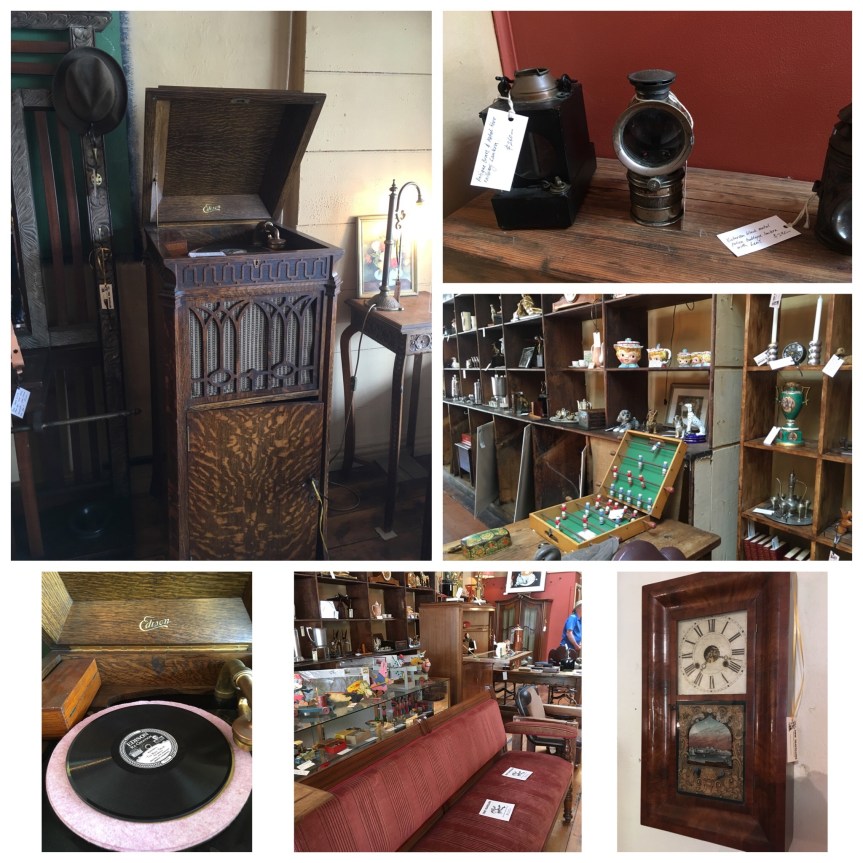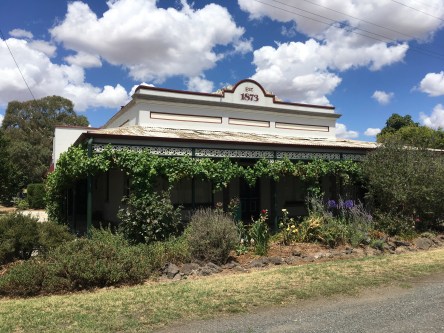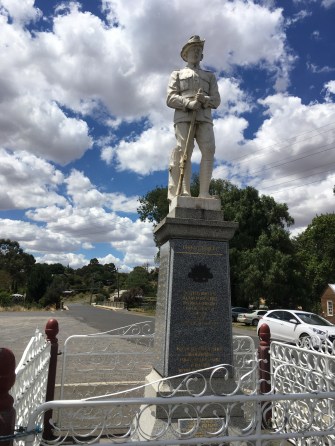
Pony Express Station Museum & Gift Shop: Gothenburg, Nebraska

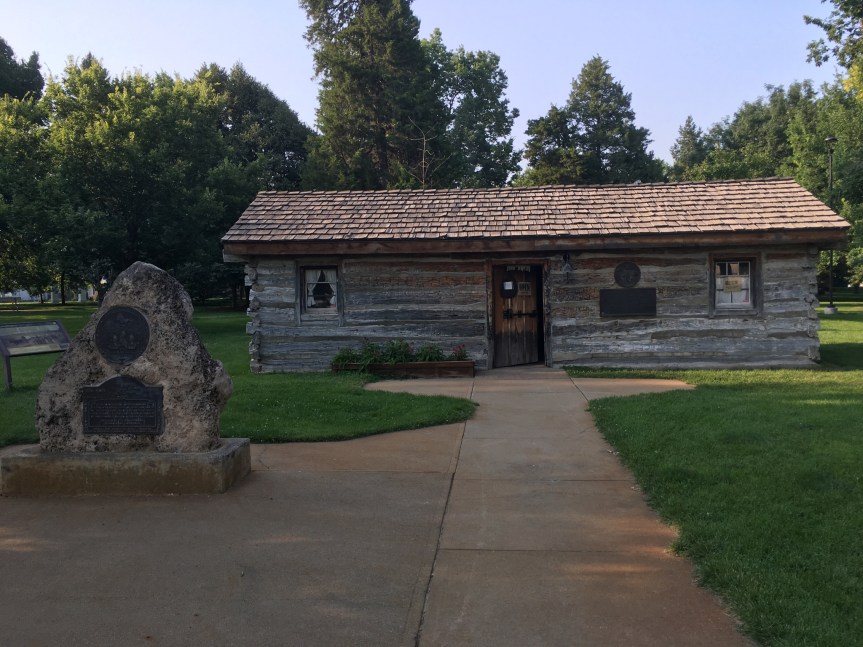
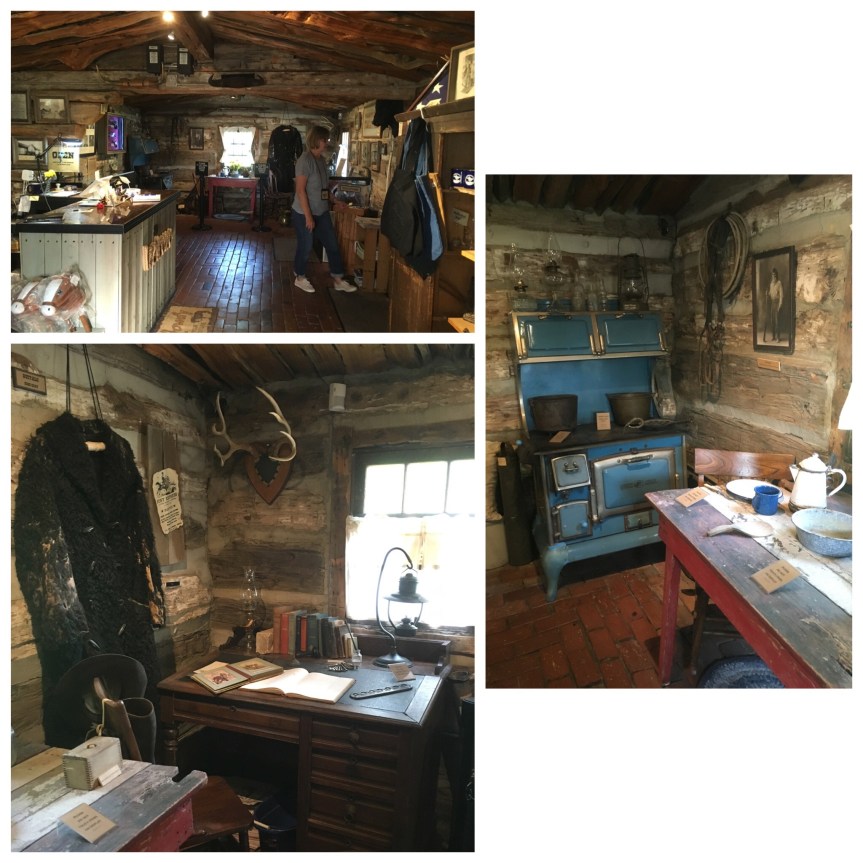
Located in Gothenburg Nebraska is a historic Pony Express Station (well, as it turned out… the walls are original, the roof is new) serving as a museum and gift store. Now granted, it’s not in its original location, historically, it was on the far side of town [they moved it to a park in the middle of town because that was better for business] …. and most of crucial importance, it has no bathroom… But, that said if what you’re looking for is a decent excuse to stretch your legs while road-tripping down I-80, this is it.
IMG_4037

IMG_2306

When I first arrived the exterior of the place met my expectations for a small museum dedicated to the historically important, if short-lived, Pony express

IMG_4031

IMG_3986

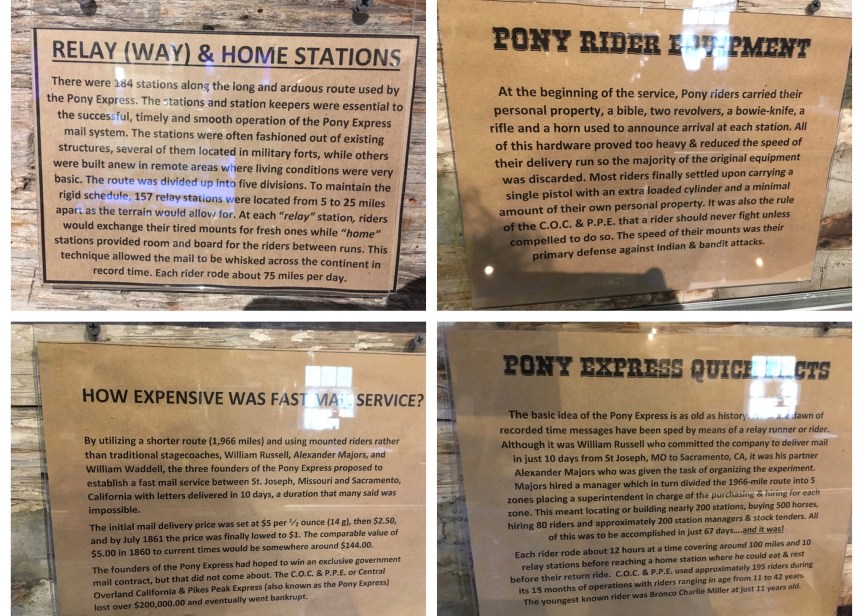
Most people don’t realize this but while it’s a favored features of Hollywood Westerns, the Pony express only was in service for about 18 months, partially because only the government or insanely rich people could really afford it…
IMG_2307

“the cost to send a 1ounce (14 g) letter was $5.00[32] at the beginning, (about $130.00 to today’s standards). By the end period of the Pony Express, the price had dropped to $1.00 per ​12 ounce but even that was considered expensive (equivalent to $27 in 2017[33]) just to mail one letter.”
— from Wikipedia, but also told to me by the docent…  and the informational signs they had attached to the walls…
fullsizeoutput_4418

And as I already knew, about 18 month after it began working the first electrical telegraph wires had been set along the same distance, GREATLY reducing the transit time for a message from 10 days by pony express rider

IMG_2305

Who had to ride the whole route on horse back…. albeit from station to station, each time switching to fresh horses

IMG_4012

IMG_4003
the messages were locked into the “Mochila” which were designed to sit over the horse’s saddle, and could then be quickly switched from saddle to saddle, rather than on the person of the riders themselves

to the amount of time it took to send out all the dots and dashes of the message.

IMG_4014

IMG_4021

That said, on closer inspections, mostly what it is, is a gift shop — with over 50% of the space dedicated to sales, and just enough museum pieces thrown in to justify calling it a museum… that and the woman who works there knows just enough about the pony express to give you a short history of it. To be honest was expecting a bit more than this

IMG_4022
EVERYTHING on this side of the building, which is quite tiny anyways, is gift shop

IMG_2303

Boys Town Nebraska & World’s Biggest Ball of Stamps

Boys Town (now more a Catholic organization for troubled youth than an orphanage) while a part of Hollywood movie history is also a very real place, and it is also a National historic Landmark (so designated in 1985)

fullsizeoutput_43f2.jpeg

(got to love the above pedestal in their gift shop) and is located in Douglas CountyNebraska … think Omaha

IMG_3906

And, for those who have only know of this place because of the beloved movie classic of the same name starring Spencer Tracy and Mickey Rooney, it is worth a one hour visit …

fullsizeoutput_43ef

Technically, it is still its own town (suburb — according to Wikipedia there are two families that live there, in addition to the six ‘households’ where the boys live… making up a total population of around 745 people, according to the 2010 census), but rather than being located near Omaha Nebraska, as it was when founded, it is now pretty much utterly engulfed by it.  (Just below Green Meadows, and west of the Sheraton)

boys town

Like most Americans my age my knowledge of Boys Town Nebraska has till now been based ENTIRELY on the 1938 Hollywood biographical film. Apparently, the town had been called the “City of Little Men” before the movie came out — I vaguely remember it being described as such by the Flanagan character in the movie, but Hollywood had effectively ingrained the name Boys Town in the world’s consciousness, along with the sort of image branding money just can’t buy — so smartly, Flanagan changed its name.

IMG_3936
Lou Gehrig, Father Flanagan, & Babe Ruth

That said, what I knew about Father Flanagan, was entirely based upon the movie. He was a catholic priest who had founded a different sort of orphanage; in effect he had pioneered and developed a completely different paradigm that emphasized teaching children to take care of themselves and each other, rather than the traditional model of adults taking care of children… and my image of the man was indelibly formed by the Spencer Tracy’s performance. That said, I have to admit that because of recent events regarding the catholic church, and some of what I’ve learned on my previous travels (please click the link), that is no longer the case…

IMG_3904
Photo out my car window

My connection to the place, via my having seen the movie repeatedly while growing up [note: back before cable TV, when the TV world consisted of maybe 10 channels total, if you were lucky… it was one of popular movies that was in the public domain that local TV stations could run repeatedly, at very little cost to themselves], and as such, I was actually excited to see the place. In my mind’s eye it was going to be that same town from the movie, with a fire station and barber shop — all run by boys of varying ages… with very few adults to be seen… but no such luck.

IMG_3905.JPG

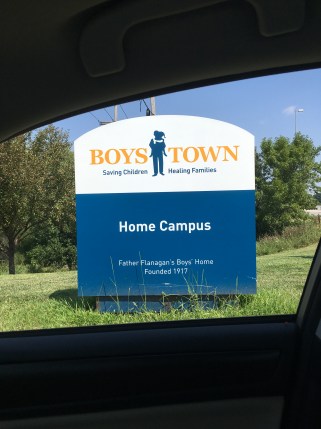
A “campus” as described in the sign above, is for the most part what I found, indistinguishable from any other ‘campus’ educational or business. Now granted, on the day I arrived the weather was both blistering hot AND humid, of the sort the drains your energy and sours your mood, and that might have been part of it. But my expectations were SO dashed upon my arrival… I didn’t even find anything resembling a ‘downtown’ with any businesses run by the boys,

IMG_3910

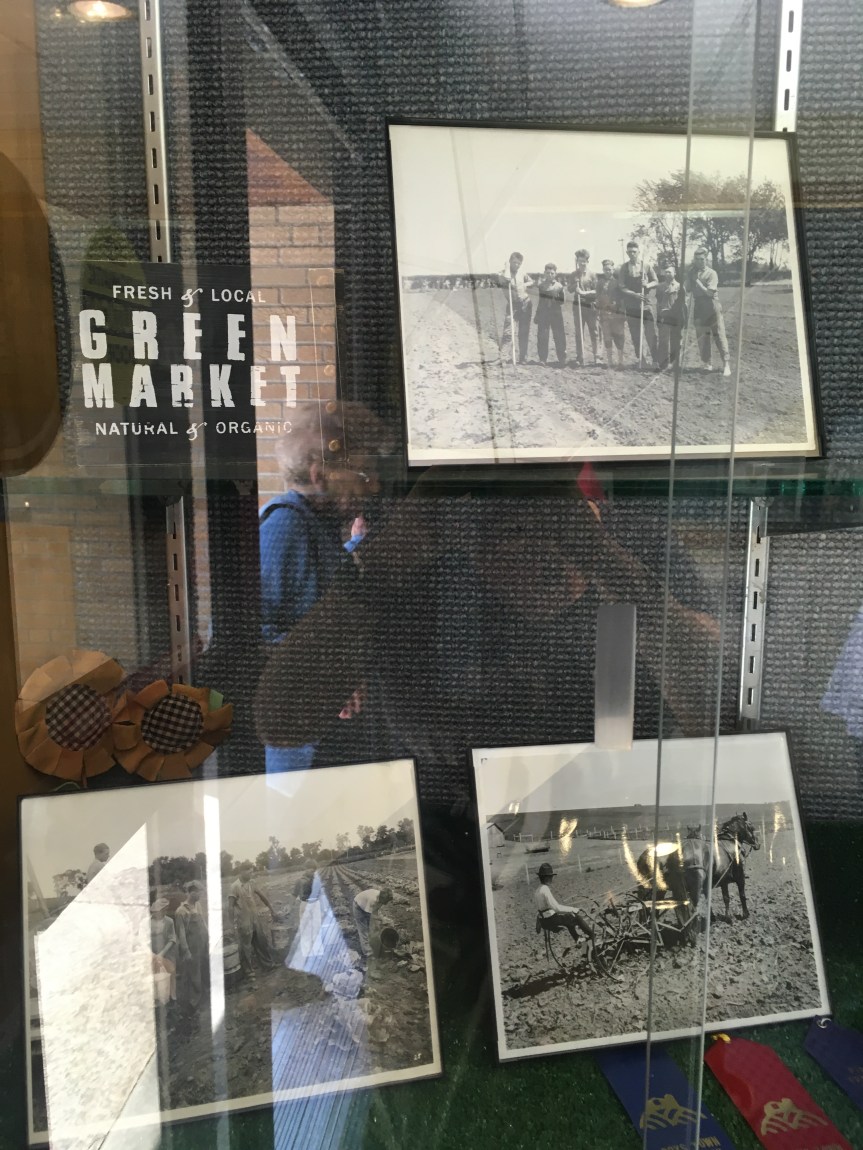
or even of them growing their own food (other than in the above historic photos, and these I found on line)… and the reality of what it had become kind of killed my excitement (well that and the heat).

IMG_2195

When you arrive there’s a “visitor” center that you’re directed to. From its gift shop you can get the map of the property, if you want to try touring it yourself. I had timed it wrong to do the tour, arriving at around noon, and the next one wasn’t until 2 o’clock. The woman at the gift counter, where you sign up for it said “if you don’t do the tour they might not let you into all of the buildings. We don’t necessarily have a docent standing there ready” Not even for Flanagan’s home, which is listed as a tourist location of note, on every website I looked at before arriving. (I didn’t have enough time to hang around for an extra hour to wait for it— I was cross country driving and had to be San Francisco by a set date)

IMG_3945
The gift shop has no shortage of branded items

However, she told me that if I went right now into the cafeteria (also in the visitor’s center) — it’s open to staff and visitors and apparently is very popular with locals —

IMG_2197
It’s easy to identify the boys town boys, they are the ones wearing button-down shirts and ties
IMG_3938
These local ladies play mahjong here every Tues and Fri 

I had been lucky enough to arrive to witness the swearing-in for five new boys to become citizens of the town (this link is to a page with a video where you see a little video about what that means). During the event I learned that all of the boys being sworn in had already been here between a few weeks in a few months before taking the oath.

IMG_2198
upper left, the boys to be sworn in, and the priest… and the ceremony

The priest began the event by sharing the history of the town with any visitors in the room (which included family members of the boys, as well locals who come here regularly…  The boys then all got up, took an oath, and then each talked about three things about themselves they want to work on while they are here, the thing that had been hardest for them since they arrived, and one other thing I’m forgetting what it was.

That said, I have to admit that as this was happening some part of me was shocked to realize how many priests were involved in the this program (some part of my brain hadn’t really made the connection that this was in fact a Catholic charity), and I found myself wondering to what extent if any the recent sexual molestation of children (with boys from troubled homes being at the top of the victim list) had touched Boys Town…  Only to find this,  and then THIS  …. which sort of soured my whole experience of what was happening…

IMG_2196I didn’t realize that the song, “he ain’t heavy he’s my brother” was actually inspired by a quote from here… that was also used in the movie,

Apparently, the one of the towns older boys was carrying around Howard, who was handicapped by polio, and abandoned by his mother (read the description in the picture above) … even though he wasn’t so small anymore and father Flanagan had asked him “isn’t he getting a bit heavy for you?” and the boy had answered, “He ain’t heavy, Father… he’s m’brother” and this image of what the town taught boys about their responsiblity to each other became the symbol for the town.


So, I wasn’t all that miffed about missing the tour or seeing Flanagan’s home, as the town wasn’t what I was expecting, and if it wasn’t going to be that, then the only other thing I wanted to see while there was THIS, which is located in the Visitor’s center right behind the gift store:
IMG_2218
I got the docent/woman working the gift shop to repeat her spiel into my phone, and let speech to text do it’s thing for me: “OK Father Flanagan started boys town in 1917 and was a stamp collector… he died in 1948 so this was even after his death in ’51 … anyway to honor him the boys started wrapping used stamps around a golf ball… so if you cut this huge ball in half you’d see it’s all stamps to the golf ball center. It weighs 600 pounds and it’s made up of 4.6 million stamps and it’s 32 inches in diameter …. they did it in less than two years” IMG_2219The wall immediately behind the ball is also impressive, it’s a floor to ceiling mural also made up entirely of used stamps.

IMG_2220

And then there’s a whole little museum area dedicated to the hobby of stamp collecting:

IMG_2222

And possibly because of his fame, and the fact that he was stamp collector himself, this happened:

IMG_3952

And apparently someone at boys town was collecting baseball cards, because there’s a room dedicated to that too

IMG_2221

On the way out of the building to my car I noticed this, they have peppers as decorative plants, which I thought was kind of brilliant.

IMG_3956

National Museum of the U.S. Air Force: Dayton, OH

You wouldn’t think one of the best FREE museums in the world would be in nowhere Ohio, but you’d be wrong. If you’re even marginally interested in flight, technology, engines or just history, The National Museum of the U.S. Air Force is amazing. I enjoy this place so much that this was my second time coming here, the first time was by myself in September of 2009, the second was July 23, 2018 with my travel buddy, Mik.  Let me remind you that the Wright brothers, who are the ones usually given the credit (cough) for having invented the airplane, did so in Dayton, Ohio. And, that is probably the reason why this is located in the Wright-Patternson Air Force Base.  (That and the fact that it IS the middle of nowhere means land prices are very low.) Be prepared to devote a few days to it (I suggest a minimum of three)… and like the Smithsonian, it’s FREE (your tax dollars at work).

IMG_3161.JPG
two photos on left are 2009, right is 2018

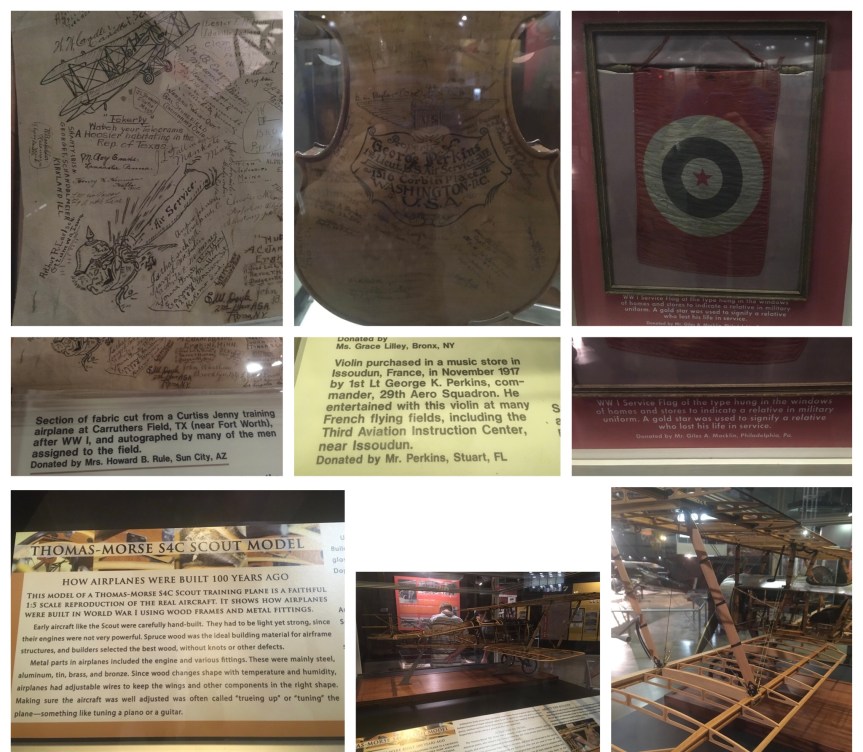
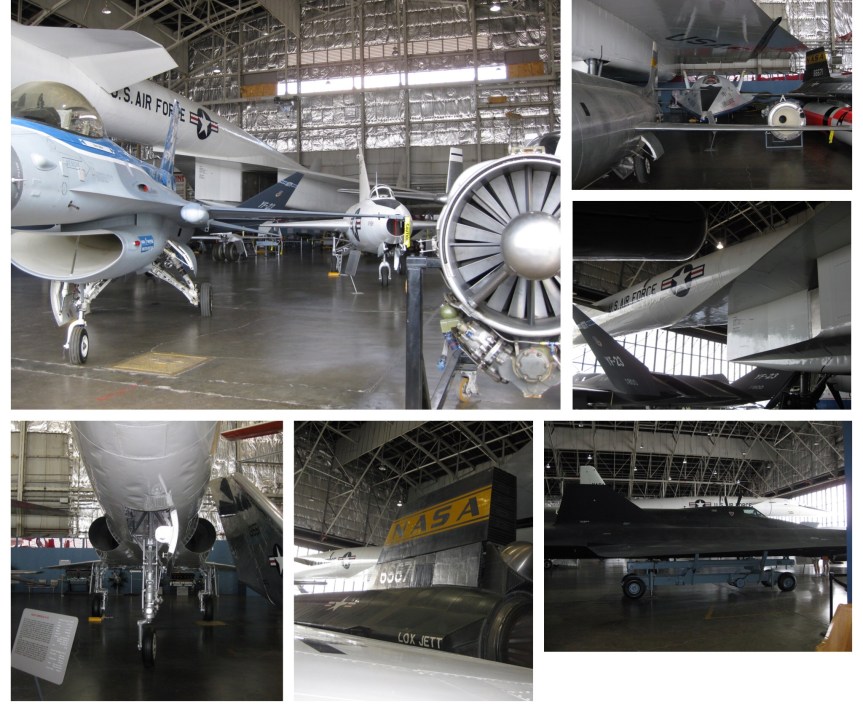
Also, having been to both museums twice, far as I’m concerned the Smithsonian’s Air and Space in D.C., can’t really compete; it can’t, it hasn’t the space.IMG_2809.JPGNote the photo in the 1903 photo bottom right (above) is the same airplane in the photos below, that’s one of the great things about this museum, they don’t just have photos of historic models, they have the actual airplanes (and according to their website they’re all kept as much as possible in perfect ‘airworthy’ condition. fullsizeoutput_424e.jpegThe Air Force Museum in Dayton is HUGE; it has close to 900K square feet of hangar space within which its planes are displayed … according to Wikipedia it’s the largest military aviation museum in the world… it has to be, they currently have around 360 different aircraft and missiles on display, including most of the Air Force One‘s not in usage, and the number will only grow. What I tell my friends is if it historically relevent, belongs to the U.S. Air Force, and the Smithsonian doesn’t have, it’s probably in Dayton.IMG_2812In addition, it is a REALLY well curated museum, that tells a very easy to follow story of the history of flight (as it pertains to the military), and does so in a way that keeps you engaged and willing to come back for more …. and they have actual examples of EVERY plane they mention, full size sitting right in front of you.fullsizeoutput_4252.jpegThis is one of my very favorite museums anywhere… and I’ve been to a lot of museums. I liked it so much I’ve been to it twice. I feel that it has something for everyone, it’s about history, war, technology, etc… As an example, I had been trying to convince my travel buddy to come here with me, but he kept saying he had little to no interest in flight technology…. as it turns out however he’s a big fan of engines, and for almost every type of innovative airplane they would have a display showing the engine it used (so he was very happy).


IMG_2814In addition to all of the engines, which made my friend happy… the museum includes all sorts of memorabilia from flying squadrons, to keep the interest of folks who aren’t interested in technology at all, but might enjoy human interest details.IMG_2815.JPG

fullsizeoutput_4253.jpegIMG_2816

There’s a hallway of the museum devoted to Dayton locals who survived the Holocaust

IMG_2819

A different hallway devoted to WWII airforce art, like the bomber jackets, and the designs on airplanes (giving them personalities, and keeping track of how many bomber raids they went on)

IMG_2820A hallway devoted to the Berlin Airlift after WWII, when the Russians tried to strangle hold part of the city. IMG_2818IMG_2560

The first time I came was in 2009, when for family reasons I found myself stuck in Cincinnati for a few days. My brother had been to this museum once before, and STRONGLY suggested that I rent a car, head North, and go to Dayton once I got bored with what Cincinnati had to offer. I ended up coming here three days in a row.

fullsizeoutput_425c.jpeg

IMG_2817

I then returned in 2018 with my travel buddy, because I was coming from Chicago, had a spare week to fill before heading off to Pennsylvania, and as a fellow geek I felt he’d really enjoy this place (and would never have come here on his own). That said, I the more I see of Dayton the more I think that I would happily came back to here for a third extended stay (one of my one month trips) in order to take the place in, in full, at my leisure.

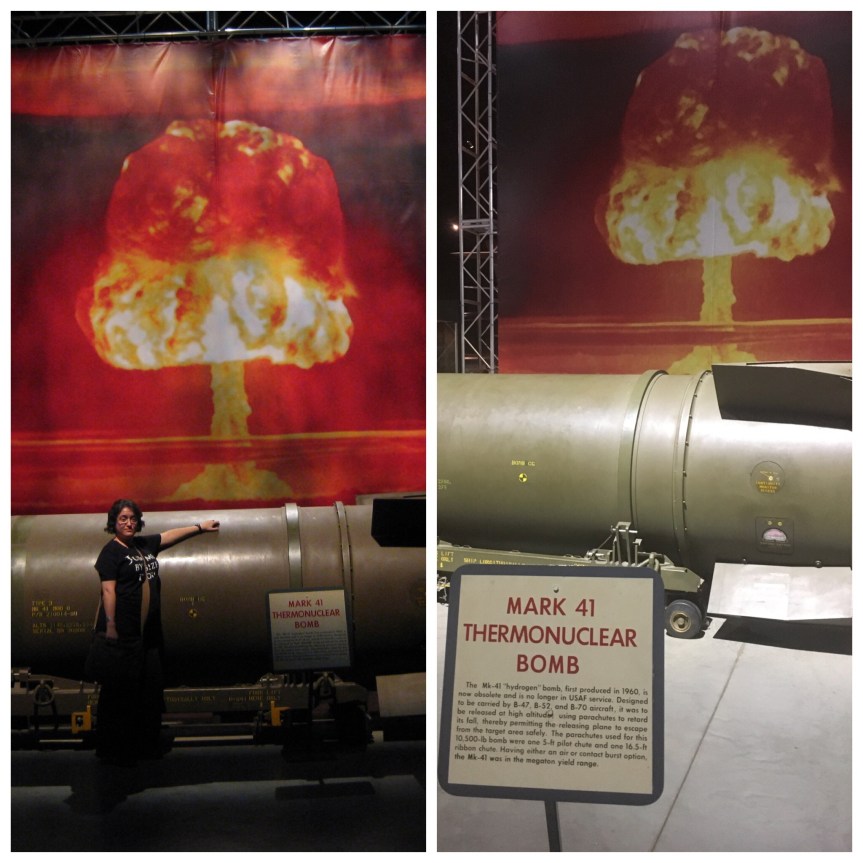
For the two pictures above of the thermonuclear bomb, my 2009 visit is on the left, while my recent 2018 visit on the right…. The major change seemed to be the placement of the Mark 41 sign (not a huge change)

IMG_2691

The picture above is 2018, while the parallel image from 2009 is below (top left image) … the rest are all from 2018… not much has changed in this exhibit (I image moving intercontinental ballistic missiles –ICBMs– isn’t all that easy to do)

IMG_2807

Then and now, one of my favorite sections of the museum is the collection of Airforce One airplanes. The first time I went this was located at the very back of the museum, where there were normal quick construction airforce hangers (the sort the military can put up in a few days during war-time rather than actual buildings) that were, as such, FULL of natural light… (something that is NOT considered a good from an archival point of view, since harsh sunlight can cause things to fade over time) that were absolutely crammed full of the newest of the high-tech airplanes (that weren’t secrets anymore) that they had to display. I was told by a docent that they had plans to build a fourth building to house them in the near future (by my 2018 it had been done)

fullsizeoutput_4267.jpeg
2009, crammed together planes in a hangar

Behind these most recent high-tech airplanes they had just sort of lined up next to each other, the Airforce ones planes.

fullsizeoutput_4266

Where by 2019 they were in a darkened structure that had to lit artificially

IMG_2728.jpg

The first plane I went into was the plane made especially for transporting Franklin D. Roosevelt (1933-1945), who as we all know was paralyzed.

IMG_2825


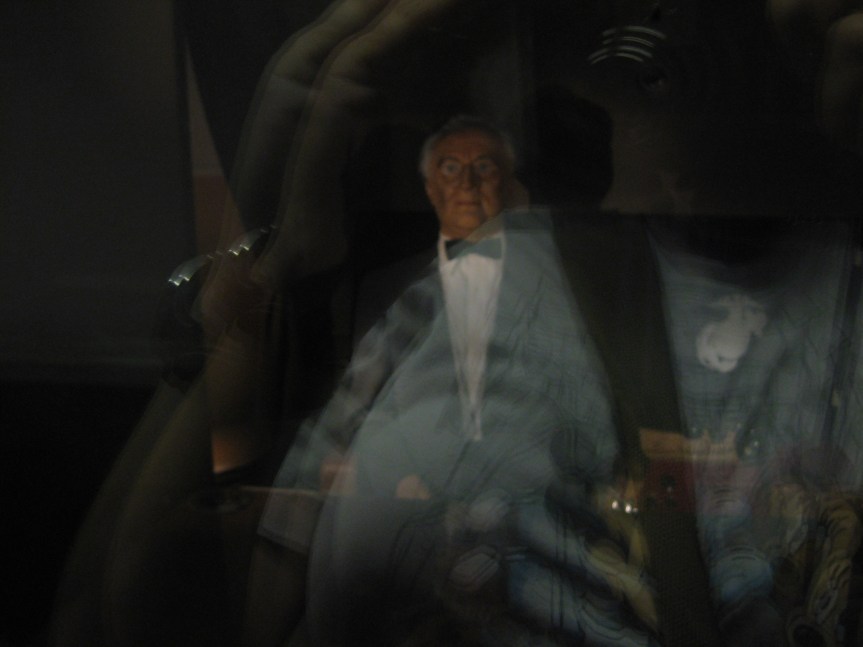
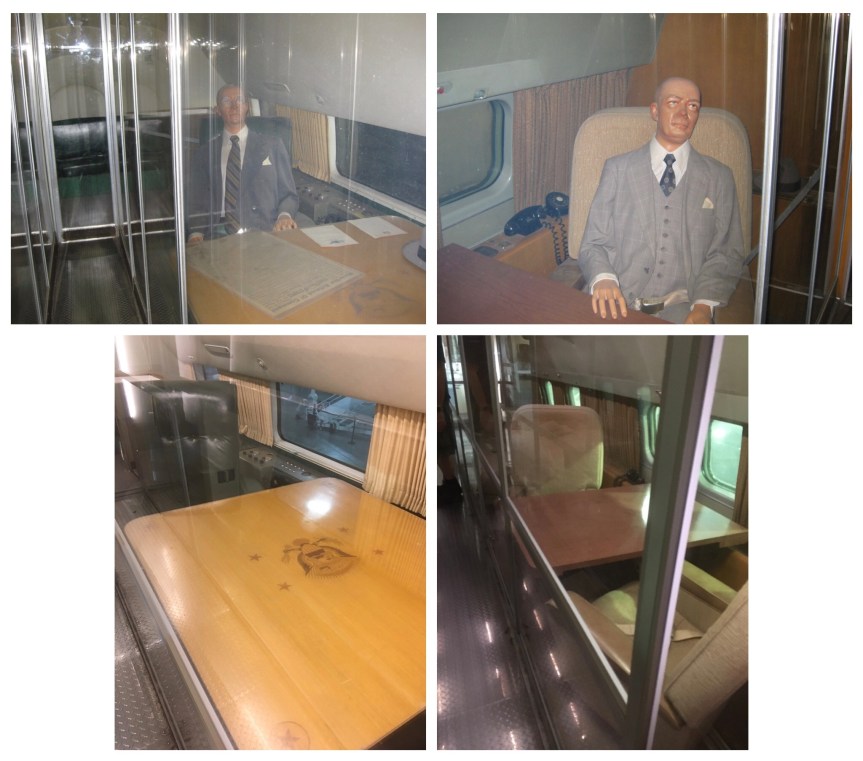
Between 2009 and 2018, I found two major differences in the first Airforce One plane display (the one Roosevelt flew in). Firstly, in the President’s office part of the plane, in 2009 they had a Roosevelt manikin sitting in his office

IMG_1860

while in 2018, when I visited the same plane I found it had been removed. Note the white decoration on the drapes for evidence that it’s in fact the same space (sorry for the lousy 2009 picture, my digital camera then, and it was a camera — not a camera in a phone, was nowhere near as good as the camera currently in my 2016 iPhone SE)

IMG_2826Additionally, at the back of the plane, where the elevator was located, in the 2009 version a wheelchair was located in the elevator, which included a sign explaining the use of the elevator…. (top two photos below)

fullsizeoutput_4248

But when I returned in 2018, the elevator well was empty… and I didn’t spot the wheelchair till AFTER I’d already left the plane, and spotted it sitting on the ground in FRONT of the elevator’s cage.

The next plane was flown by both Harry S. Truman (1945-1953) and in the very beginning of the presidency of Dwight D. Eisenhower (1953-1961)

IMG_2830

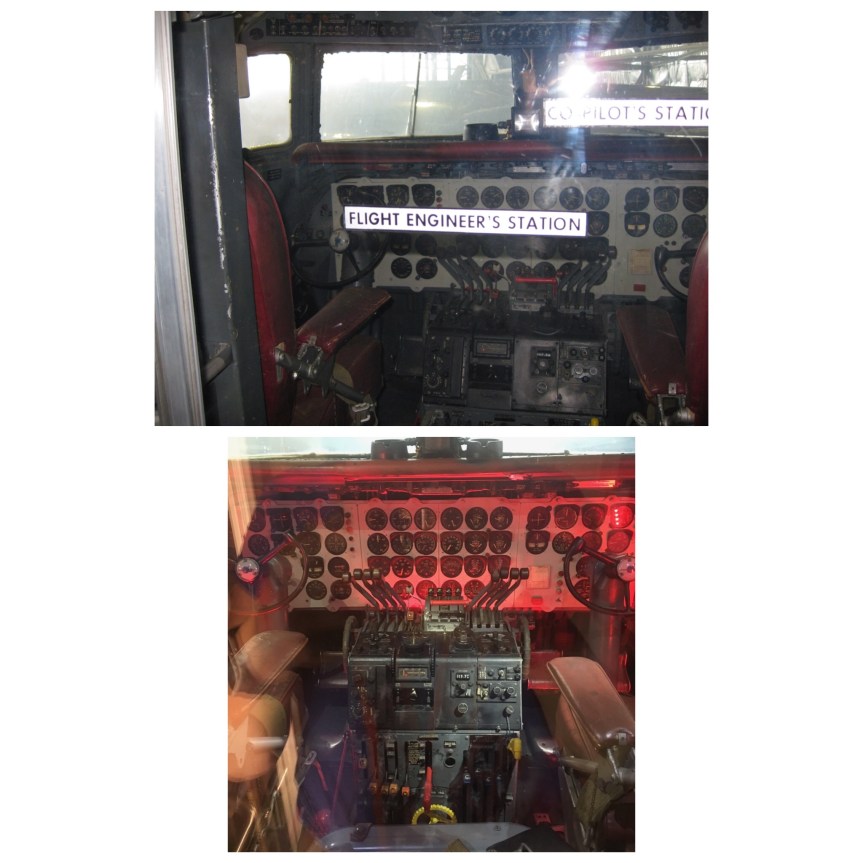
in this one I found a MAJOR change… firstly, in 2009 the cockpit came with tags attached to the plexiglass explaining who was sitting where

IMG_2827.JPG

Which had been removed by the time of my 2018 visit… but LOOK AGAIN, they had refurbished the chairs and changed the color of the leather???? From a historical standpoint, WTF????

fullsizeoutput_4265

ALSO, in 2009 there were mannequins seated in the plane while in 2018 they were gone. (Note that Truman was at a special presidential desk while Eisenhower wasn’t) During Eisenhower’s tenure, he also got a new plane…a Lockheed VC-121E

IMG_2821

IMG_2822

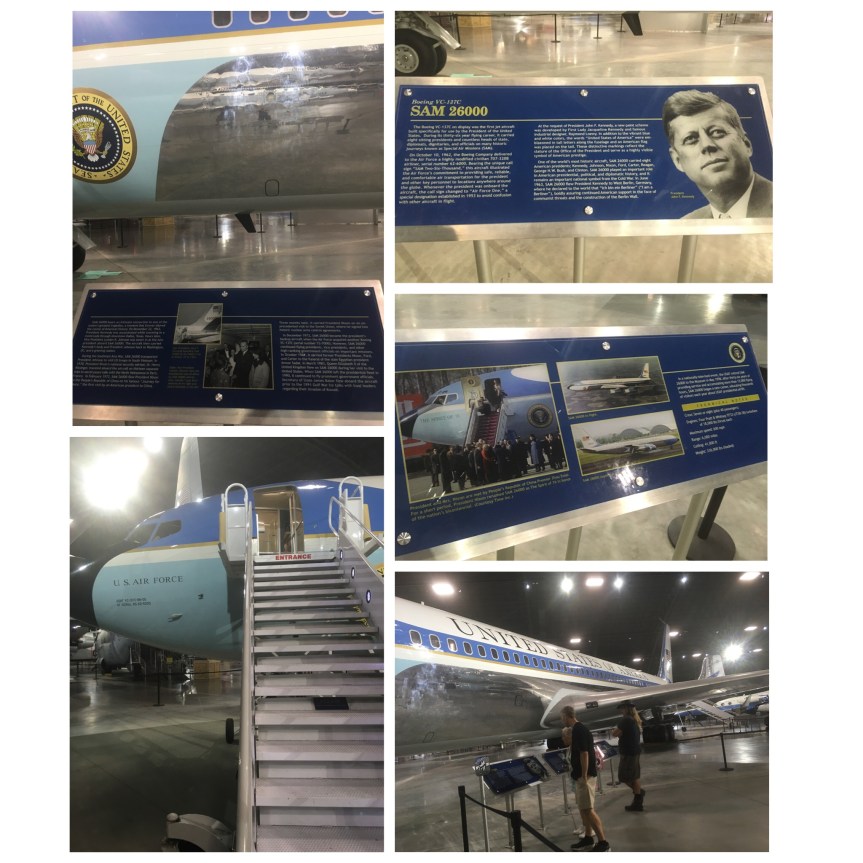
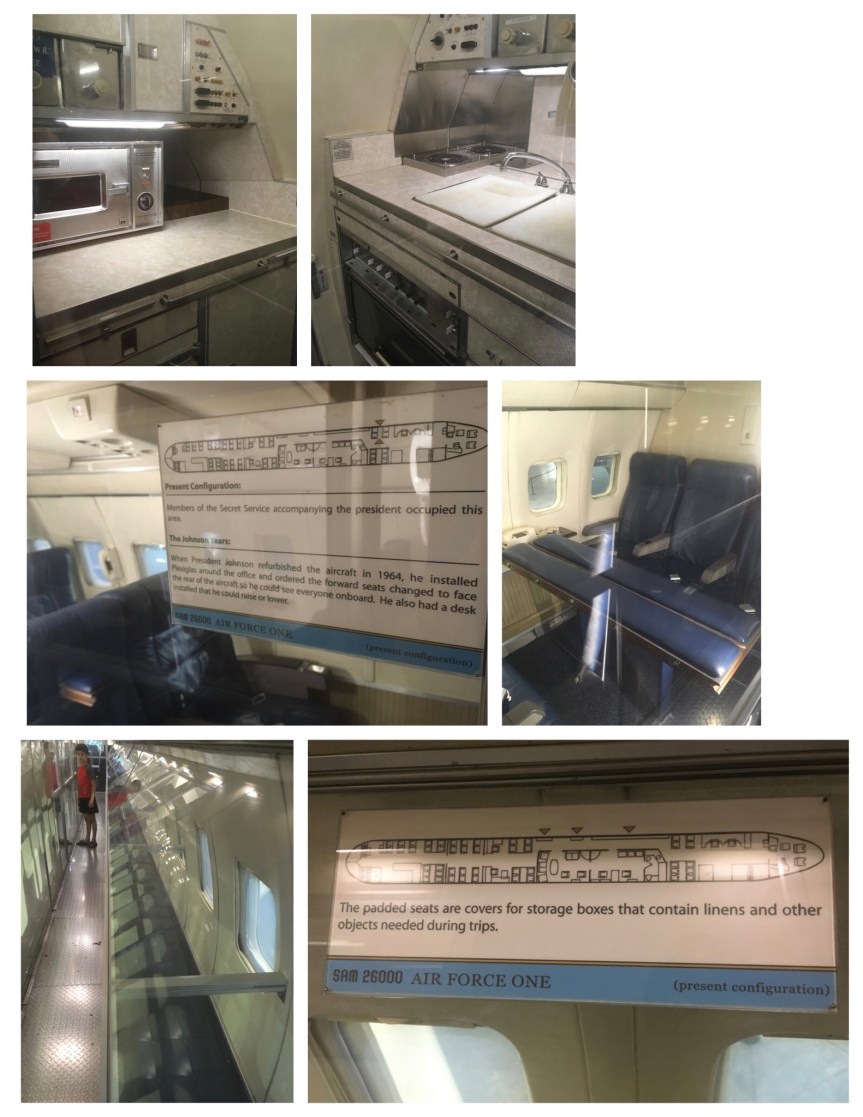
The final airplane, a Boeing VC-137C, was flown the longest of all the Airforce One planes, for almost 30 years before it was finally replaced, from the Time of John F. Kennedy (1961-1963) all the way through Bill Clinton (1993-2001)

IMG_3117

In this plane I was unable to spot any differences between 2009 and 2018

IMG_3119

fullsizeoutput_4249IMG_3121

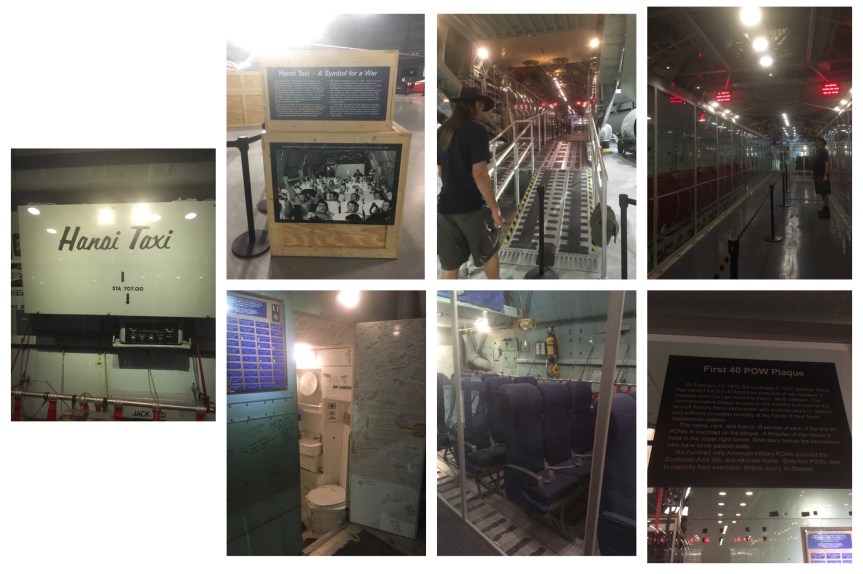
By the time we were done with the presidential planes it was almost time to go (the place closes at 5pm) but we managed to fit in one last plane, one of the transport planes that took soldiers to Vietnam, and nicknamed by them as the “Hanoi Taxi”

fullsizeoutput_4247

Oh, and I’m adding one last photo, this was from 2009: I really wanted to do this again in 2018 but we didn’t happen to find it… that said we were only in the museum for about 5 hours… nowhere near enough to do it justice and see everything

IMG_1915.jpg
Me in 2009, you stood behind it and put your head up into the helmet

James Whitcomb Riley, Boyhood Home & Museum; Greenfield, Indiana

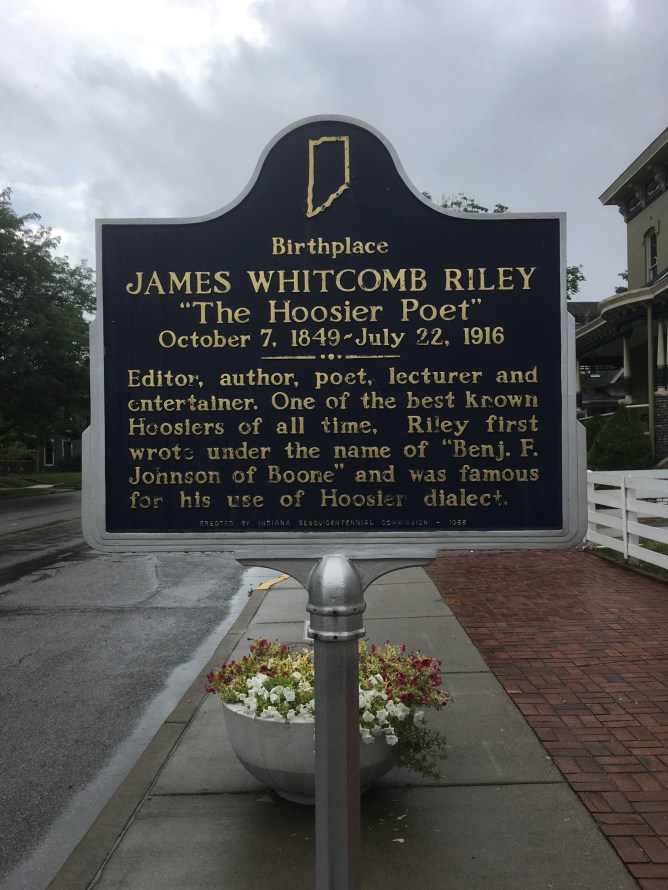
I LOVED this place! Sitting right on the National road (Also called the Cumberland Road, or route 40), is the boyhood home of one America’s great poets, James Whitcomb Riley, sometimes known as the Hoosier poet, because of his connection to the Hoosier state (Indiana). Now I admit a personal connection because his most famous poem, Little Orphant Annie, was one of the few poems I ever memorized (for school), and as Riley is one of those writers who wrote what he knew, all of his poems that stem from his childhood experiences lovingly reference specific details of this home.

IMG_2476.jpg

With respect to his poetry: for those who don’t already know this, Riley and Mark Twain were both part of the same movement in American literature to elevate and appreciate the “authentic” phonetic voice of the American people when writing, rather than to use the “Formal” voice of educated society. Hence the “Orphant” is NOT a typo, it’s how the word orphaned was pronounced in 1885 by the average person then living in the Hoosier state (Indiana), and this technique is used through the whole poem (most of his poems actually) so that if you carefully read it OUT-LOUT, but AS WRITTEN you can’t but help but switch into something approximating the accent intended  (which is different from how Twain had Tom or Huckleberry sound, as the accents in the deep south were different).

Little Orphant Annie [first stanza only]
Little Orphant Annie’s come to our house to stay,
An’ wash the cups an’ saucers up, an’ brush the crumbs away,
An’ shoo the chickens off the porch, an’ dust the hearth, an’ sweep,
An’ make the fire, an’ bake the bread, an’ earn her board-an’-keep;
An’ all us other children, when the supper-things is done,
We set around the kitchen fire an’ has the mostest fun
A-list’nin’ to the witch-tales ‘at Annie tells about,
An’ the Gobble-uns ‘at gits you

Ef you

Don’t

Watch

Out!

To this day I have an image indelibly marked into my brain as my grade school English teacher stood before the class and recited Little Orphant Annie to us, using a completely different accent than she normal spoke in… and then assigned for us to memorize it so that we could each recite it in class the following week. I LOVED that poem and can (pretty much) still do a decent job of recalling it to this day (so that the fact that the docent was reciting various stanzas of the poem, as she took us through the house, made it doubly meaningful for me).

One of the things to be aware of before heading here is that the museum building closes at 4pm, and the last tour of his childhood home, which is the adjacent home  (and you are NOT allowed to enter it without the docent guiding you) begins at 3:15pm. I arrived at 3:25 (immediately after a group of three other women) only to be told, “we’re sorry, you’re too late for the tour, please come another day).

The museum, which is where you enter via an adjacent house (the main house is locked up at all time, except for when the docent allows you in) is sort of major non-event in my opinion, and NOT really worth visiting. It’s mostly a holding area should more people arrive at once than the available docent can safely escort through the home next door. It has a tiny little excuse for a gift shop located in a back room of the house alongside the offices for the docents. (It has some books on CD, magnets, a few toy type things — this one shelf is pretty much it)

IMG_2547.JPG

And then in the main “living room” are cases holding some first editions, and pictures of his life POST when he lived in his childhood home (his adult home was in Indianapolis).

IMG_2350
This is an original poem, written in Riley’s own hand that they have on display

The reason his photo (below to the right) was drapped in black was because I visited the house on July 21st, 2018, and we were approaching the 102nd anniversary of his death, July 22, 1916

IMG_2546
the Sofa below the screen belonged to Riley, and was known to be a favorite napping place

You then are led to sit on some folding chairs and watch this short video of just under nine minutes, the highlight of the museum, which I found was also available on YouTube (so you don’t need to drive there to see it)

while researching for this blog piece I found this 20 minute documentary about Riley was on YouTube, it seems to be made by a person who visited the house (apparently more than once), and contains parts of the tour as well as a load of biographical information about Riley

Before we sat down to watch the video I had loudly commented on how sad it was that we’d JUST missed the last tour window. How much I LOVED Riley, and had even memorized Orphant Annie in school… and then recited bits of it out loud… and how sad it was that I’d driven ALL the way from Chicago only to miss the window by 10 minutes, and how I’d probably not pass this way again. I think this had the desired effect because half way through the movie the manager of the place said that even though we’d arrived late, she’d stay a bit late and give us the tour herself (which she normally never does, as she’s not a docent).

[To paraphrase the movie Wall Street, “guilt, for lack of a better word, is good” — guilt & greed, they both work as motivators. Another great motivator would be sexual desire — somewhere in the Talmud there’s a comment that but for sex no man would build a house or plant a seed — but I dont’ think I was her type. (Joke)]

So she took us outside to the home next door and let us in. A very cool point that the docent comments on repeatedly is that Riley’s father,

IMG_2365
His father served in the Civil war, and came back suffering from serious PTSD which essentially broke him

who was a lawyer by profession (and had been the town mayor at one point), was a member of the historic fraternal organization of The Freemasons (so-called because of claims of connection to the Masons of the medieval periods who, because of their specialized knowledge of masonry, were alone of the working classes free to wander Europe, going from castle or monetary building site, to site as needed or wanted) …

IMG_2377… his father took the group’s history seriously, to the point of designing and building (by HAND) not only a lot of the furniture in the house, including a “partner’s legal desk” AND chairs for his legal practice which he worked from his home office (it’s a two-sided desk  — she noted how at the time there were no law schools, you studied law by working with an older lawyer… so the ‘apprentice’ or Jr. Lawyer, would be on the far side supporting the older lawyer who would see customers)

IMG_2551This chest was also one he built by hand; it has no nails, but rather is put together like a puzzle and then glued. It’s very beautifully carved, and the docent said that various woodworkers who’ve come through the house have commented on how, even with today’s tools, making a chest like this is VERY hard. That it exemplifies just how skilled of a woodworker he was.IMG_2552He also built these rocking chairs and did the caning himself. The docent particularly like the way you could see how the hands had worn over time, and would imagine the family members sitting there, maybe rocking a baby to sleep.

IMG_2420

This ladle and bucket were also and made, the ladle is special as it is made from a coconut shell. Think about it, this is the mid 1800’s, coconuts were incredibly rare delicacies. But the position of the home directly on the National road meant that at least there were (according to the docent) an average of 90 vehicles passing a day, many of which had goods to trade. After eating the flesh of the delicacy, James’ father had the foresight to make use of the shells.

So we know that Riley’s father was a highly creative and artistic master furniture maker; but get this, he also built the ENTIRE house by himself… (although I’m sure he had help with the multi-man jobs like getting the framing for the walls up, etc.)IMG_2540.JPG

and this was INCLUDING the stairway!!!!

IMG_2548.JPGThe docent spent a lot of time telling us about how he constructed it, how he soaked and twisted the wood of the railing by hand, and put the shape of musical note at the bottom to symbolize a harmonious household. She also told us how “Orphan Annie” otherwise known as Mary Alice “Allie” Smith, had thought the staircase was the most amazing thing she’d ever seen, and had fancifully named each step.

IMG_2549
Photos of the original “Annie” as a child, and as an old lady

Interestingly, the poem had originally been “Little Orphant Allie’s come to our house to stay”, Allie for Alice, but the printer hadn’t been able to make sense of Riley’s handwriting and screwed it up. By the time Riley discovered the error too many copies had been printed, and the poem was already a major hit, so it stayed as Annie.

That said, if you know Riley’s poetry visiting this home is something of a treat as he references it often in his poems.


Little Orphant Annie [continued from above]
Wunst they wuz a little boy wouldn’t say his prayers,–
An’ when he went to bed at night, away up-stairs,
His Mammy heerd him holler, an’ his Daddy heerd him bawl,
An’ when they turn’t the kivvers down, he wuzn’t there at all!
An’ they seeked him in the rafter-room, an’ cubby-hole, an’ press,
IMG_2389.jpg
A ‘press’ is a built-in half closet, that’s only as deep as the distance from the interior to exterior walls. The cubby hole is a room under the stars.
An’ seeked him up the chimbly-flue, an’ ever’-wheres, I guess;
But all they ever found wuz thist his pants an’ roundabout:–
IMG_2553
James’ pants to the left, the roundabout is a shirt with buttons around the bottom that button into the top of the pants ensuring a tidy appearance
An’ the Gobble-uns ‘ll git you

Ef you

Don’t

Watch

Out!
An’ one time a little girl ‘ud allus laugh an’ grin,
An’ make fun of ever’ one, an’ all her blood-an’-kin;
An’ wunst, when they was “company,” an’ ole folks wuz there,
She mocked ’em an’ shocked ’em, an’ said she didn’t care!
An’ thist as she kicked her heels, an’ turn’t to run an’ hide,
They wuz two great big Black Things a-standin’ by her side,
An’ they snatched her through the ceilin’ ‘fore she knowed what she’s about!
An’ the Gobble-uns ‘ll git you

Ef you

Don’t
Watch

Out!
An’ little Orphant Annie says, when the blaze is blue,
An’ the lamp-wick sputters, an’ the wind goes woo-oo!
An’ you hear the crickets quit, an’ the moon is gray,
An’ the lightnin’-bugs in dew is all squenched away,–
You better mind yer parunts, an’ yer teachurs fond an’ dear,
An’ churish them ‘at loves you, an’ dry the orphant’s tear,
An’ he’p the pore an’ needy ones ‘at clusters all about,

IMG_2408

Er the Gobble-uns ‘ll git you

Ef you

Don’t

Watch

Out!

[Note: When looking at where Annie slept, while working at the Riley home, it’s important to remember she arrived after the Civil war had started, and James’ father was away fighing. She had been staying with relatives, but their father was also going away to war and the family didn’t feel they could afford to support her during that time. She was brought to the Riley home, as they were one of the richest families in town. Mrs. Riley

IMG_2360.jpg

said she couldn’t afford to pay her, as her own husband was also away at the war, but could provide free room and board. BUT, since Mr Riley was away, there was no one to build Annie a bed to put her mattress upon.]


A BACKWARD LOOK

Away to the house where I was born!

IMG_2468
⁠And there was the selfsame clock that ticked

IMG_2361.jpg
Note the clock on the mantel-shelf

From the close of dusk to the burst of morn,
When life-warm hands plucked the golden corn
⁠And helped when the apples were picked.
And the “chany dog” on the mantel-shelf,
⁠With the gilded collar and yellow eyes,

IMG_2366
The [chinese] or chany dog, on the mantel-shelf
Looked just as at first, when I hugged myself
⁠Sound asleep with the dear surprise.
And down to the swing in the locust-tree,
⁠Where the grass was worn from the trampled ground,
And where “Eck” Skinner, “Old” Carr, and three
Or four such other boys used to be
⁠”Doin’ sky-scrapers,” or “whirlin’ round”:
And again Bob climbed for the bluebird’s nest,
⁠And again “had shows” in the buggy-shed
Of Guymon’s barn, where still, unguessed,
⁠The old ghosts romp through the best days dead!
And again I gazed from the old schoolroom
⁠With a wistful look, of a long June day,
When on my cheek was the hectic bloom
Caught of Mischief, as I presume—
⁠He had such a “partial” way,
It seemed, toward me.—And again I thought
⁠Of a probable likelihood to be
Kept in after school—for a girl was caught
⁠Catching a note from me.

— James Whitcomb Riley


In addition to Orphant Annie, one of the other poems of Riley that even students today are sometimes taught is this one:

The Raggedy Man

O the Raggedy Man! He works fer Pa;
An’ he’s the goodest man ever you saw!
He comes to our house every day,
An’ waters the horses, an’ feeds ’em hay;
An’ he opens the shed—an’ we all ist laugh
When he drives out our little old wobble-ly calf;
An’ nen—ef our hired girl says he can—
He milks the cow fer ‘Lizabuth Ann.—
Ain’t he a’ awful good Raggedy Man?
Raggedy! Raggedy! Raggedy Man!
W’y, The Raggedy Man—he’s ist so good,
He splits the kindlin’ an’ chops the wood;
An’ nen he spades in our garden, too,
An’ does most things ‘at boys can’t do.—
He clumbed clean up in our big tree
An’ shooked a’ apple down fer me—
An’ ‘nother ‘n’, too, fer ‘Lizabuth Ann—
An’ ‘nother ‘n’, too, fer The Raggedy Man.—
Ain’t he a’ awful kind Raggedy Man?
Raggedy! Raggedy! Raggedy Man!
An’ The Raggedy Man one time say he
Pick’ roast’ rambos from a’ orchurd-tree,
An’ et ’em—all ist roast’ an’ hot!—
An’ it’s so, too!—’cause a corn-crib got
Afire one time an’ all burn’ down
On “The Smoot Farm,” ’bout four mile from town—
On “The Smoot Farm”! Yes—an’ the hired han’
‘At worked there nen ‘uz The Raggedy Man!—
Ain’t he the beatin’est Raggedy Man?
Raggedy! Raggedy! Raggedy Man!
The Raggedy Man’s so good an’ kind
He’ll be our “horsey,” an’ “haw” an’ mind
Ever’thing ‘at you make him do—
An’ won’t run off—’less you want him to!
I drived him wunst way down our lane
An’ he got skeered, when it ‘menced to rain,
An’ ist rared up an’ squealed and run
Purt’ nigh away!—an’ it’s all in fun!
Nen he skeered ag’in at a’ old tin can …
Whoa! y’ old runaway Raggedy Man!
Raggedy! Raggedy! Raggedy Man!
An’ The Raggedy Man, he knows most rhymes,
An’ tells ’em, ef I be good, sometimes:
Knows ’bout Giunts, an’ Griffuns, an’ Elves,
An’ the Squidgicum-Squees ‘at swallers the’rselves:
An’, wite by the pump in our pasture-lot,
He showed me the hole ‘at the Wunks is got,
‘At lives ‘way deep in the ground, an’ can
Turn into me, er ‘Lizabuth Ann!
Er Ma, er Pa, er The Raggedy Man!
Ain’t he a funny old Raggedy Man?
Raggedy! Raggedy! Raggedy Man!
An’ wunst, when The Raggedy Man come late,
An’ pigs ist root’ thue the garden-gate,
He ‘tend like the pigs ‘uz bears an’ said,
“Old Bear-shooter’ll shoot ’em dead!”
An’ race’ an’ chase’ ’em, an’ they’d ist run
When he pint his hoe at ’em like it’s a gun
An’ go “Bang!—Bang!” nen ‘tend he stan’
An’ load up his gun ag’in! Raggedy Man!
He’s an old Bear-shooter Raggedy Man!
Raggedy! Raggedy! Raggedy Man!
An’ sometimes The Raggedy Man lets on
We’re little prince-children, an’ old King’s gone
To git more money, an’ lef’ us there—
And Robbers is ist thick ever’where;
An’ nen—ef we all won’t cry, fer shore
The Raggedy Man he’ll come and “splore
The Castul-halls,” an’ steal the “gold”—
An’ steal us, too, an’ grab an’ hold
An’ pack us off to his old “Cave”!—An’
Haymow’s the “cave” o’ The Raggedy Man!—
Raggedy! Raggedy! Raggedy Man!
The Raggedy Man—one time, when he
Wuz makin’ a little bow-‘n’-orry fer me,
Says “When you’re big like your Pa is,
Air you go’ to keep a fine store like his—
An’ be a rich merchunt—an’ wear fine clothes?—
Er what air you go’ to be, goodness knows?”
An’ nen he laughed at ‘Lizabuth Ann,
An’ I says “‘M go’ to be a Raggedy Man!—
I’m ist go’ to be a nice Raggedy Man!”
Raggedy! Raggedy! Raggedy Man!

Big Mac Museum; Irwin, Pennsylvania

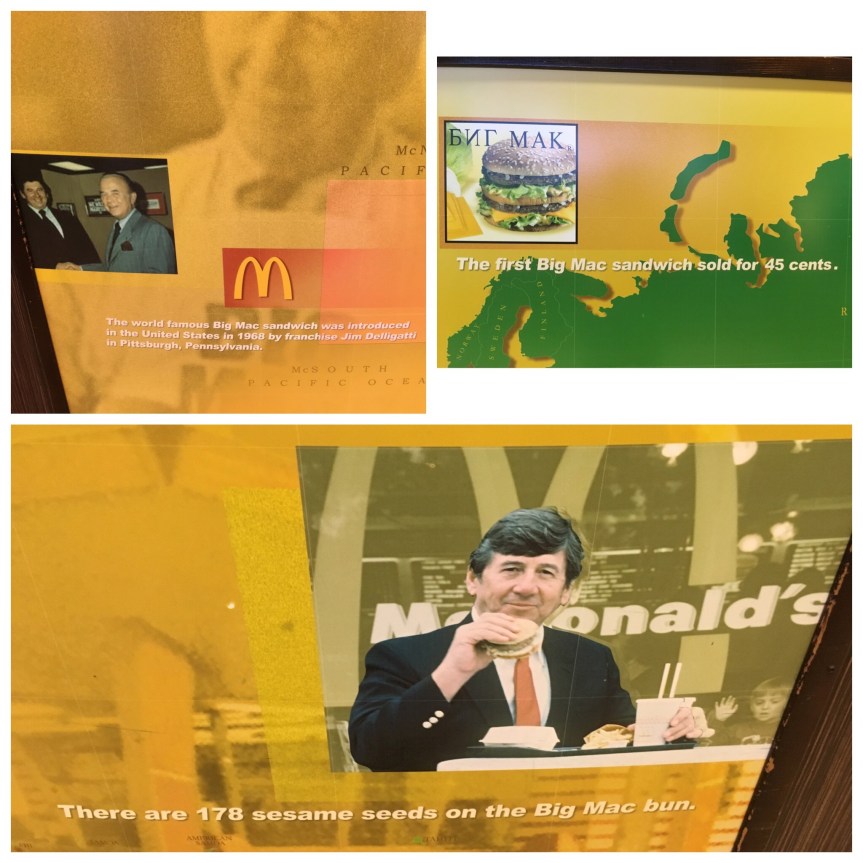
Everything is invented somewhere, and while you might think that the Big Mac, the signature burger for McDonald’s might have been created by Ray Kroc, the chain’s founder, or the two McDonald brothers he had partnered with (it was they who had invented the business model) and whose business interests he ultimately bought out… or maybe at their food labs in their global headquarters in Oakbrook, Illinois, you’d be wrong. The Big Mac was invented in Irwin, Pennsylvania by a franchise owner by the name of Jim Delligatti in 1967…

IMG_2258

IMG_2253

To be honest, I don’t think I’d eaten a big mac in 20 years (I tend to go for the quarter pounder with cheese) but since I was here, I felt it was obligitory.

IMG_1395
Different containers the Big Mac came in, my favorite is the tin one
IMG_2255
IMG_2257
IMG_2256
IMG_2254
McDonald’s collectables, I THINK they’re figurines of corporate managers
I am deeply embarrased to admit that there’s a 14 foot Big Mac somewhere on the property and I missed it… it is my intent to go there again at some point and take a picture of it.

Brambuk Aboriginal Cultural center & Bush Tucker Cafe: Halls Gap, Victoria, Australia

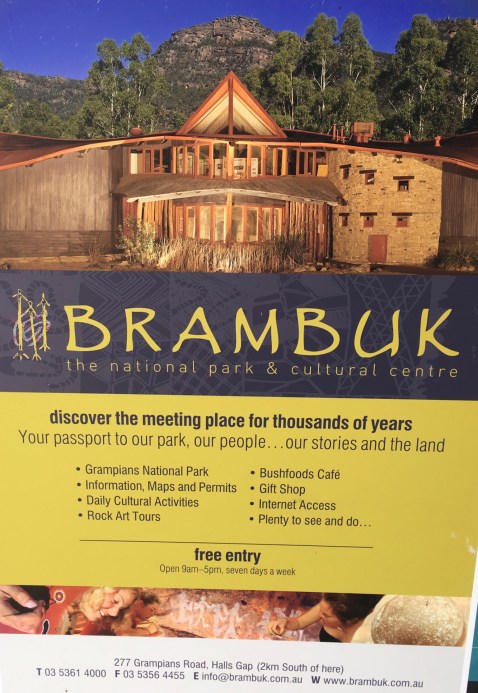
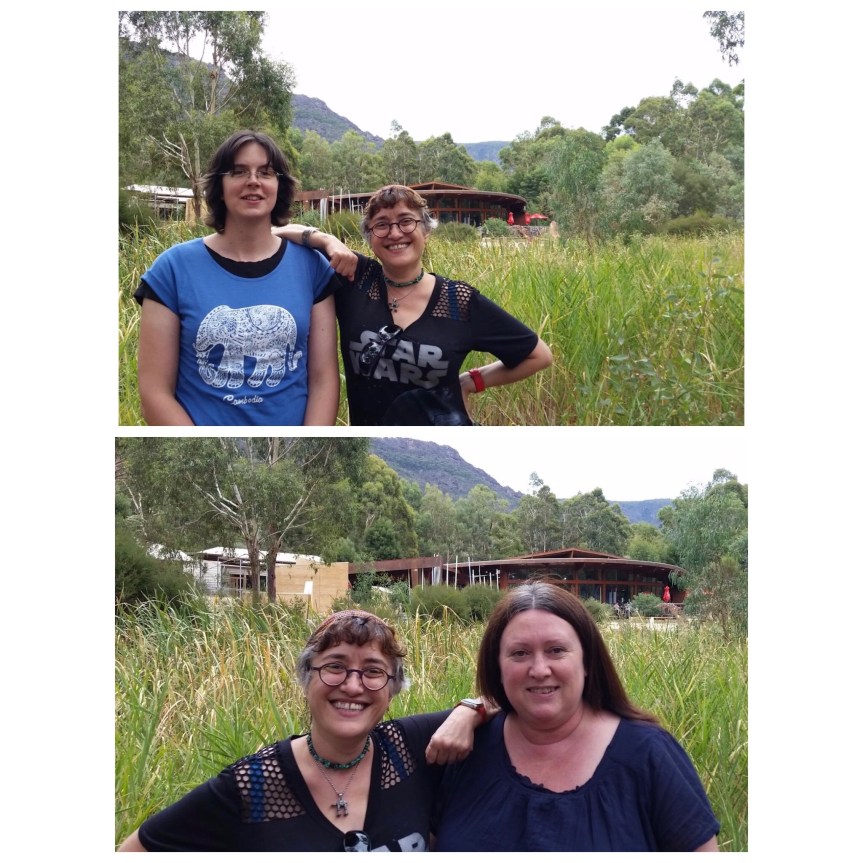
Brambuk National Park & cultural centre is about a 3 to 4 hour drive away from Melbourne, and a 5 hour drive away from Adelaide, so if you haven’t made the effort to road trip between the two (or live in the area), odds are you’ll miss this National Park. Along with the natural wonders of the place, and a host of optional activities (which I will discuss elsewhere), there is a must see but ultimately highly disappointing Aboriginal cultural center, a really wonderful little cafe with very unusual foods, and of course a pretty good gift shop.

IMG_7498.jpg

From my first days of planning my trip to Ballarat, my friend who was hosting me had been describing this place to me, and it was one of the things I insisted we had to do, in SPITE of the fact that I was pretty much laid up because of the sever concussion I had suffered not two weeks before.

IMG_7509
TThe cafe and gift shop building

IMG_2079

They have a large selection of gelato available in flavors native to Australia fruits and spices… Golden Wattle seed, Quandong fruit, Strawberry Gum,  Desert lime, Macadamia nut (which is actually native to Australia, not Hawaii), Riberry and Davidson Plum

IMG_7511

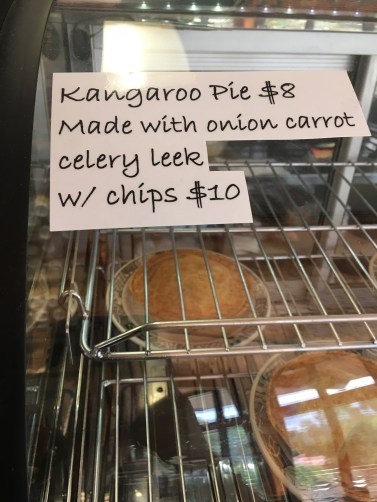
As part of my experiencing Australian pies, I ordered a “Skippy” pie (you have to love the perversity of Aussie humor — check the link), which I shared with my friends (one of whom at 99% of the chips… I only ate two)

IMG_2083

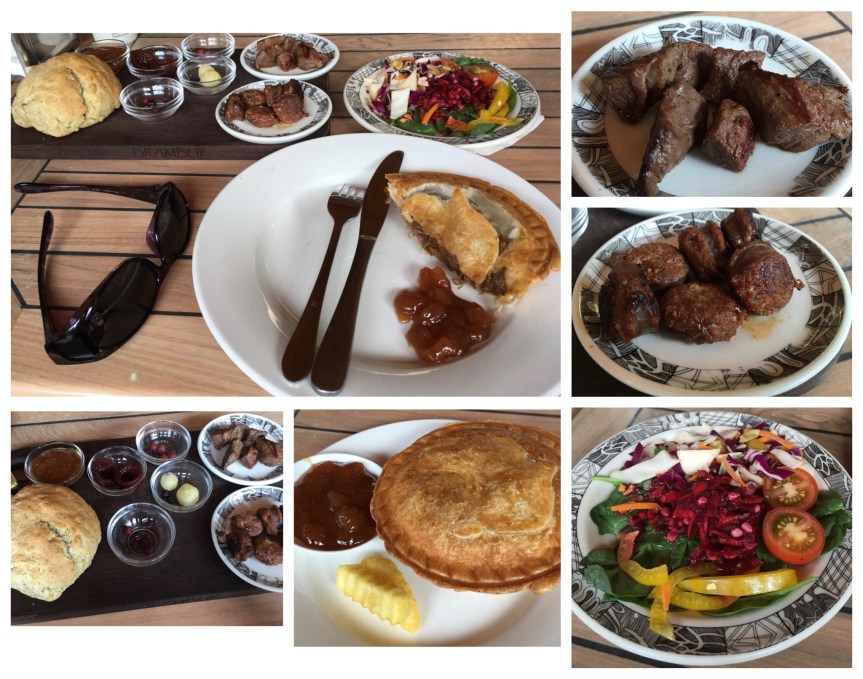
we passed on the Lemon Myrtle scones and instead opted for the Wattleseed Damper w/Quandong & Peach Jam and Wattleseed cream (because I had no idea what a Damper was). After checking out their menu, we decided to go for the Bush Food Platter

IMG_2082

which had a little bit of everything (Kangaroo, Emu sausages, Crocodile, Wild Duck (Australia has a few different breeds, they never told us which one we were eating), 2 Bush Food Chutney’s (again we never found out which flavors) & a Garden Salad w/Bush Tomato & Balsamic Dressing) which is intended for two people, so we shared it between us. DEFINITELY worth trying, if only for all the new flavors. (see below for what some of these things look like)

IMG_2084
some of the spices and seeds mentioned above

While waiting for our food we raided the gift shop, which had a very good selection of items (many of which were made by Aboriginals with the proceeds going to them).

IMG_2086

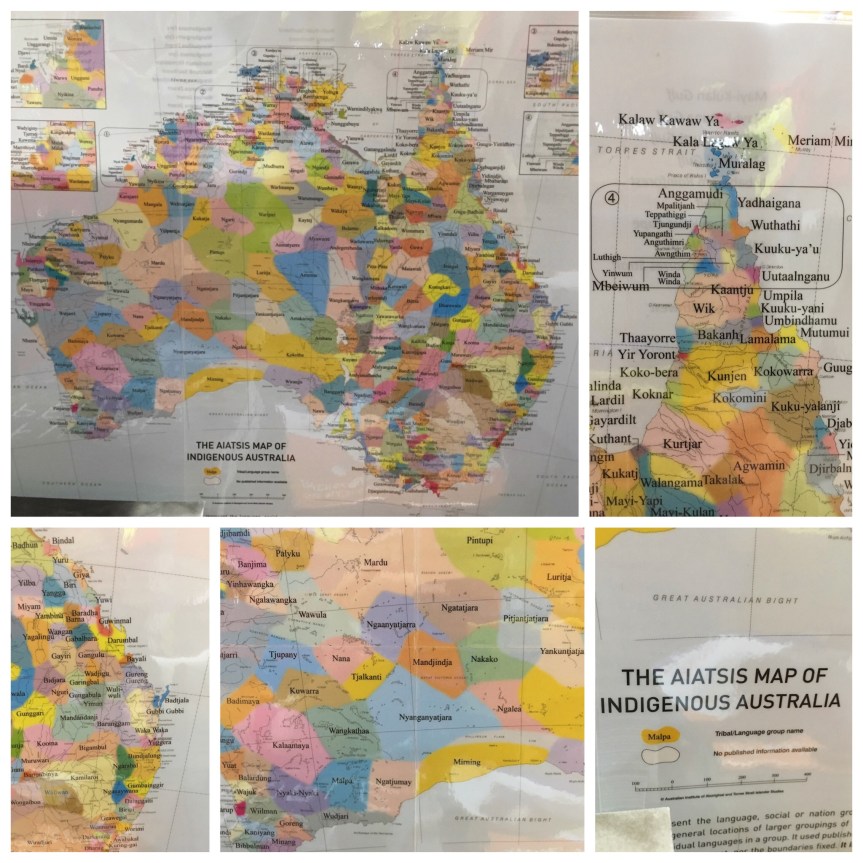
At first I thought left versus right-handed boomerangs was a joke on the tourists, but no, apparently they need to be designed differently. That said, I was tempted to buy this map of Australia (below) showing all the native tribal lands… but didn’t.

IMG_2080

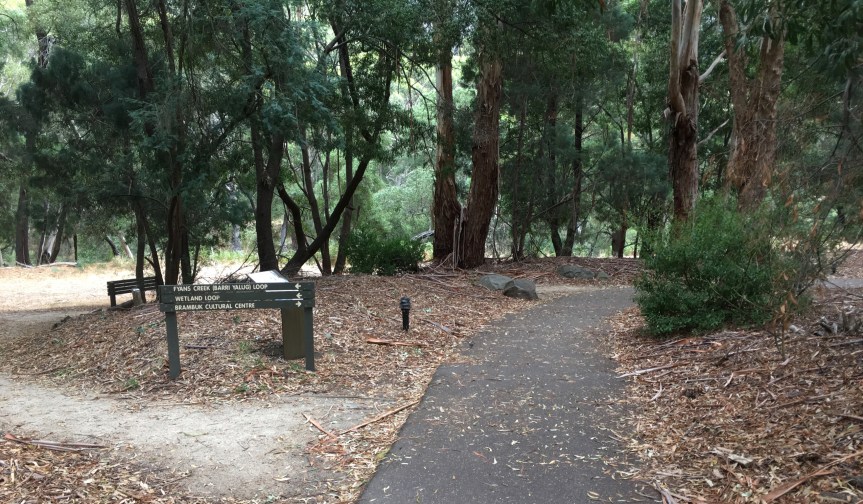
Once done at the first building you walk down a path to the cultural center

IMG_7540

IMG_2087

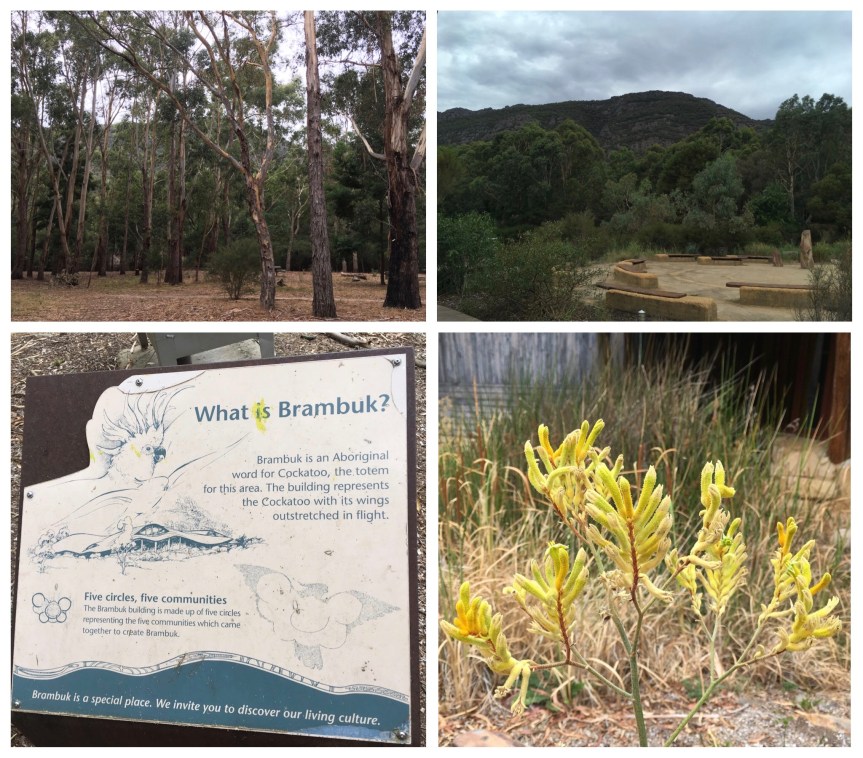
The real disappointment of this visit was the thing that should have been the star, the cultural center. Even though pretty much all they have in there is photographs, we weren’t allowed to take any. There was a movie on Aboriginal culture but you had to pay to see it (and it wasn’t cheap, so we skipped it).

According to their website’s description, “The Brambuk Cultural Centre is the longest running cultural centre still operated by Aboriginal people. Come here to explore the culture, its traditions and various multi-award winning architectural establishments.” So, you’d think this would be a place where politically motivated local Aboriginals would choose to work in order to teach interested visitors about the grandeur of their own culture, and share their love of their own history.

IMG_7543
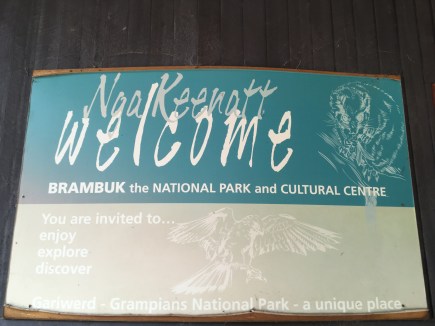
Note how faded and worn the sign is

But here’s the thing… the odds are when you get there, you won’t spot a single Aboriginal …  not even one with an ancestor four generations back so that all of the distinctive, but also  highly recessive, genetic traits have been bred out — lord knows we didn’t find any (and we asked).

[Rant: Firstly, let’s keep in mind that I have spent months of my life, studying, living and working on the Navajo reservation, and to this day still maintain some VERY close friendships with Native Americans I met during that period of my life who are to this day deeply involved with trying to improve things for their people. What I am not is a knee jerk liberal who attends protests and talks the talk, but has never spent more than a day or two being a tourist among said people, and has therefore never really walked the walk, let alone never spent any real-time talking to said people, whose rights they are so moved to protect; and hence doesn’t even really know who they are let alone understand their problems, and what these people might want for themselves vs., what you the privileged white person might want for them. That said, one of the things that kind of annoyed me while visiting was my observation that in the modern-day Australians (who by all appearances as white) seem to take extreme pride in any small amount of Aboriginal heritage they can claim. Keep in mind, in the case of Aboriginal Australians, that by the third generation, such heritage is difficult to identify visually, and unlike with African genes it can’t “pop up” unexpectedly — where two seemingly white parents can give birth to a dark-skinned child, the same way two brown-eyed parents can have a blue-eyed child. So for instance, I, while researching this piece, learned about a European/Anglo member of the Tasmanian government, by the name of Jacqui Lambie, who offended the Aboriginal community by claiming she was one and therefore could represent them, and then went so far as to get her DNA tested to try to prove it. While this on the surface might seem to be not unlike Americans who point to Native American roots that their ancestors would have tried to hide with embarrassment. The difference is that … where as in America that person might take pride in being “part” Cherokee, they rarely if ever have the audacity to claim the state owes them something for prejudice that they themselves never have had to face in their daily lives because of that genetic heritage. In Australia, however, they will; in the current age they will describe themselves as simply Aboriginal, not as ‘part’ Aboriginal, because it is now not only COOL to be Aboriginal, but again it comes with all sorts of benefits designed to provide a ‘leg up’ in a society that has heretofore condemned them. I was for instance more than a little ticked off to see Aboriginal art, which is sold as such rather than just as art, and it’s a big deal to be able to PROVE the authenticity of said art… only for the photo of the artist to be of someone with blond hair and blue eyes. Think Iggy Azalea, the Australian rapper who claims aboriginal heritage who couldn’t understand while Americans took issue to her calling herself, “black” and hence being an ‘authentic’ rapper…

In the US, the TRIBES would never allow such a thing, for the obvious reason that funding is finite and every kid who is part Native, but has suffered none of the deprivations of that ancestry, who takes that funding is in effect taking it out of the mouths of the folks who really need it. And now that the tribes themselves have found creative ways to pull themselves out of poverty, they are getting EVEN FIERCER about who does or does not get to call themselves “Native America” versus, being of Native American ancestry. It would be a bit like the Johnson’s (African American family, founders of Ebony and Jett magazine and first African American to make make the Forbes 400 list), who used to live near me — and walking distance from one of the very best high schools in the country — had mansion on Lake Michigan, with a swimming pool and tennis court, and had the Commodores (Lionel Richie‘s band before he went solo) play for their kids sweet 16 party taking advantage of preferred places and funding at Universities, intended to help cure socioeconomic disparities that exist in the African-American community]

According to the staff member we spoke to, while the Aboriginal community gets the final say on what happens there, and everything is done with difference to them… sadly, their interest sort of ends with that, and is mostly focused on the money generated by the place… although one of the staff members said if we signed up for the classes and performances that we had read about and wanted to see (which weren’t happening at that time, and hadn’t happened in a while, and he wasn’t sure when the next one might be), we MIGHT (but not would) see Aboriginals working those events.

What displays they had were placed kind of hap hazard, so that it didn’t tell any sort of meaningful story. Overall, it was kind of massive waste of time

IMG_2289.JPG

having trouble embeding the map (follow link to google maps):


The Convent: Daylesford, Victoria Australia

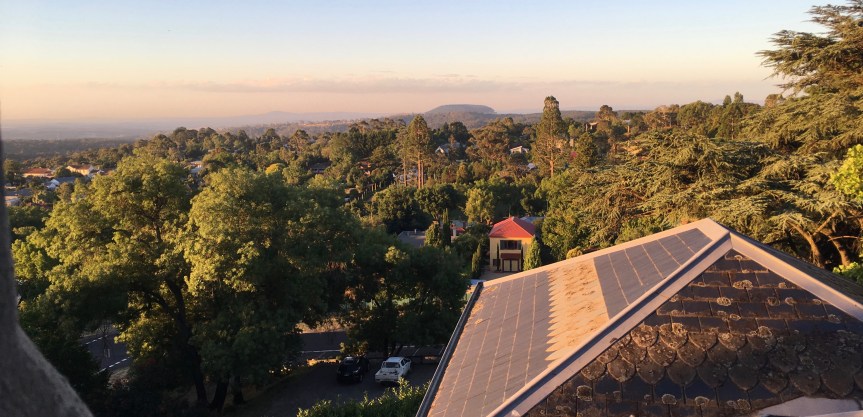
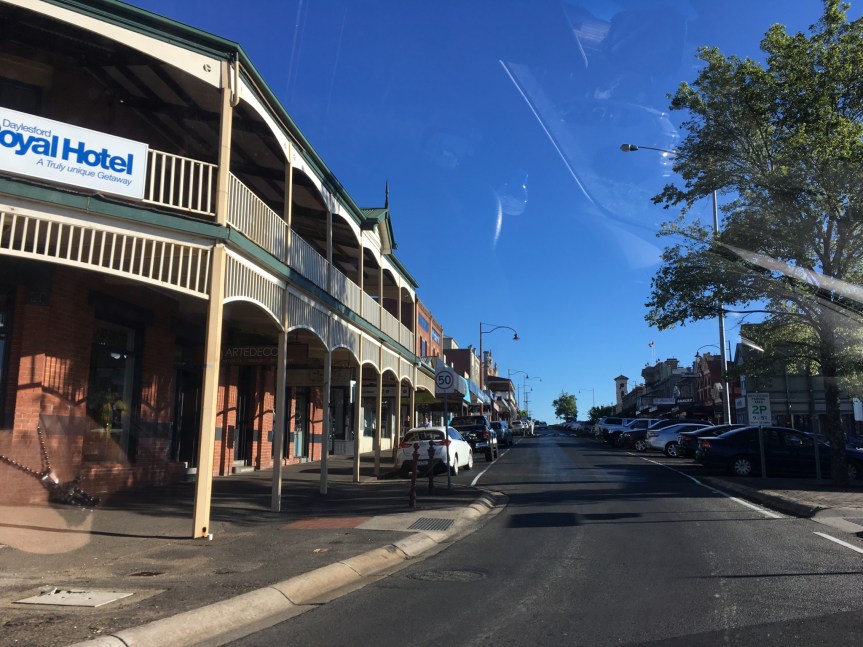
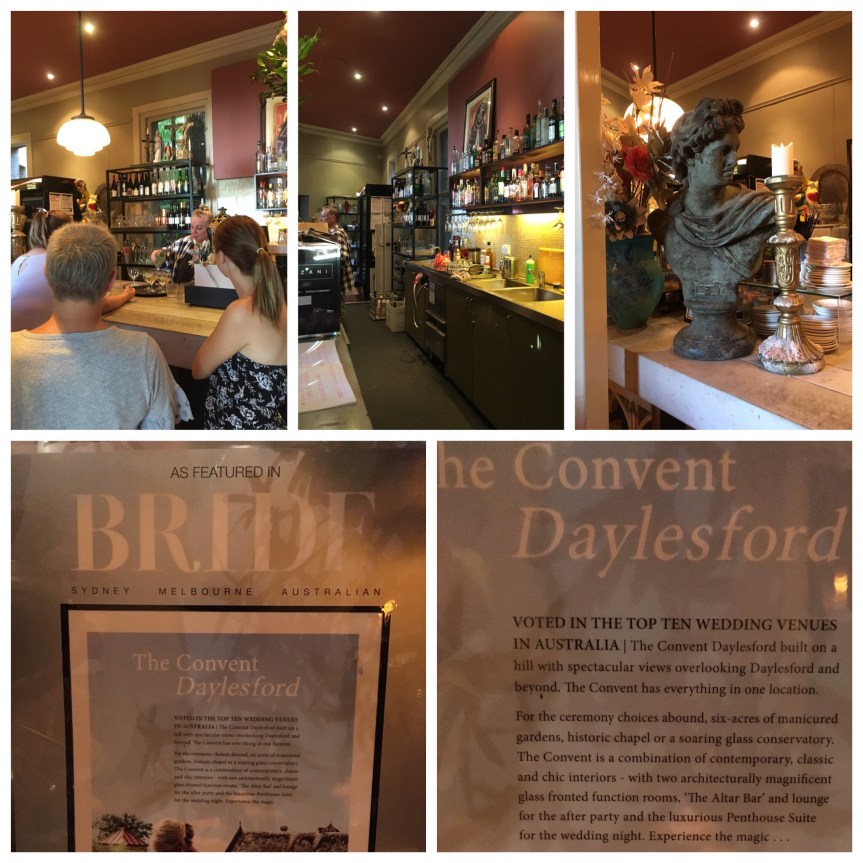
You wouldn’t think it, but Daylesford is actually a major tourist destination in Australia. By all appearances it’s just another small Australian town, indistinguishable from many of the other small towns in the area… but it has the advantage of sitting on the edge of what is now an extinct volcano, and as such it is one of the few natural spa towns in the country… known for it’s 65 naturally effervescent (bubbling) springs. Among its many attractions, is a historic (and haunted) nun’s convent that has been converted into an art gallery and wedding venue.

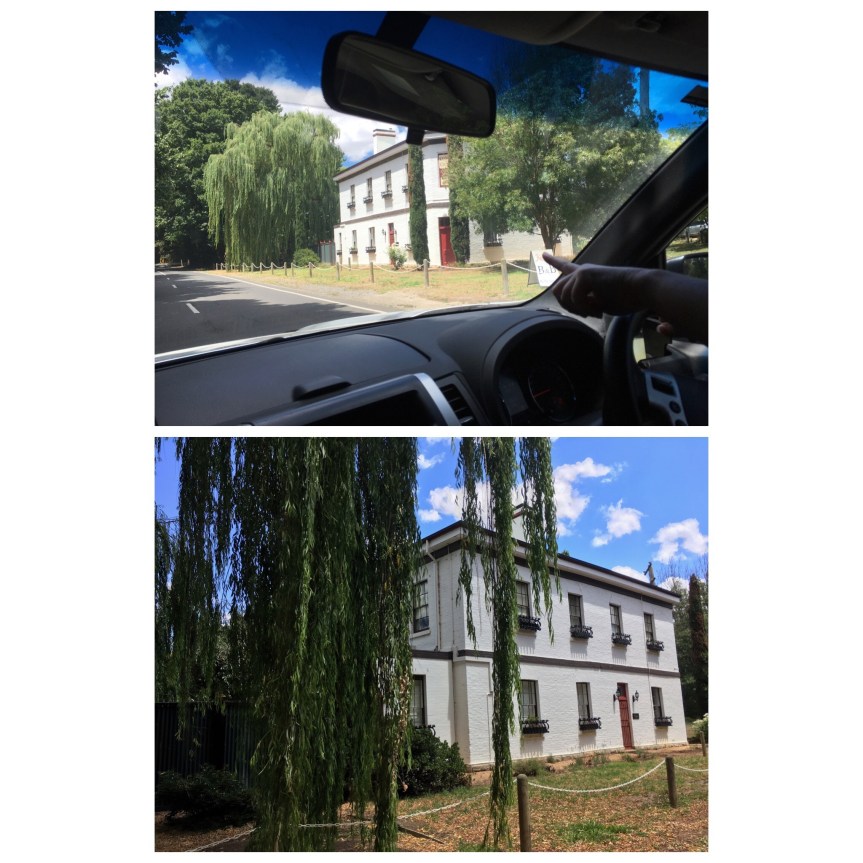
IMG_7410

(Based simply on how the people in the town preferred to dress — unstructured simple flowy garments made from natural materials, I told my hostess that I felt like I was back in Mill Valley, CA — a highly affluent town just north of San Francisco known for its concentration of New Agers, movie stars and retired Hippies … to which my friend responded that I had perceived correctly, as this town has very similar demographics, and has an Ashram a Yogi, etc)

IMG_7374

I was brought here by the friend I stayed with for two weeks in Ballarat. She is a woman of many talents: a former nurse, a real estate agent, an entrepreneur, and about once a month she guides collections of tourists through this convent, as she is also a psychic and medium, a talent she has had since her early childhood.

[NOTE: That said, I’m writing this blog post well AFTER my visit so I’m a bit vague on the details of what ghosts were where. I came here on February 9, 2018… only about two weeks after my accident that had resulted in a sever concussion … but a good 6 months later, and as I’m currently holed up in the Chicago area (i.e., my home base) doing things like doctor’s visits — including some related to the post concussive syndrome which I am STILL suffering from (albeit very mildly at this point, thankfully) and the fact that I hit the ground so hard that I dislocated my jaw (requiring some expensive visits to my dentist who is trying to fix the damage) —  I am taking the opportunity of being back on my home turf to rectify that lapse.]

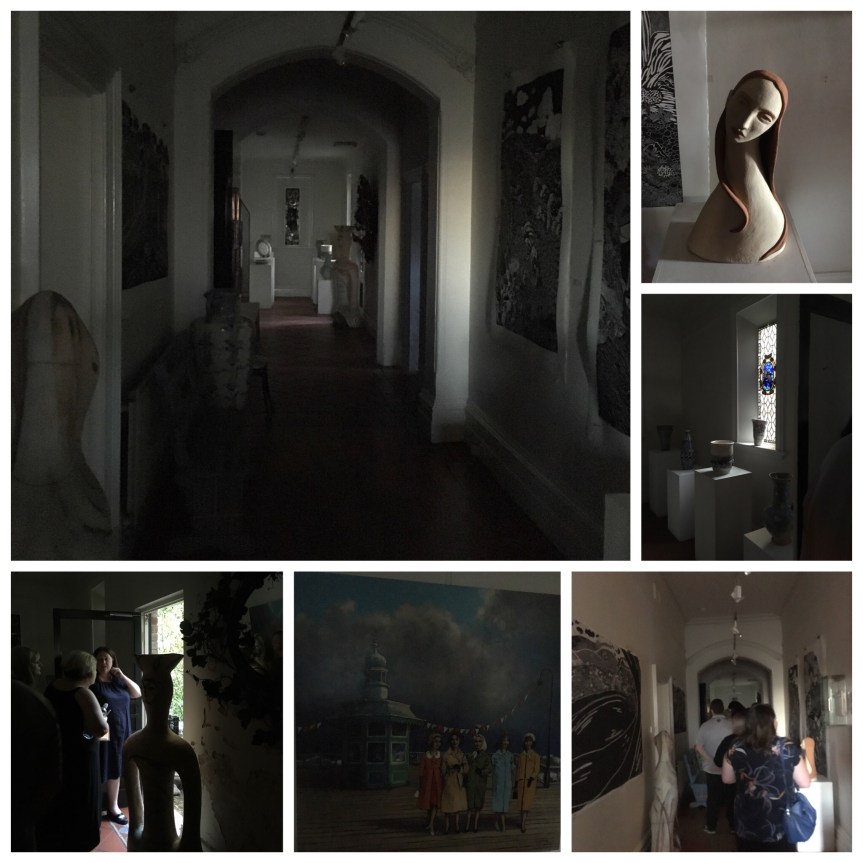
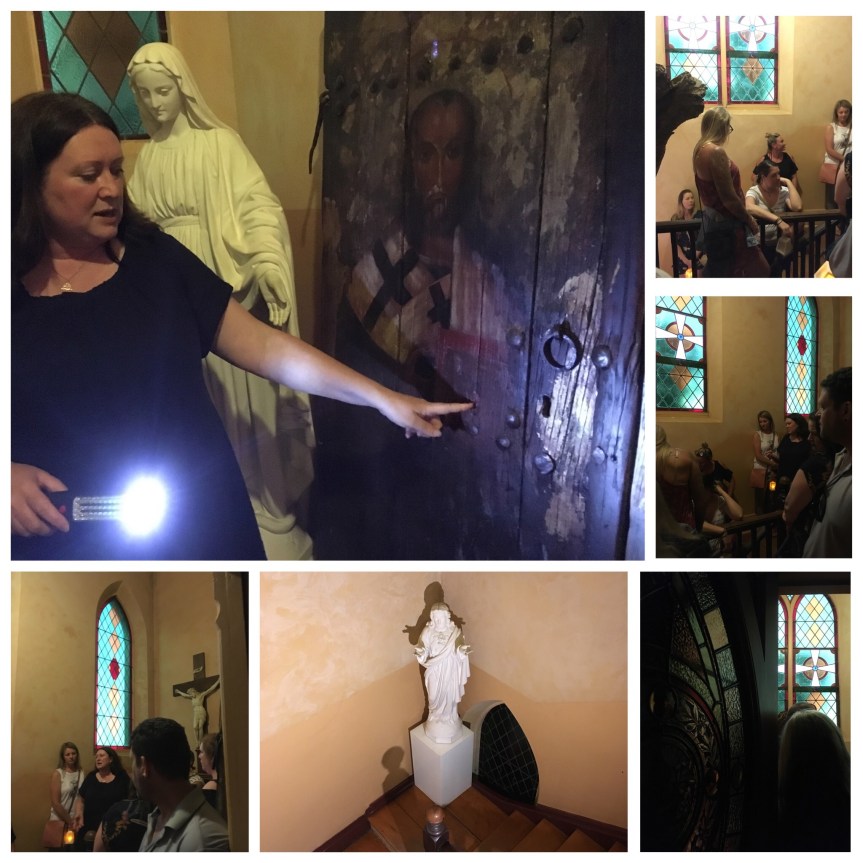
As we were driving around my friend told me that this is the second gay capital of Australia (Sydney being the first), and based on the number of rainbow flags I was seeing I don’t doubt it. She said that there are more gay people than straight people in Daylesford. fullsizeoutput_4145.jpegWe came to this former convent, which during the day triple duties as an art gallery, a wedding venue, and a hotel ….. because in the evenings is when its fourth duty comes into play, as a haunted structure… and my friend has been hired (because of her particular talent), to lead a ghost tour here on a similar regular basis. That said, the woman who normally comes and helps her lead the groups through the structure couldn’t be there that night, so since I had asked if I could come see the place (anyway) she’d tasked me with walking at the end of the group and making sure there were no stragglers (or folks who were breaking the rules and taping the tour without prior permission — photos are allowed). IMG_2078
IMG_2079

As we walked through the hallways of the building, my friend would describe various ghosts that are known to regularly haunt different parts of the building.

IMG_7434

IMG_2080

This top floor of building was used as a hospital ward at one point, and she had interesting details to share of how the nuns managed this (getting the bodies up and down, etc.).

IMG_2081

These small rooms off of the larger main rooms were nuns bedrooms. One of them in particular, the one everyone is lining up to get into… is haunted by the ghost of a woman who (I think) had committed suicide there, or some such… (I’m really very blurry on the details at this point — it’s 6 month later — of the specifics of her story, but my friend explained it at great length…I remember it was very interesting and sad)

IMG_7440

IMG_2082

IMG_7465

IMG_2083I think I remember she said that this church part of the convent was haunted by a former Priest, or maybe it was the head nun… again, I’m very foggy on the details so I suggest if you’re in town you take her tour. IMG_2084At this point my friend was giving a very long story, and I was getting tired and wasn’t paying close attention anymore, and was focusing mostly on taking pictures… but as you can see more of the tour group were riveted on what she was saying
IMG_2085

This painted door, according to my friend, has a particular energy embedded into it, which both my friend and another psychic both had felt independently (I forget what it was, again, you should sign up for the tour to find out), and she was explaining about that during the picture above. She was also leading us into the basement which had been used for some horrible purposes over the years, lots of ghosts… and while we were down there a lot of people who were on the tour came out of there having experienced something…

Clunes, Victoria, Australia

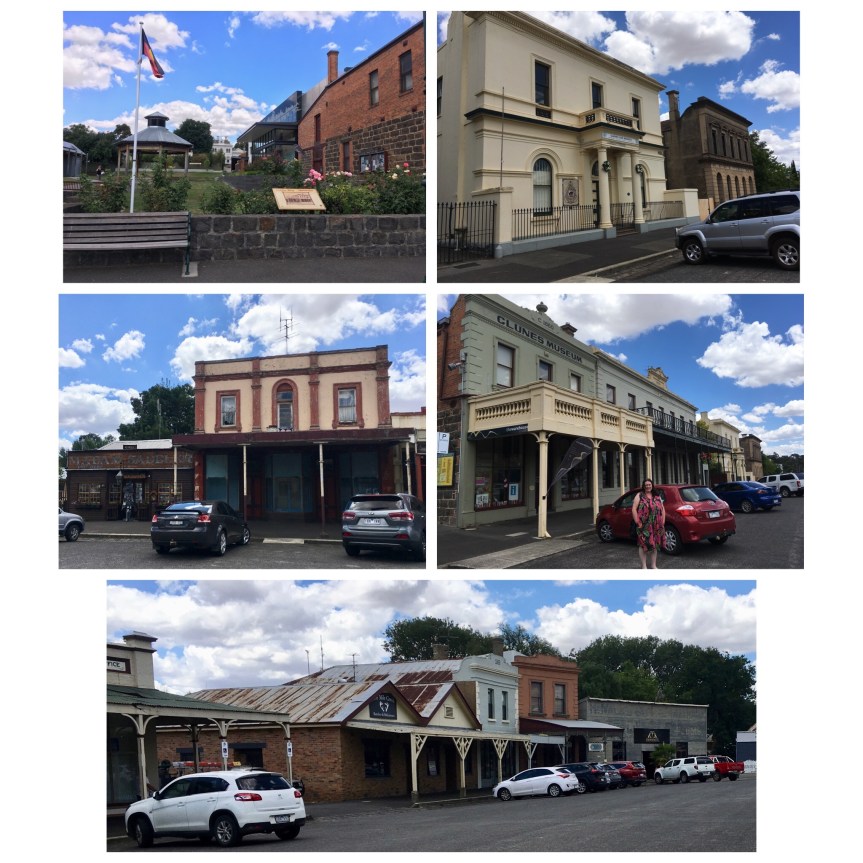
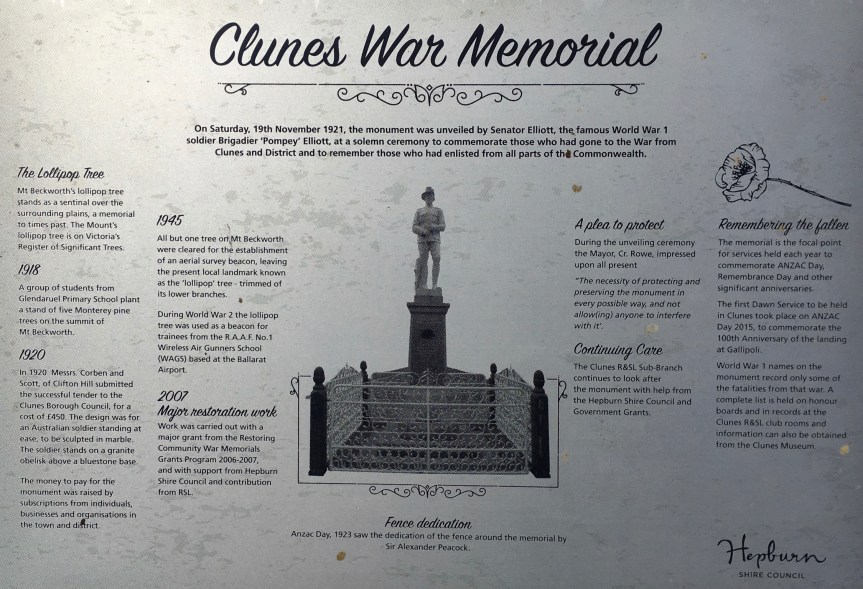
The friend who hosted me in Ballarat brought me to visit a nearby town called Clunes, Victoria (there’s actually more than one Clunes in Australia). The town (like many in the area) was once a gold mining town, but its current claims to fame is that it has been used many times in movies and TV shows, and they hold the largest yearly book fair in Australia.IMG_1860

Movies and shows shot in this town include, Ned Kelly (with Heath Ledger, Naomi Watts, Geoffrey Rush,  & Orlando Bloom), Mad Max, HBO’s the Leftovers, Amazon’s Picnic at Hanging Rock, and a large selection of Australian TV shows, etc. In fact there’s a new big budget about to be filled there about the life of Ned Kelly staring Russel Crow, that’s currently looking for extras.
IMG_1853IMG_1854

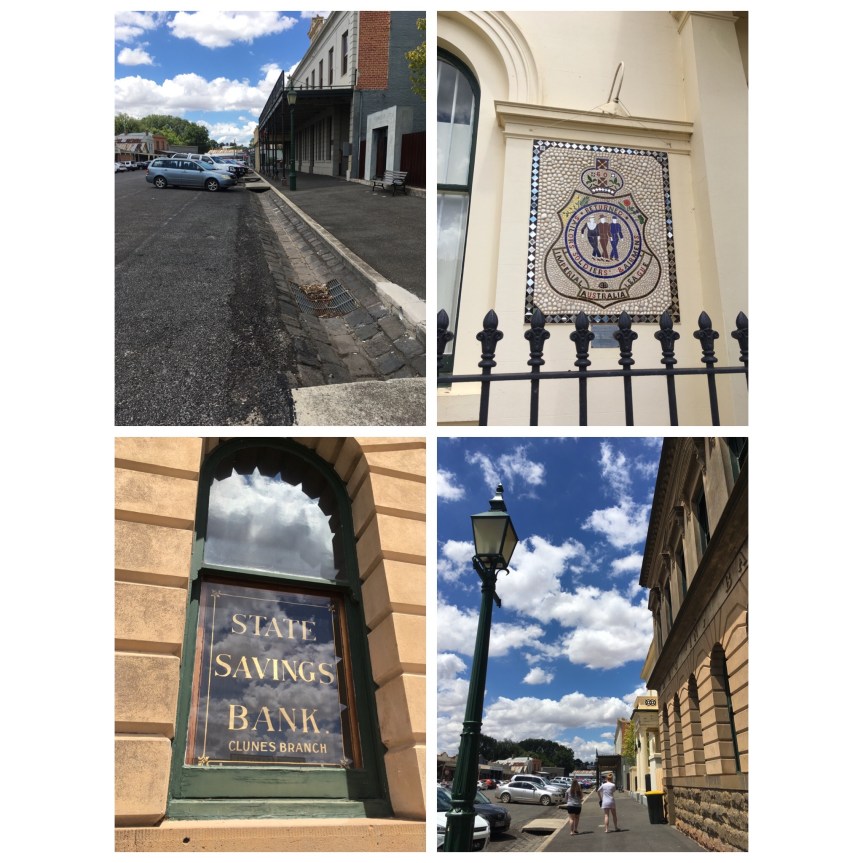
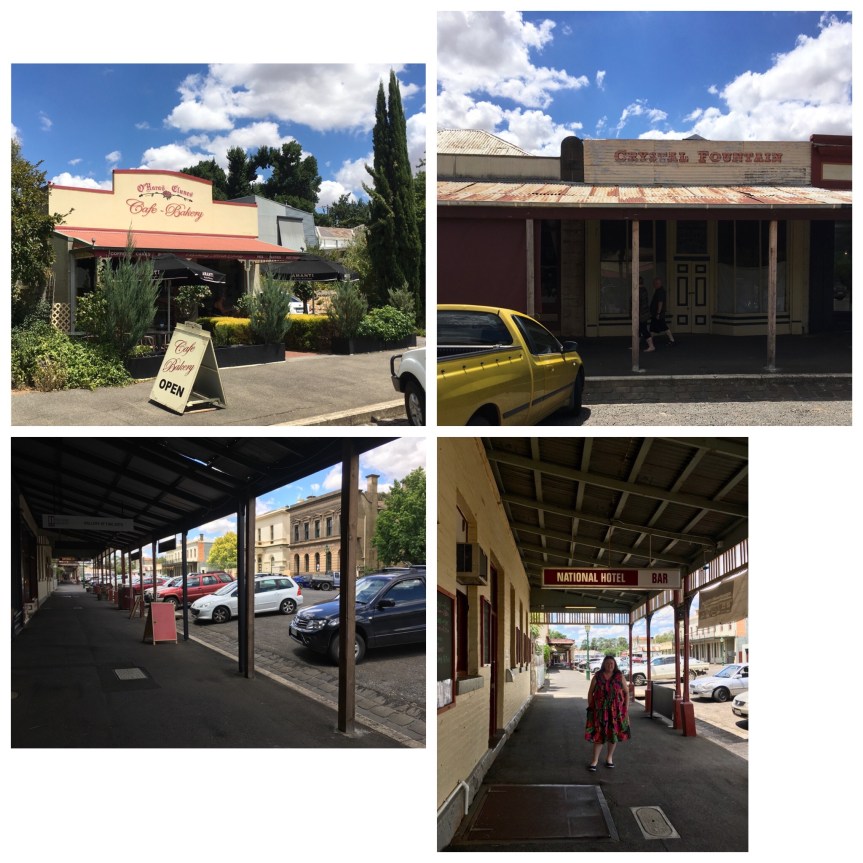
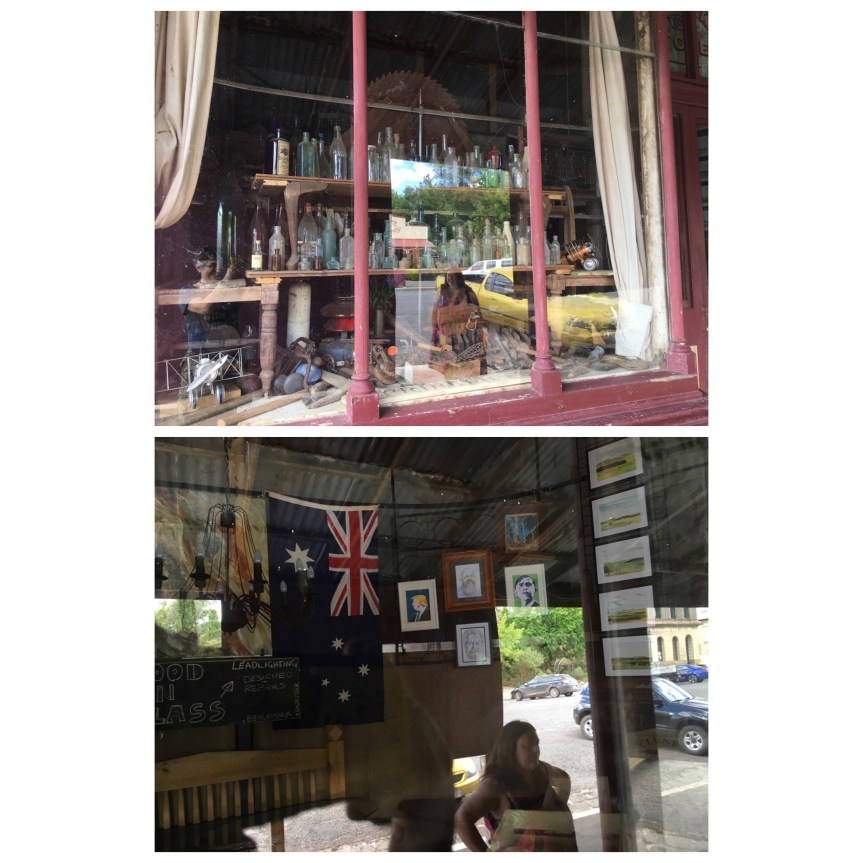
Other than being very picturesque Clunes seems to be just a quiet little Australian town. I could see why film studios like the place, there’s very are lots of very nice building but not much going on that a filming would disrupt.

IMG_1857IMG_1859IMG_1856IMG_1858IMG_1855

IMG_7058

IMG_7090

IMG_1852
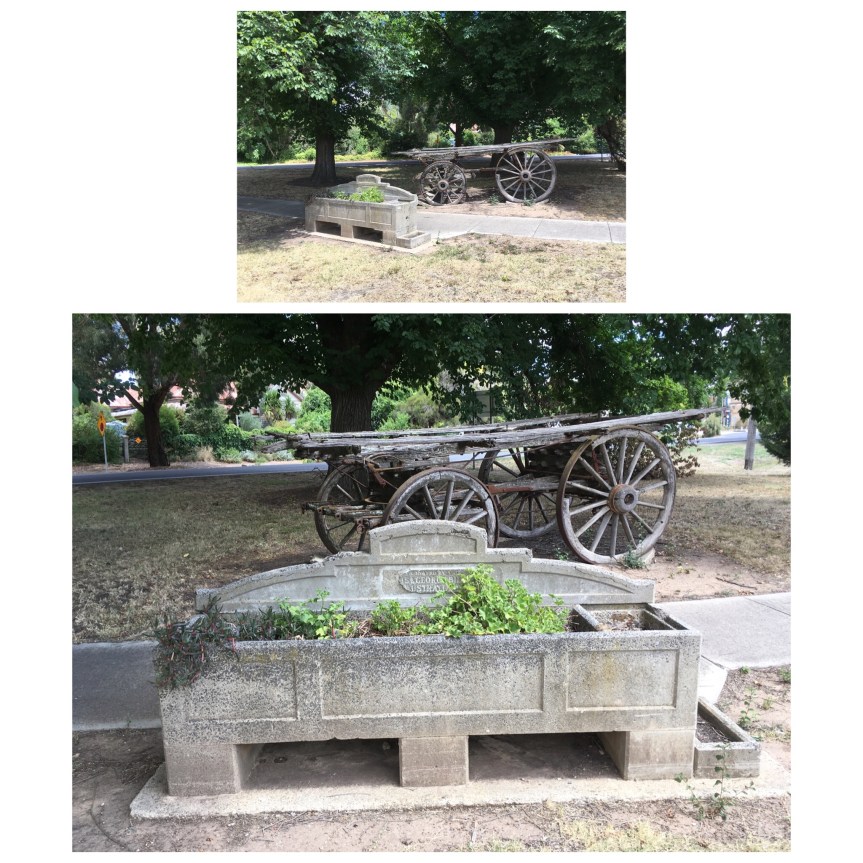
What to do with a horse troth? Fill it with flowers

IMG_1851

IMG_7075

IMG_7076

Bunjil Rock Shelter

Bunjil Rock Shelter is one of the many Aboriginal religious sites scattered throughout Australia. In is located in the Black Range Scenic Reserve, and according to this academic report, “It is the only known site in Victoria to contain bichrome [2 color] figures and an anthropomorphic figure whose identity is known…The site is generally regarded to be one of the most significant of the 150 or so Aboriginal art sites in Victoria, and yet its management has been characterized by nagging doubts about its authenticity.”

IMG_7613.jpg

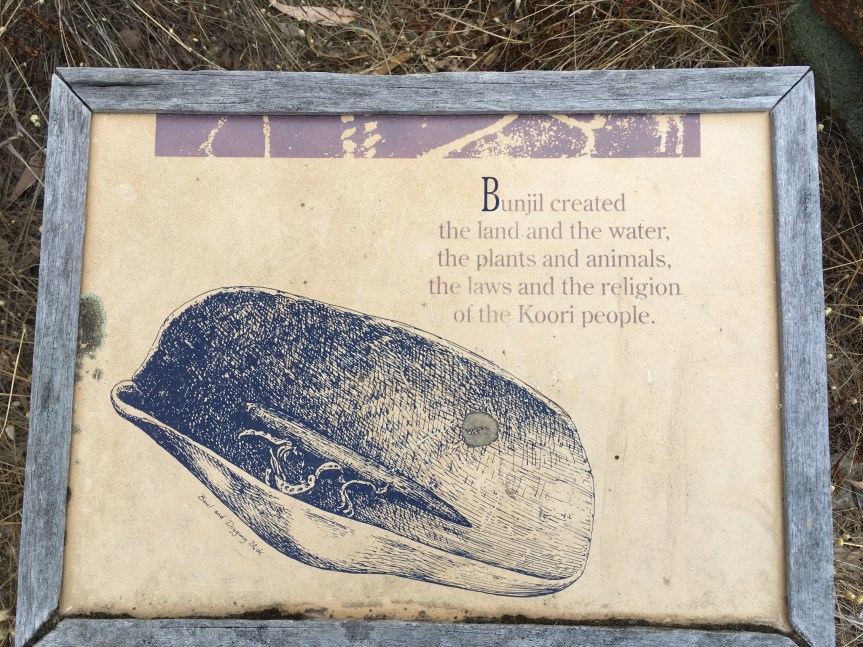
Bunjil is one of their creator deities of the Aboriginal world (see image below), and is often described as a Wedge-tailed eagle, the largest bird of prey in Australia (see image above)

IMG_7614.jpg

Bunjil Rock Shelter was one of the meaningful (to me) places my host (while in Ballarat) took me to; she was driving me around and always keeping in mind my highly limited post concussive energy limits (the glorious serendipity of staying with someone who used to be a nurse). She said this was one of those places she’d always wanted to go to, but never had — so it was good for her too.

IMG_7628
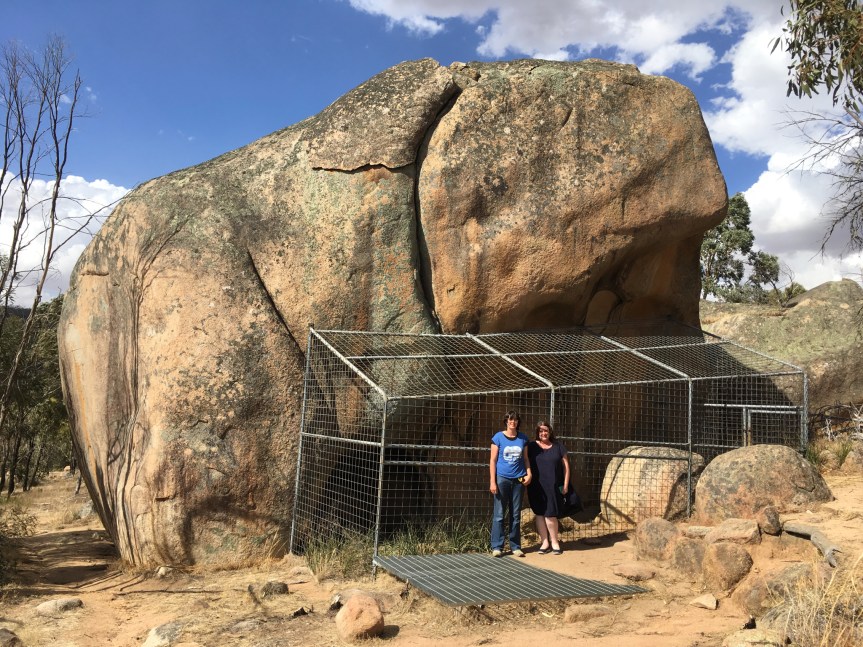
My host and her friend, who joined us on this trip,v standing in front of the fence the protects the rock cave (just left of them)

Inside the cave there is an “Ancient” Aboriginal painting (according to my friend its had touch ups so that kind of screws with the ancient part)IMG_1873

Unfortunately I was the only taking pictures this day, and I was already seriously fatigued from our other stops, so I didn’t remember to ask someone to take a photo of me….

[NOTE: That said, I’m writing this blog post well AFTER my visit. In spite of the fact that I was in I came here on February 9, 2018… only about two weeks after my accident that had resulted in a sever concussion, I was only able to do this trip because my friend drove me around, and I actually spent very little time on my feet. Once back home I wasn’t mentally able to keep up with my write ups … At the time an outing like this one left me exhausted and the next day was spent just resting … but as I’m currently holed up in the Chicago area (i.e., my home base) doing things like doctor’s visits — including some related to the post concussive syndrome which I am STILL suffering from (albeit very mildly at this point, thankfully) and the fact that I hit the ground so hard that I dislocated my jaw (requiring some expensive visits to my dentist who is trying to fix the damage) —  I am taking the opportunity of being back on my home turf to rectify that lapse.]

IMG_1874

Personally I really loved the huge rocks in the area… although you have to wonder where they came from…

IMG_7632

Warning… if you decide to come here… whoever set up the signs leading to this historical site needs a good whipping. We had a really hard time finding it, and actually passed it twice.  It’s a relatively small sign placed well away from the road, on a side road that doesn’t really look like road… 

Link to the map

Dog On The Tucker Box; Gundagai, New South Wales, Australia

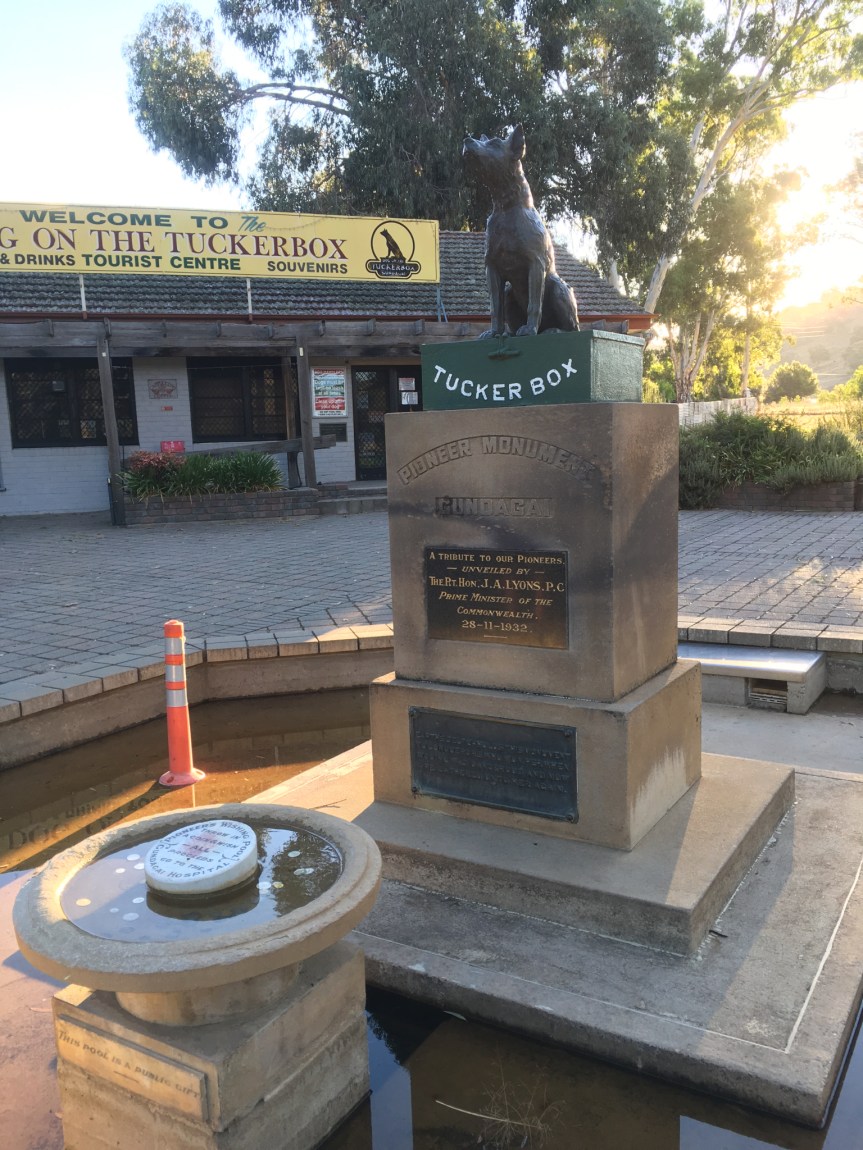
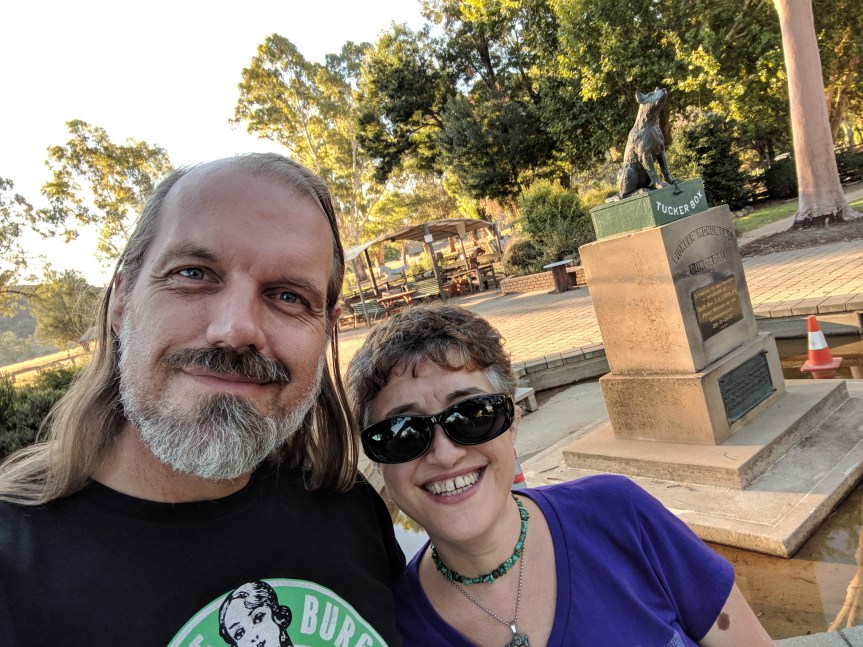
This statue titled, “Dog on the Tucker box” is a tribute to Australia’s pioneers, and a ‘well known’ (to Australians) bush poem whose author (may or may not) have been lost to time; it is located on the road between Sydney and Melbourne.

IMG_8706.jpg

But here’s the thing, when I googled to try to find the famous poem the statue was based on I found multiple different ones and partial ones, and variations on the same theme, or variations of wording…. so if you play the video below, and then follow some “different” poems that various sites were pointing towards as the poem, you’ll see my confusion.

[NOTE: That said, I’m writing this blog post well AFTER my visit. I was at the Dog on a tucker box about 4 months ago, on Feb. 26th, 2018, almost a month after my accident that had resulted in a sever concussion … Even a month later my brain wasn’t close to good (I was talking really really slowly at the time, searching for almost every word) and as such I just haven’t gotten around to writing about it till now.  The accident made it impossible to focus my brain the way I needed to in order to blog, and as such I fell woefully behind on the posts the Australia trip … but as I’m currently holed up in the Chicago area (i.e., my home base) doing things like doctor’s visits — including some related to the post concussive syndrome which I am STILL suffering from (albeit very mildly at this point, thankfully) and the fact that I hit the ground so hard that I dislocated my jaw (requiring some expensive visits to my dentist who is trying to fix the damage) —  I am taking the opportunity of being back on my home turf to rectify that lapse.]

IMG_8704

That said, the “or worse” referred to in the above image, was explained in other versions I found that said that every time you read “the dog sat on the tuckerbox” you should actually convert it to “the dog shat on the tuckerbox”  … i.e., the past tense of to shit… in other words, this is a poem about a dog that took a dump on this guy’s lunch box.

Bullocky Bill — by anon

As I came down Talbingo Hill
I heard a maiden cry,
‘There goes old Bill the Bullocky
– He’s bound for Gundagai.’

A better poor old beggar
Never cracked an honest crust,
A tougher poor old beggar
Never drug a whip through dust.

His team got bogged on the five-mile creek,
Bill lashed and swore and cried,
‘If Nobbie don’t get me out of this
I’ll tattoo his bloody hide.’

But Nobbie strained and broke the yoke
And poked out the leader’s eye,
And the dog sat on the tucker-box
Five miles from Gundagai.

————————

‘Nine Miles from Gundagai’ by Jack Moses (A PC version from the 1920’s)

I’ve done my share of shearing sheep,
Of droving and all that;
And bogged a bullock team as well,
On a Murrumbidgee flat.
I’ve seen the bullock stretch and strain
And blink his bleary eye,
And the dog sit on the tuckerbox
Nine miles from Gundagai.

I’ve been jilted, jarred and crossed in love,
And sand-bagged in the dark,
Till if a mountain fell on me,
I’d treat it as a lark.
It’s when you’ve got your bullocks bogged,
That’s the time you flog and cry,
And the dog sits on the tuckerbox
Nine miles from Gundagai.

We’ve all got our little troubles,
In life’s hard, thorny way.
Some strike them in a motor car
And others in a dray.
But when your dog and bullocks strike,
It ain’t no apple pie,
And the dog sat on the tuckerbox
Nine miles from Gundagai.

But that’s all past and dead and gone,
And I’ve sold the team for meat,
And perhaps, some day where I was bogged,
There’ll be an asphalt street,
The dog, ah! well he got a bait,
And thought he’d like to die,
So I buried him in the tuckerbox,
Nine miles from Gundagai.

———————————–

Author unknown about 1850

I’m used to punchin’ bullock teams across the hills and plains.
I’ve teamed outback for forty years through bleedin’ hail and rain.
I’ve lived a lot of troubles down, without a bloomin’ lie,
But I can’t forget what happened just five miles from Gundagai.

‘Twas getting dark, the team got bored, the axle snapped in two.
I lost me matches and me pipe, so what was I to do?
The rain it was coming on, and hungry too was I,
And me dog shat in me tucker-box five miles from Gundagai.

Some blokes I know have stacks of luck, no matter where they fall,
But there was I, Lord love a duck, no bloody luck at all.
I couldn’t heat a pot of tea or keep me trousers dry,
And me dog shat in me tucker-box five miles from Gundagai.

Now, I can forgive the bleedin’ team, I can forgive the rain.
I can forgive the damp and cold and go through it again.
I can forgive the rotten luck, but ‘ang me till I die,
I can’t forgive that bloody dog, five miles from Gundagai.

IMG_8720
The infamous Australian sense of humor at play

This is one of those roadside attractions that means nothing unless you’re conversant with local folk culture … which I was not.  My travel mate however was born and raised in Australia, so he insisted we stop here. And this ladies in gentleman is why it’s always helpful to travel with a local.

MVIMG_20180226_185131

Just next to the statue was this restaurant, Oliver’s Real Food, which my friend said was must try, as it is the Australian “healthy” version of a fast food chain, i.e., lots of organic and vegetarian ‘fast food’ options.

IMG_8715
Me being held by a ‘big’ Koala,

In front of the restaurant was a big Koala, but as I had already seen a much BIGGER Koala while in Australia, I didn’t really consider it to be particularly worthy of note (other than for sheer cuteness) … but of course a picture was necessary.

At the restaurant I had some nothing to write home about sushi and edamamae (hard to screw up). That said, they had what I ultimately decided was probably one of my favorite ginger beers in all of Australia… it had a really STRONG ginger bite, which is how I like it — with the added advantage of it was supposed to have a good dose of probiotics

IMG_8721