The personal authentic travels of a world-wide drifter, you'll always see pics of me at the locations being described (if the other blogs you're reading don't do that, odds are they were NEVER there, just saying…)
Because nothing says Minnesota like a massive Viking!!
History of the area via its historic buildings and consumer goods,
and… the rune-stone
Cute local museum: Essentially, it’s a combination of the trend of collecting historic buildings to one central location in order to save them from demolition and a history of the area via consumer goods. However, there is also a massive ‘rune-stone‘ which a farmer ‘dug up’ from his farm that he claimed is supposed to be proof that the Vikings came to America way before Columbus — while the museum refuses to say it, and some in the local community believe it’s the real deal… the fact is that it’s never been considered anything but a hoax by serious researchers.
If you dial the number below, or scan the QR code (the box thing) you’ll hear about the stone and a translation of what it says.
In fact one of the most interesting points, from my perspective, was how local small budget museums are able to utilize these technologies to upgrade the customer experience. Throughout this museum there are descriptions you can access via your cell phone or smart phone (using a QR scanning program), which are available in English AND Norwegian.
I had previously seen a TV show, I forget where, that talked about how in Norway there is a very popular reality TV show about kids who come to Minnesota to try to find their families and experience their lives in the USA. Apparently there’s a huge tourist population of Swedes and Norwegians discovering small town MN, and these narrations in Norwegian are the proof of that.
Granted, this place is nowhere near as well laid out is the last local museum I went to, but they’ve done a fairly decent job of collecting junk from all of the surrounding town members and housing it in a way that at least people can see it and understand what it is.
While I came to see the Paul Bunyan, and it was OK, it was the unexpected Chippewa Valley collection that I was deeply, deeply, impressed by — ardently so, to the extent that I would argue that if you’re ever within (let’s say) an hour drive of there, it’s definitely worth making a special trip to Eau Claire just to see it. In fact just before leaving — while telling the elderly woman at the front desk how much I loved the place, I learned that their former curator (who was the one who had set the tone) had been ‘stolen’ away from them by the Smithsonian. Yes, it’s THAT good, but on a much smaller budget.
What brought me to the Paul Bunyan Museum was I had remembered seeing a truly massive statue of Paul (and his Blue Ox “Babe”) when I came here with my mother as a child (maybe middle school aged?). Apparently, based on what other people who also came to see the statue as I was waiting for the place to open, that one had fallen apart and been replaced with this much smaller and far less impressive model.
With regards to the hand, I saw a bunch of these sculptures scattered all over Eau Claire. I thought that they were a bit like the Chicago cows — which are much larger, also decorated uniquely and scattered around the city — or something of that sort, and it turned out I was exactly correct.
Initially, I arrived at the Paul Bunyan museum just as it was closing. They let me walk in and look at the gift shop collection, but that was it. As such, I opted to spend the night in Eau Claire and come back the next day before continuing my trip westward. (I stayed at an Airbnb, a REALLY nice apartment in a high rise with an amazing view; the owner made me home-made quiche and some really good coffee for my breakfast.) The next day, because my host had to go the work, and I was intending to not return to her digs before leaving town, I arrived an hour before the Paul Bunyan was due to open.
As I sat there, I was looking at the sky and saw that there was a slight beige tint to it. It’s not as bad as say the skies in Korea but there was clearly a lot of something between me and the blue. I think Eau Claire Wisconsin is beginning to get the downdraft from that contagion of fires spreading all over southern Canada that were why I opted to take Interstate 94 across till I got to Glacier National Park, rather than going straight north and taking the Trans-Canada highway all the way to Vancouver Island, where I plan to spend to months.
The Paul Bunyan museum to be honest struck me as something of a tourist trap-ish… the employees were for the most part a bunch of spoiled teenagers who are paid to essentially sit there and do nothing (LOUSY customer service). When I went there was in fact this one blonde girl who is clearly the bully/leader who was doing her best to avoid actually working, and expected the other employees to stay with her so she could laud it over them. When I finally demanded help, she send over this other girl, a kind of passive and sweet brunette to see what the problem was. It was a rather small museum and most of what was in there in terms of interactive displays didn’t even work.
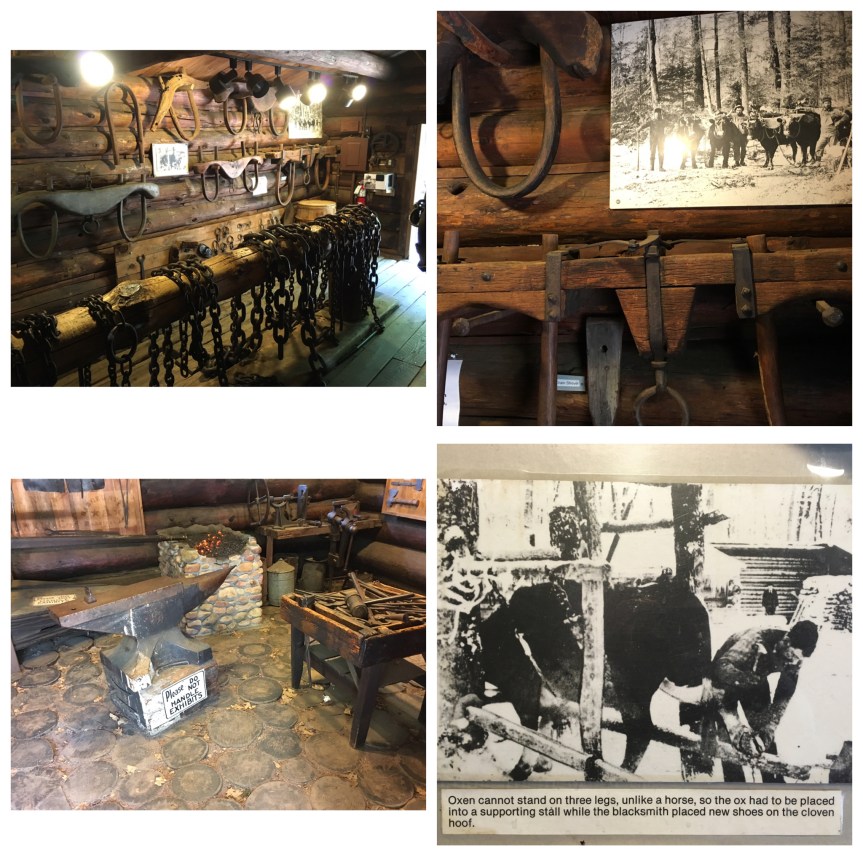
To be honest the best part of the Paul Bunyan is what I refer to as the “living Museum” part out back — a collection buildings representing a logging camp; and… I saw many locals go STRAIGHT to these, bypassing the completely the building where you pay your entrance fee… and like I said before, all the teenagers on staff were just sitting in there not doing their jobs — which would have included stopping people from entering without paying.
Note the Green button on top of the silver box in the bottom right picture, every area had one of these and when you pushed it a “local” in this case the ‘store owner’ would begin offering a detailed narration of the room, its contents, and tidbits of about the life of the loggers who worked there.
Again on the left, the green button you pushed for the narration
As you continue back through the buildings you pass through a wooden gate and come to more houses, only these are no longer the logging camp and look more like part of what might have been early Eau Claire, WI, marking the transition to the Chippewa Valley Museum, in the large post office type looking building in front of you (no pic, sorry).
Even though the two museums, the Paul Bunyan and The Chippewa Valley, are located right next to each other within a park area (surrounded by a sort of moat — see map below) they are not in fact cooperative with each other — you can not even get a discounted combo ticket for both — because they are their owned by two different groups.
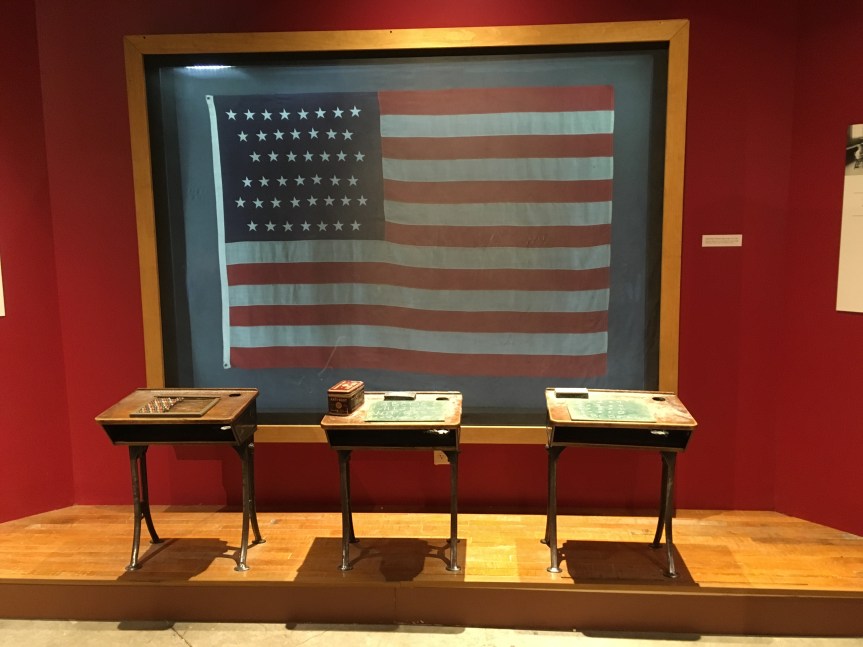
The price is the same for both places seven dollars each, but this place which is the non-for profit devoted to the overall history of the area, not just logging, actually has a much better display in my opinion. Rather than having to hit a button, the who place is automated with movement activated ‘background noises’ to give each area a feeling of veracity. So for instance, in the section about how the Eau Claire area used to be devoted to logging and wood industry, as you enter you hear the manager of the woodworkers talking to them about doing their jobs or when you walk into a section that supposed to be a schoolroom children saying the Pledge of Allegiance, that’s what you hear.
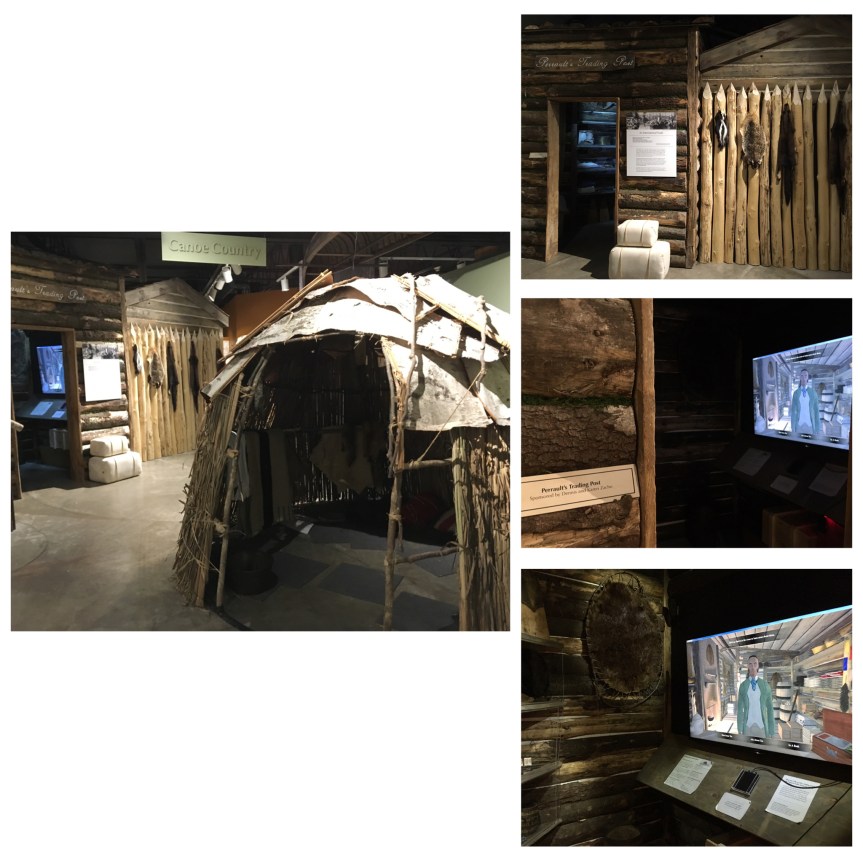
They also have really taken a good advantage of the video game architecture as a way for people to be able to go back in time and experience various things. … So for instance, fir you walk into an area devoted to the original Native American tribes the lived in the area
and in the trading post you can actually in a video game (built by local students) sort of manner interact with the trader. You are a Native American of the region and your language shifts between English and your native language is you negotiate with the trader and socialize.
This is followed by a fairly devastating area devoted to the cultural havoc wrought on the tribes when they children were forced into boarding schools where they were forcibly ‘converted’ to meet the cultural norms of the dominate white population. This included a selection of interviews with Elderly tribal members recounting their own memories of the place, and of the abuses.
And then the presentation moved into modern times…
Then they talk about problematic things, like the resettling of the Hmong refugees in the area and the problems they had when they came to settle,
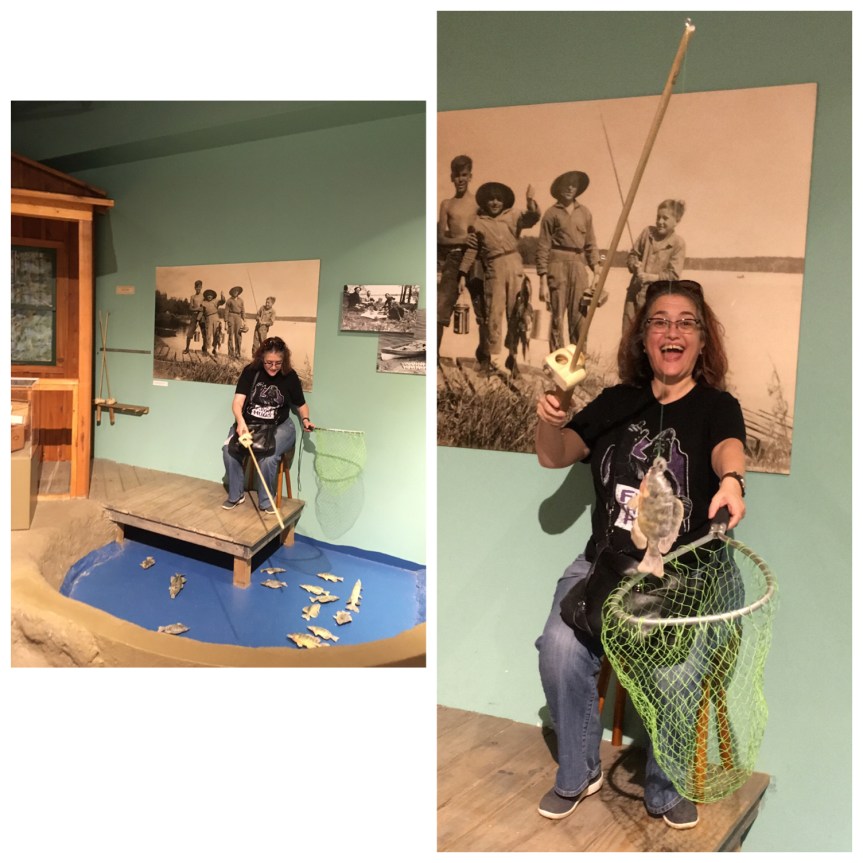
And then of course there are ‘fun things’ like the local fishing pond
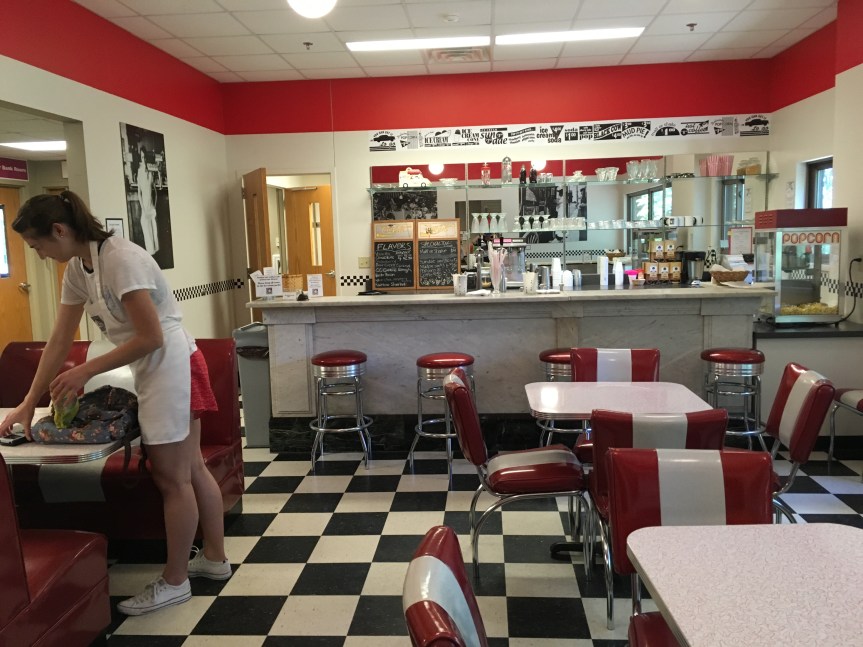
And the functional icecream parlor where you can get a snack
All in all this was probably one of the best local history museums I’ve ever seen; while there I talked to a local who said as he was walking through one of the sections devoted to what life was like between the late 1800’s and around 1960, also broken down into subject categories (jobs, health, technologies, etc)… as he went through he was reading all of these quotes, and noting to me that they were from locals he knew— and he’s lived here all his life — so whoever organized the exhibitions clearly had anthropologists and historians going through the community and collecting the local stories and supporting objects from the area in order to re-created the experiences….. and they skipped nothing, the good, the bad, and the ugly… it’s all in there….civil strife, strikes, economic upheavals, it’s all in there …. I am deeply impressed
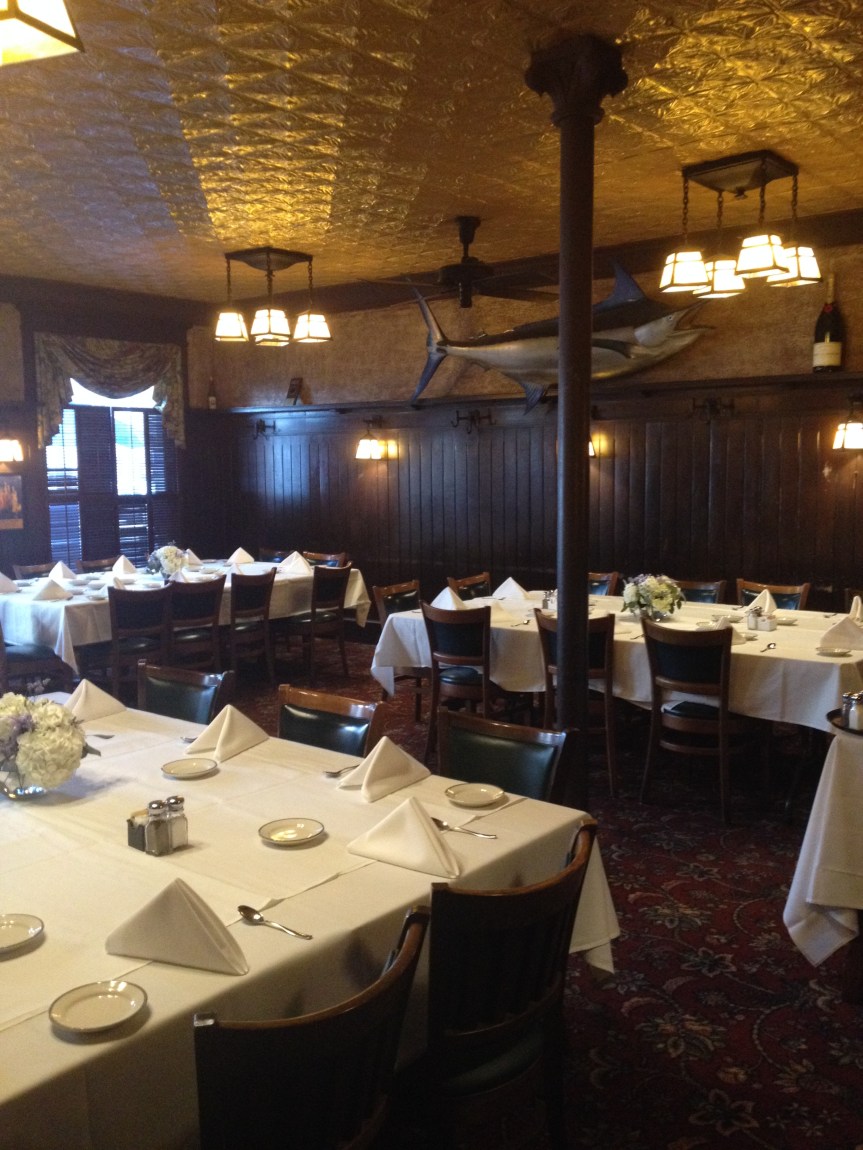
A trip to a food past: I came here based on a Yelp review that said (essentially), “Bender’s is probably the best restaurants in three counties.” Happily, this turned out to also be a historic restaurant that has been in the same building since 1907, with a lot of the menu’s ‘favorites’ tracing back almost that far. For example, I can now check off turtle soup (an American classic that sort of disappeared from our menus) from those “have you eaten this?” food lists memes that float around the internet — not mock turtle soup mind you, but the real McCoy with actual turtle meat, which apparently has been on their menu for over 60 years. It was tasty, but I have nothing to compare it to so I have no idea if it was good turtle soup.
… The thing on the side is sherry, to be added ‘to taste.’
They even still do Monte Cristo sandwiches (another item that’s mostly disappeared from US menus, that was once ubiquitous), but apparently only on Mondays. For my main I had a fairly decent crab cocktail (trying to loose some weight). Apparently, and I discovered this afterwards while researching the place on the internet, the automobile Blue Book used to suggest this place as a driving destination.
If you get there when the place isn’t busy, the manager will happily give you the historical tour. I was just walking around looking at the place and he walked right over and started giving me background information. For instance, I learned that the mural that’s in the bar was painted by a local artist in barter for free food and drink during the whole period it took him to paint it
And, believe it or not, the bar area originally not only had spittoons on the floor, but also urinals!!! Standing right out in the open (uhg). Apparently, once the place started to get popular for it’s food (and not just the liquor) the owner purchased the building next door and created a ladies dining room with it’s own door, so that they wouldn’t have to enter via the main doors at the bar, and walk by guys with their dicks out…
(SERIOUSLY? This was a thing?)
Found a more complete write up on the history of this place in a google book called “Taste of Ohio”
Worth a visit, but underwhelming; remember to use your National parks pass!!
You know how pretty much every former US President has gotten a memorial or (at least since Herbert Hoover) a library, well this fairly new National park is a museum (consisting of two, not quite adjacent buildings) dedicated to the women behind the men… i.e., all our unsung first ladies. It was established, in order to fill that gap, around the year 2000, and consists of the historic (from 1878-1891) home of Ida McKinley (whose husband’s memorial and museum are about 5 minutes away by car), and a nearby former bank (built 1895 — so after her family had already moved out); the former bank now holds a small collection of first ladies dresses, etc., and a library/research section (on its upper floors).
The Museum is pretty easy to find, and there is free parking. However, one of the more disconcerting things about this site, at least to me, was how the area is arranged; the lot is adjacent to Ida McKinley’s house but blocking your entrance is one of those vertically swinging gates. When you get there you have to ask (via a microphone) to be allowed in, and will be asked to verify that your intent is to visit the site — I get why they do it, but it is pretty unusual, all things considered. Then you will discover, confusingly, that the building you need to go to first (it’s where you pay your fee and are then led around by a docent) is NOT the house you just parked next to, but rather, it’s the former bank building which is on the FAR side of an adjacent hotel&parking-structure. And, if you happen to be cutting it close till the tour, as I was, and have any trouble walking (as I do), then it can be quite the trek. However, and I learned this afterward having already left the site entirely, there are actually quite of few first ladies dresses and things of that sort on display in the hotel, so you should try to either time your arrival so that you have a chance to see those — either before a tour, or otherwise try to remember to do it before driving away afterwards (the docents were NOT the ones who told me about it, so odds are they won’t remind you either).
In the bank building (where you are NOT allowed to take pictures) you’ll pay your fee, don’t forget to use your national park pass if you have one, and be led to a back ‘library’ to watch a pretty propagandist movie about the first ladies. I say this, because it says things like, and I’m paraphrasing “all of the wives were supportive of their husbands” and then goes on to even mention Bess Truman who I wouldn’t describe as a ‘supportive’ first wife….
Now if you know anything about Bess, you’ll know that she DESPISED Washington and would only deem to be there when her presence was absolutely demanded (essentially abandoning her husband for the majority of his presidency). Her behavior overall made it clear that she was less than thrilled about her husband’s political career in spite of Truman doing everything he could to keep her involved, including nepotism in the form of finding her paying jobs. Once, when asked if she’d like her daughter to one day be President, she said, “most definitely not.” Bess held only ONE press conference over the course of Harry’s two terms in office and only did that once her repeated refusals to do them had become a political issue. While one could give her the benefit of the doubt and say that she feared her father’s suicide would become a public issue (back then the ‘heinous sin’ of a suicide in the family was like a permanent ‘taint’ on the blood of all descendants), or perhaps one could argue that it was a before-her-time feminist stance (if the press asked her what she might be wearing to a public event her “written” responses were usually pretty sarcastic) the overall effect is still of a woman whose behavior could not be described as “supportive of her husband.”
…. hence why I mean it when I say the movie they showed us about the first ladies was pretty “propagandist”; for me, I prefer my history presented unapologetic-ally, with the good, the bad and the ugly intact.
Then we were led into the front room where the docent offered to either let us just wander the exhibits independently, or he could share with us what he knew. I promptly said “share what you know” and he made it clear he knew his first ladies (although he did edit some of the most controversial stuff out), including things like the fact that Jackie-O felt she was cursed. The docent then essentially keeps us in the ‘first ladies room’ for what I’m pretty sure was a set amount of time — it was clear my group was ready to go one well before he allowed us to do it, and then we were told to all go as a group past the hotel (again) to the Ida McKinley’s house where we led around by a different docent.
Over all, I felt the place was underwhelming; the exhibits in the first building were, in my opinion, worth seeing but not quite ‘ready for prime time.’ It was like they knew they HAD to have something, and this was the best they could come up with. I have not yet seen the Smithsonian’s first ladies exhibit, but I’m guessing it beats the pants off of what I saw here. And then, while the lower floors of Ida’s house impressively attempted to ‘recreate’ the home — based on old family photographs of the rooms, the top floor of Ida’s house then discordantly tried to tie back into the first ladies theme by offering a gallery of portraits of the women. While up there I brought up the topic, “what are you guys going to do if Hillary wins the presidential campaign?” The docent admitted it was an issue they were currently trying to wrap their brains around — even though it was something they should have considered at the outset. Insisting that first ladies need to be recognized is a feminist stance… Yet, Just looking at the place, in my opinion, how they set the place up is evidence that its founders essentially bought into the belief that presidents are and always will be male. Considering organized the place not 16 years ago, you’d think they’d have prepared, nay… looked forward, to the eventuality of a female president, but it is clear they had not.
Before leaving the site entirely, I struck up a conversation with some retired folks who were in the parking lot. To my great luck, one of them had grown up in Canton and started telling me about just how different the site had been then — reiterating something I had spotted in an image that was in the house.
Ida’s childhood home had been converted into a business, and the parking lot we were standing in, as well as the home’s garden, had been occupied with other businesses/buildings … all of which have since been torn down (in order to restore the site, something that probably could not have happened but for a downturn in the Canton economy).
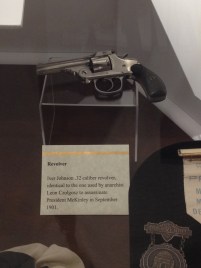
For those who are weak on their presidential history, McKinley was the 25th President, and was shot six months into his second term, in 1901, by Leon Czolgosz, an anarchist (he didn’t think we should have any sort of government); McKinley is probably best remembered for, by the simple act of dying, making way for Teddy Roosevelt — which might not be fair to McKinley who was actually a fairly effective president (depending on how you feel about US expansionism/colonialism), but is none the less an accurate statement.
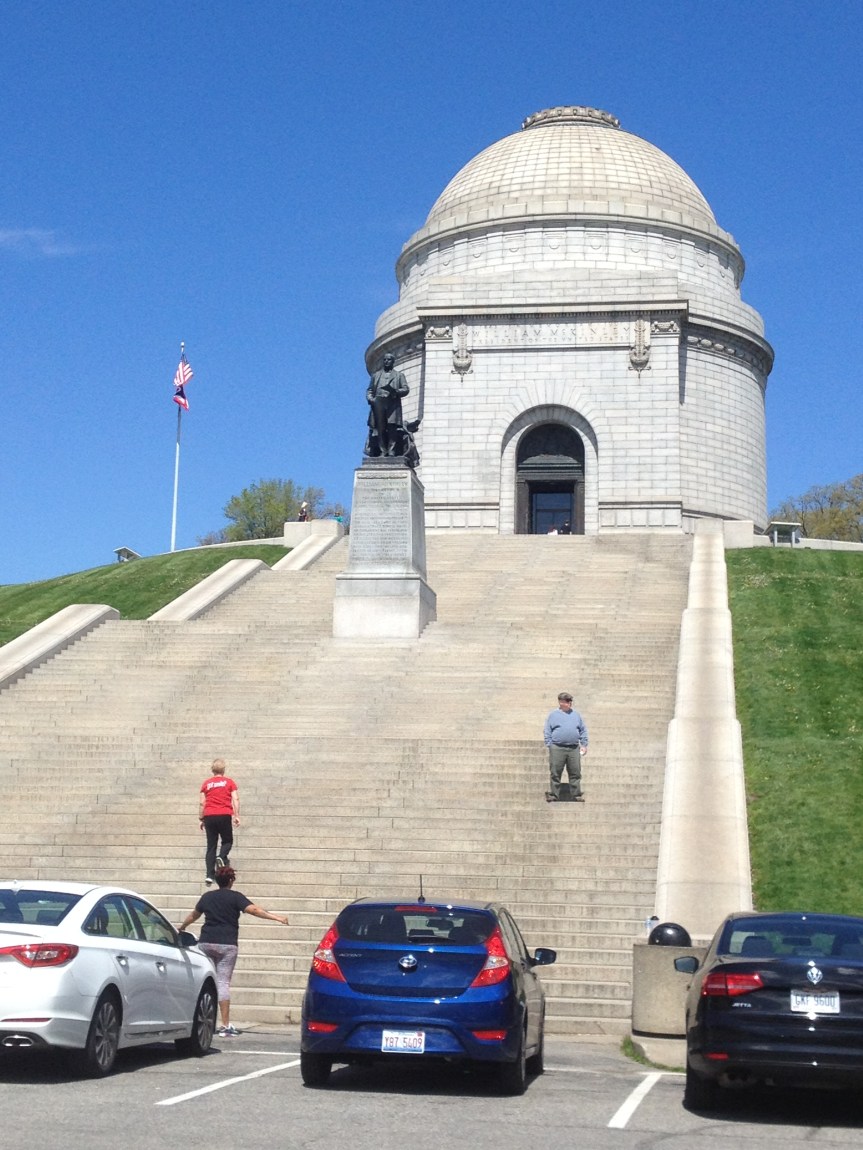
As mausoleums go, this is a pretty impressive one, and doubles as a popular place to work out, a phenomena that I seriously doubt the folks who designed and built it had in mind. While there I saw any number of ‘dressed to work out’ women and some men doing the steps. I even saw one class of orange clad 2nd graders assigned by their teacher to run up the stairs as a way of calming them down after a long bus ride, before entering the presidential library/museum portion of the memorial.
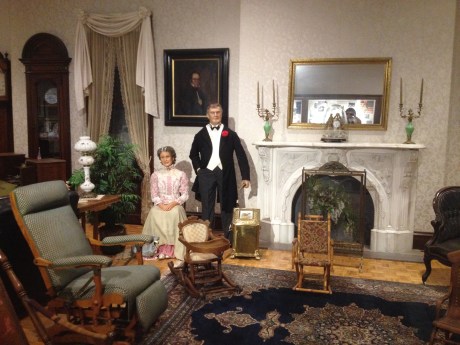
Next door to the mausoleum is a really impressive little museum (completed in 1964) that is most definitely worth a visit. It kind of reminds me of a miniature version of Chicago’s Museum of Science and Industry. There’a small planetarium (because of all the school kids I was lucky enough to see a light show on a week day), a gallery devoted to the McKinley’s that shows furniture and various items that belonged to the and includes an animatronic President so good that I’m thinking they may have gone to Disney for his production.
There is also a whole wing dedicated to recreating a small town of McKinley’s era, with various shops, a post office, a doctor’s office, a dentist, etc., which is in and of itself worth the price of admission, etc., and that’s just on the top floor. I consider this to be part of the living museum trend, even though none of the ‘buildings’ are saved historic ones.
The basement is devoted to dinosaurs, but I barely got to see it. There is in fact way more thing to do that I made time for because I wanted to make sure I was able to fit in a visit to the first ladies museum on the other side of town before it closed. If I go to Canton again, which I intend to, I will devote a whole afternoon to this museum.
Definitely worth a visit: Apparently the first museum devoted to a first lady. I learned a lot about her during the visit and now have a lot more respect and sympathy for her than I did previously.
Finding this place wasn’t difficult (with GPS helping), and once you’re in the right part of town the house its self is easy enough to spot, in fact there are signs everywhere of the “hi you’re here” variety — but I’ve got to warn you, that the signage that was supposed to direct visitors to it’s parking lot was horrible! There’s this narrow little alleyway that odds are you won’t spot, which is where you need to turn down off of the busy main street in order to get to the parking lot behind the house, and G-d help you! It really is NOT clearly marked, nor is the traffic pattern in front of the house set up to aid out-of-town visitors to make the turn safely.
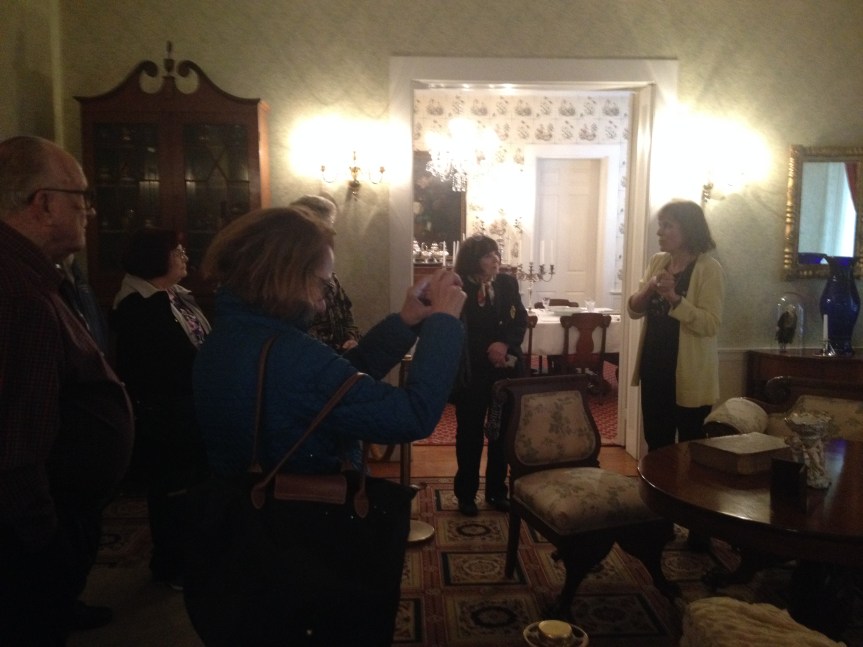
I enjoyed my visit here. A lot of historical research, time, effort, and money was invested in order to try to recreate the home as Lincoln might have known it when he visited here. According to our docent, a retired female lawyer, as a result of various historical flukes, historians have a pretty good idea of exactly what items were in the house, and if they weren’t successful in tracking down the specific items the Todds owned (although happily in many cases they were), then they were able to replace them with items sufficiently similar as to give visitors a fairly accurate sense of being in their home. Anytime the items were known to have been owned by the Todd or the Lincoln families, the docent would point them out, and she always made it clear when they were not. So for instance they knew Mary Todd had a preference for the work of a particular furniture designer, and they have some of his pieces but aren’t sure if they’re the exact ones own by Mary… etc. In the picture below for instance, the table she (in white sweater) is standing next to was the actual one from the home, as was the bible laying on it.
I learned a lot of interesting things, such as the house (after the Todds had sold it) became the brothel where a soon to be famous madam, Belle Brezing, who many believe became the template for the Belle Watling character in ‘Gone with the Wind,’ got her ‘training’; and that after Lincoln’s death, Mary’s son, who didn’t recognized the symptoms of laudanum/morphine addiction (which she had been proscribed as a cure for migraines) had his mother declared insane, and tried to get control of her money.
The first time I read about this place was in a blog devoted to ‘things worth stopping to see while road-tripping with the kids down to Disney World.’ However, back in June of 2015, when I was initially making that trip south from Chicago to Orlando, I was still one month shy of the end of the proscribed (by Jewish law) 11 months of mourning for my father, and as such couldn’t do anything ‘fun.’ However, I remembered it now, almost a year later, and since I discovered it was effectively on my path from my friends home in Georgia, to visiting another friend currently doing time in Ohio, I made a point of stopping to see it (in fact, all other things I did while in Lexington were peripheral to this stop).
Worth a good two hours, possibly more, both attractions are on a man-made island. In the valleys near this location sat both a Colonial era British Fort, and an Indian village that was the birthplace of a Famous Native American; the original valley locations for both the fort and village were submerged in 1979, in order to create the Tellico reservoir, and island.
I came here wanting to see Sequoyah’s birthplace, having been told about this it by the folks at New Echota in Georgia, where there is a whole display describing his achievements. Sequoyah was so famous in his day that the trees of the same name were named after him; he achieved this notoriety because, after recognizing the importance of the written language in empowering the invading whites, he sat down and all by himself invented a phonic alphabet for the Cherokee language so that his people too could be literate. And the village in which he was born was called Tuskegee
Below a plaque in memory of the Cherokee people who had lived in the valley that had been flooded in 1979, and the 191 burial sites that had to be moved to this new burial mound in order to create the Tellico reservoir
I am putting this on the list of places that I didn’t schedule in near enough time for. I honestly was expecting it to be less than it was. By the time I was getting there, it was due to close in about 10 minutes. I had the phone number and called, and the lady working the desk said she would stick around for an extra 15 for me, and another Family that happened to show up can see the place at the same time I arrived (they had not called).
As I said before, this is not actually the original location, the Tennessee Valley Authority had flooded the whole area to create a electric damn and this is where they move to the his home, and created the visitor’s center which explains all about the history of the tribes, and the import of Sequoyah’s achievements.
Once this place closed, I moved across the street to the rebuilt British fort built there. By the time I arrived the visitor’s center had already close, so I can’t speak to it.
Behind the visitor’s center however is the fort, which only closes at sundown… and it is kind of seriously cool. It’s a living history museum which includes everything, down to sheets on the soldiers bunks
To be blunt, this is a “not yet ready for prime time” educational center about the Cherokee nation and the ‘Trail of Tears,’ which passed along the old ‘highway’ (aka, historic paved road) the center sits next to. According to the woman who ran the place, they’re still getting funding and were just recently able to buy this building (which looks like it might have been some sort of office). The plan is to tear down the current structure, in the very near future — just a matter of months, and replace it with a much larger facility on the same location.
Currently, all they really have to show are some placards on the wall that tell the story of what happened, which are (I’m pretty sure) duplicates of ones I already saw on the walls of other more developed locations like New Echota (I’m guessing they were gifts from a state historical society or some such). She said that once they expand there will also be artifacts from local digs and research facilities, with a full library, etc. Among the placards was a description of archeological digs done in the area before the Tennessee Valley Authority had put in a damn that flooded many historic Indian sites back in the 1930’s as part of the depression area development of the region, and I assume many of the artifacts will be from those digs.
I look forward to coming back to this place at some later date to see how it progresses.
When I first drove here, I thought that maybe my GPS had failed me, because there were no signs leading to here, but happily, there are nice clear signs out front. Then I saw the sign on the door… firstly, the author forgot to include the local area code and not being a from there I had no idea what to dial, and secondly, my T-mobile phone had no signal, as in none. I went next door to the gas station and asked a nice young guy if he had a working cell phone and would he please call the number for me. The woman who runs the place was apparently 15 minutes away running errands, but said to wait for her.
While doing that, I went next door to a nice looking antiques place (other people’s junk), which actually had a few things worth buying, as a well a huge collection of abandoned family photographs that go back to the 1800’s (we don’t recognize any of these relatives so what will you pay us for them). It was kind of sad actually. The woman who ran the place gave me a free copy of a book about the history of the area written by a local man.
Picturesque spot for a nice picnic, or to fish: This is an historic site that’s technically in Dalton, even though you’ve got to drive past a few other towns to get to it… I think it’s a bit like O’Hare Airport being in Chicago (It’s ORD designation refers to it historically being located in Orchard Place, which Chicago annexed in the late 1950’s via a thin strip of land, against the wishes of the surrounding suburbs, so as to be able to claim the income generated by the airport). Even though it’s supposed to be in Dalton, on the map it’s much closer to Varnell, GA … and if you are from here Varnell is pronounced Varr-a-nell
It’s Historic (pre-Civil War & Trail of Tears, and listed on the list of Historic places), and pops up on all the ‘things to do lists for the area — even though they haven’t actually put in the effort to give you anything to do when you get here. In spite of it being a working mill (the product of which is sold at a local shop) it’s apparently only open to the public once a year in October, when they have a festival here — makes no sense to me either. If it is a working mill, why not just set a schedule and allow folks to visit while its happening, talk to the kids about the process, etc… more often than just once a year. There is a visitor’s center and ‘historic’ store across the street, but it too is rarely open. As such, this is more of picturesque place to stop and eat than really an educational experience (although there are the obligatory signs scattered around). Knowing this (thank you to Yelp and TripAdvisor reviews – by other confused visitors), I had picked up a Ruben sandwich from the butcher shop/deli near here and am eating it as I watch three old guys who are sitting pretty spread out from each other along the river bank, fishing silently.
The most entertaining thing that happened while I was here was a car and a truck drove into the lot, and a young dark haired woman got out of the car, ran over to the truck, got up on the running board and started repeatedly head slapping the poor guy sitting there who looked to be in his early 20’s. After she was done she ran back to her car. He then slowly got out and went over to her car to talk to her… At that point one of the fishermen and I made a quiet retreat.
Well worth the price! Probably the easiest to understand explanation of the civil war battles in this area, played out on a 3d diorama . Is it low rent? Sure, but whoever put the thing together did so with a spark of theatrical genius which makes the whole thing worth while. Great theater of the off off off Broadway variety if you will…
The Chickamauga and Chattanooga National Military Park consists of three separate parks that memorialize one of the major/pivotal military campaigns of the Civil War (or what some Southerners refer to as the War of Northern Aggression).
Cravens House located 1/2 way up Lookout Mountain (which I didn’t bother seeing the inside of because the original house was decimated during the battles, and what’s there is entirely a re-creation — and it’s only open on Weekends)
Next door the #3’s visitor center is the tourist trap called Battles of Chattanooga which to be quite honest, completely beats the crap out of the paltry offerings at the tourist center next door; and, any traveler who wants a better understanding of the battles around Chattanooga should consider this a MUST do. In fact, this is the 2nd time I’ve gone to this attraction, the first time was maybe 10 or 15 years ago as a friend and I road tripped from Chicago to Disney World, and we spotted massive road signs advertising it. At the time we thought it was going to be hokey, but as we were both geeks we decided to give it a try. We ultimately agreed it was utterly worth the time as both of us had studied the battles in school, but the 3D blinking lights visual demonstration (showing troop movements up and down the mountains that surround the city, etc), allowed us to finally understand what had happened.
However, as it had been at least 10 years since my last viewing I decided to buy include the ticket to this as part of the Rock City/Ruby Falls/Battles combo deal which I strongly suggest buying if you’re going to be in Chattanooga for at least a few days. And I suggest seeing this demonstration and THEN going across the street to the National park at the point.
Since it was to dark inside to take any useful photos, let me set the scene with words:
Imagine if you will one of those massive sculpted 3d tables that shows the geography of the Chattanooga basin looking south across the winding Tennessee River — with lookout mountain on the far right, and the hills of Missionary Ridge to the far left, effectively encircling the city below. Now imagine on the wall behind the table a movie about the long siege of the area, and how it went on until President Lincoln finally got fed up with General Bragg’s refusal to be aggressive (which was resulting in failing morale among the soldiers) and opted to replace him with General Ulysses S. Grant (sometimes referred to as Lincoln’s Butcher). From time to time the movie darkens, and the map comes alive with flickering colored lights demonstrating troop movements. For example: Federals floating past Confederate guards in the dead of night to attack the only viable ferry point, or racing up Missionary Ridge as, father like son, the elder (and horribly named) Arthur Macarthur (can’t you just imagine the ribbing he got growing up?) disobeys Grants express orders — setting the pattern for his son I suppose — and thereby wins one of the first Medals of Honor, as his son General Douglas Macarthur would later do in WWII (making them the first father and son pair to do so). The whole thing is really quite exciting.





 With regards to the hand, I saw a bunch of these sculptures scattered all over Eau Claire. I thought that they were a bit like the Chicago cows — which are much larger, also decorated uniquely and scattered around the city — or something of that sort,















 Rebecca Radnor's Personal Blog: Consider yourselves warned!