

When you think of convenience stores you generally don’t think of them as a great place to pick up an affordable meal. I don’t know about you but when I see the plastic wrapped food options in their refrigerated cases, or the hot food on display, I tend to worry about food poisoning first, and consider just how desperate I am for food second, and then tend to go for something processed and in a bag instead… like a bag of chips. Except when I’m in Japan, in Japan I actually opt for convenience store food when looking for cheap eats.

In Japan convenience stores are pretty much everywhere, with about 50,000 of them scattered throughout the country, and they are sort of famous across Asia for the quality of their eats. For example: the other week, my favorite former teaching assistant (from when I was professor in Korea a few years ago) was in town for a few days. (I had told him I was intending to come here after Australia and he had asked if he could tag along for a few days.) This being his first time here, one of his “while in Japan” priorities was to eat convenience store food… I shit you not. Sure, Korea is chock a block with convenience stores, and even has 7-eleven’s of it’s own; and Korean convenience stores have food too… that will keep you from starving to death and will fill you up in a pinch, but the whole time I was working there I never heard anyone describe them as a first choice for a meal. (And most of the time what I saw folks eating at them were cup a noodles or some other processed and or frozen food warmed up … not generally the ready made stuff (of which there was very little to choose from anyway — probably a catch 22 situation).
By comparison in Japan you’re as likely see teenagers and young adults dropping into a convenience store to pick up a quick meal (which they’ll usually eat at home) as you are to see them dropping into a McDonalds or a any other fast food chain, and by extension the offerings are extensive. While there they’ll pick up freshly cooked but refrigerated meals out of the refrigerators, baked goods, etc., with the same confidence as we would buying precooked foods from the grocery stores’ deli sections.
The concept was brought to Japan in 1974 by 7-Eleven, a brand that started in Texas, and as is true with all other imports the Japanese made it their own, to the point of buying out the brand entirely (the company is now owned by the Japanese, and there are more of them in here than anywhere else, in fact 31% of all their stores world wide). Nowadays, there are essentially three major chains, 7-eleven, Lawson (which like 7-eleven began as a US brand, but the brand name is now owned by the Japanese and the US stores were bought out by, and now called Dairy Mart), and FamilyMart (the only chain to originate in Japan).
Of the three, my favorite is Lawson where a) pretty much everything they sell is in my opinion much tastier than the equivalent at the other two chains

… but also, and most importantly for me, b) Lawson’s cooked foods tend to have English descriptions on them (making my life a tone easier).

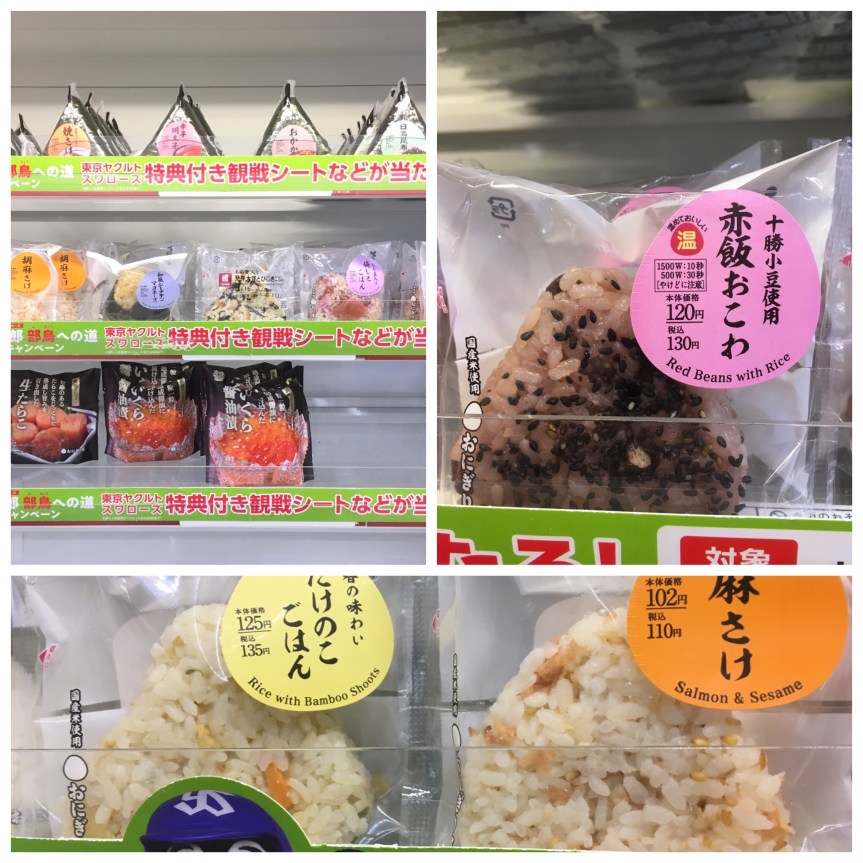 They also sell these little packets of chicken in various calorie sizes… I recently tried the smoked chicken tenderloin one for 37 calories … and oh dear lord it’s tasty and moist! Last year a friend of mine had decided to just throw money at the problem of not having enough time or energy to cook for the twenty people she’d invited to thanksgiving dinner, and had purchased a whole smoked turkey from one of those catalogue food companies (like Williams– Sonoma), which turned out to be “to die for”!!!! This bit of chicken in plastic from Lawson’s was almost that good… and it’s from a convenience store!!
And while under normal circumstances I would NEVER buy something like cooked fish from a 7-eleven in the states, I have purchased it from Lawson’s, and it was good.
by comparison, 7-eleven for the most part does NOT put English on most of their food packets (except for the kcal which, happily for me, the Japanese seem to always list with the western alphabet); what is there is sort of a mission statement about how great their food is, rather than anything useful.
That and, like I said before, the few things where I’ve compared 7-eleven’s product with the comparable Lawson’s one, I preferred the flavor of Lawson’s food.
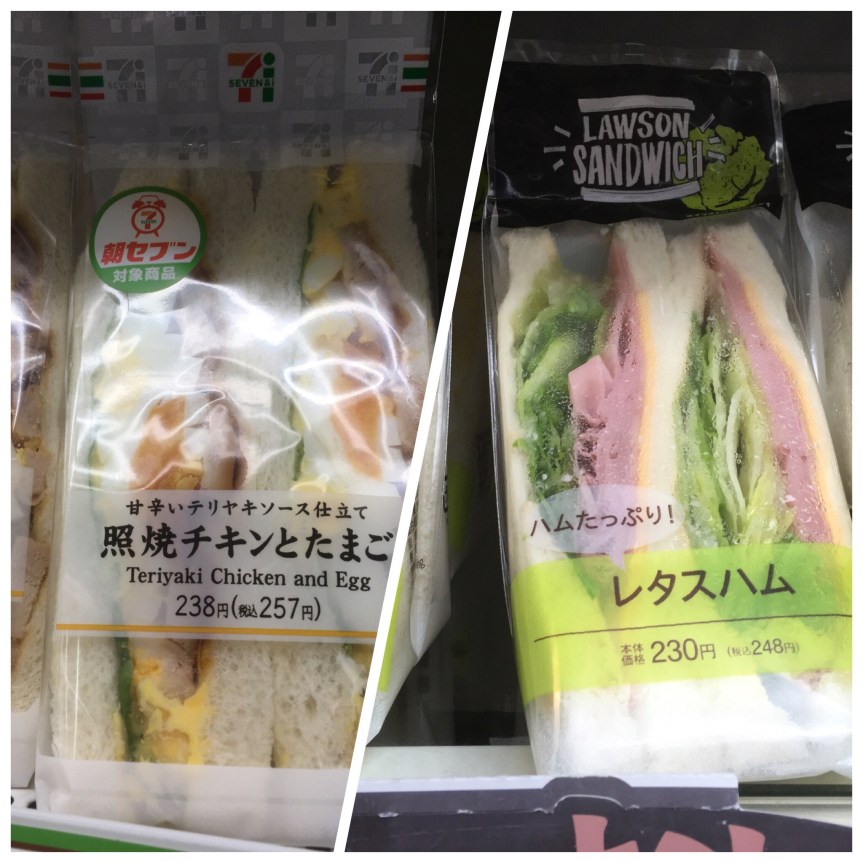
The only product where the ‘rule’ about English labeling doesn’t seem to hold up is on Sandwiches, where 7-eleven DOES put an English description and Lawson’s does not
For the most part I find the FamilyMart brand to better than 7-eleven in flavors, but not quite as good as Lawson in most things… and they rarely use English descriptions on their products either.
Also, if you’re in Japan, needing to pick up some cash, and not able to find a bank ATM that will accept international bank cards, every ATM I’ve looked at that’s in any of the three chains accepts international cards. I haven’t used them, so I don’t know if there are any extra fees involved.
An interesting factoid that most travelers will never need to use: I’ve read that, because of their omnipresence in Japanese cities of all sizes, anyone who needs police protection such as battered wives, can run to one any convenience store and the clerks are tasked with protecting them till the police arrive.
Found this good video on the topic:




 Rebecca Radnor's Personal Blog: Consider yourselves warned!